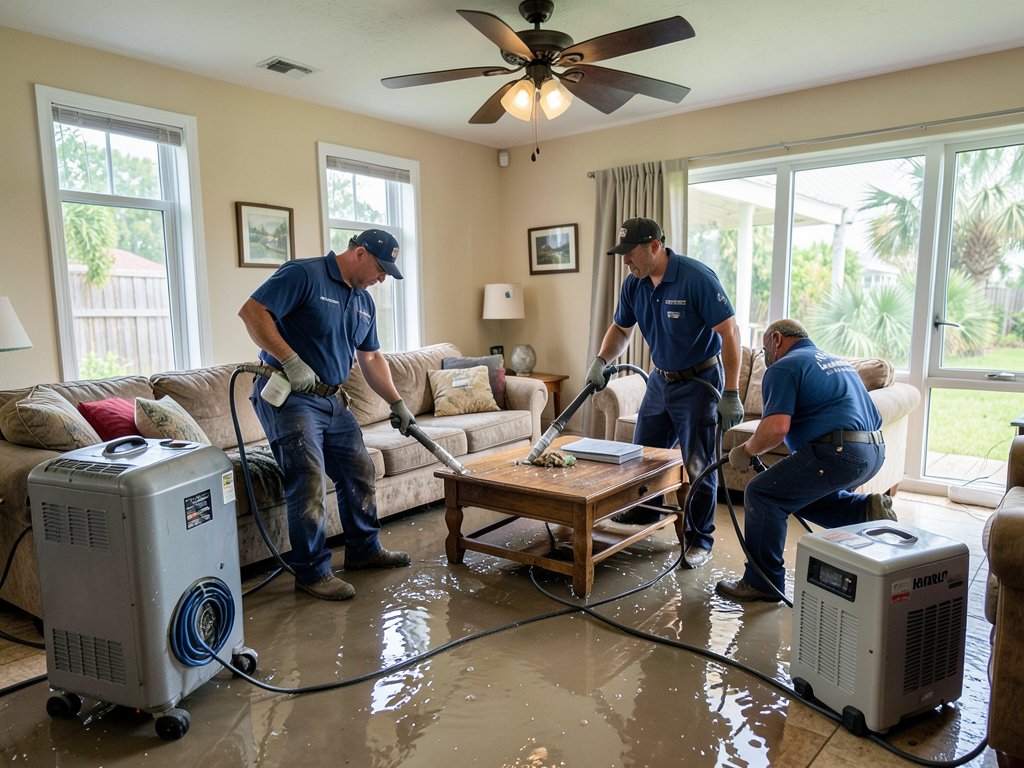







Tampa's average relative humidity hovers between 60 and 75 percent year-round. When a water heater ruptures and floods your home, that ambient moisture slows evaporation and accelerates mold colonization. Mold spores need only 24 to 48 hours of moisture exposure to begin growing on drywall, insulation, and wood framing. In drier climates, you might have three to four days before mold becomes a problem. In Tampa, you have less than two. Emergency water heater water removal must include aggressive dehumidification to pull moisture out of the air and prevent it from redistributing into unaffected materials. Without industrial-grade dehumidifiers, your home stays damp for weeks, even after visible water is gone.
Tampa homeowners face additional challenges with concrete slab foundations and older homes built before modern vapor barriers were standard. When a burst hot water tank floods a room, water seeps under baseboards and migrates through the slab into adjacent rooms. Many Tampa homes in areas like Seminole Heights, Carrollwood, and Town 'N' Country were built in the 1960s and 1970s with minimal moisture protection. That construction style makes water heater flood damage restoration more complex. Local expertise matters because out-of-town contractors often miss hidden saturation in slab homes and underestimate the drying time Tampa's humidity demands. Choosing a local team means choosing someone who understands how Tampa homes respond to water intrusion.