




Menu

Large Scale Water Extraction in Tampa – Industrial-Grade Solutions That Keep Your Business Running

When commercial properties face major water events, Fortress Water Damage Restoration Tampa deploys truck-mounted extractors and submersible pumps to remove thousands of gallons per hour, protecting your assets and minimizing revenue loss across the Tampa metro.

Slider Image 1
Slider Image 2
Slider Image 3
Slider Image 4
Slider Image 5
Slider Image 7
Slider Image 8
Slider Image 9
Slider Image 10
Slider Image 11

Why Tampa's Hurricane Corridor and Gulf Proximity Demand Industrial Water Removal Capacity

Tampa sits in one of the most flood-vulnerable commercial zones in Florida. Hurricane storm surge from Tampa Bay, seasonal tropical systems, and high water tables create conditions where 50,000 square foot warehouses, multi-story office buildings, and manufacturing facilities can accumulate standing water in hours.

A standard residential pump removes 15 gallons per minute. When you have four inches of water across 20,000 square feet, you are looking at 37,500 gallons. That requires commercial water removal equipment capable of moving 200 to 400 gallons per minute to prevent secondary structural damage and keep operations viable.

Tampa's building stock includes many older concrete slab foundations and tilt-up construction common in Westshore and the Port Tampa industrial corridor. These structures absorb water quickly. The longer bulk water sits, the more it wicks into walls, saturates insulation, and compromises load-bearing elements. High humidity amplifies mold colonization within 48 hours.

You also face business interruption costs. Every hour your facility stays offline costs revenue, labor, and customer confidence. Industrial water extraction is not about convenience. It is about speed, volume capacity, and preventing a three-day event from becoming a three-week shutdown. Large loss water mitigation requires equipment, manpower, and logistical coordination that most restoration companies cannot deploy. The difference between a small crew with shop vacs and a team running truck-mounted extractors and diesel-powered pumps is the difference between controlled recovery and catastrophic loss.

Why Tampa's Hurricane Corridor and Gulf Proximity Demand Industrial Water Removal Capacity
How Fortress Executes High Volume Water Pumping for Tampa's Commercial Properties

How Fortress Executes High Volume Water Pumping for Tampa's Commercial Properties

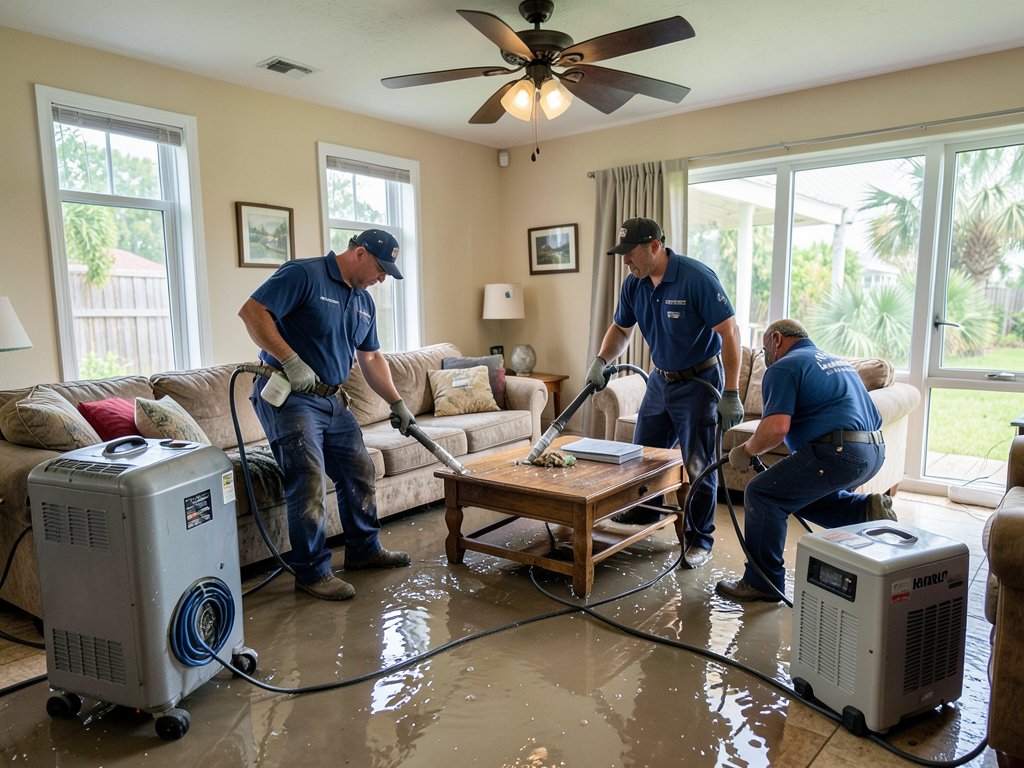
Large scale water extraction starts with equipment staging. We deploy truck-mounted extractors rated for continuous operation, submersible pumps for standing water removal, and trailer-mounted generators to maintain power independence. For facilities with basement levels or underground parking, we use trash pumps that handle debris and sediment without clogging.

Volume matters. Our extraction units pull 300 to 500 gallons per minute. For a 40,000 square foot warehouse with six inches of standing water, we can remove the bulk load in under four hours. Speed limits secondary damage. Water that sits for 12 hours starts breaking down drywall, delaminating flooring, and saturating ceiling tiles. We stop that progression immediately.

After bulk water removal services clear standing water, we transition to structural drying. This involves air movers, commercial dehumidifiers, and moisture mapping with infrared cameras. We measure moisture content in concrete, wood framing, and wall cavities to ensure complete drying. Incomplete drying leads to hidden mold growth and long-term structural degradation.

We coordinate with your insurance adjuster and provide detailed documentation. Photos, moisture logs, equipment placement diagrams, and daily progress reports give you the paper trail needed for claims processing. For businesses in Tampa's Westshore District or near the Port, we understand the urgency of restoring loading docks, refrigerated storage, and data centers.

Our process is built for scale. We have handled flooded hospital wings, retail centers, and food processing plants. This is not a two-person crew with a van. This is industrial water extraction executed with the equipment and manpower your facility demands.

What Happens During a Large Scale Commercial Water Event Response

Large Scale Water Extraction in Tampa – Industrial-Grade Solutions That Keep Your Business Running
01

Immediate Assessment and Mobilization

Within 60 minutes of your call to (656) 219-8088, our project manager arrives on-site to assess water volume, contamination level, and facility access. We identify electrical hazards, structural risks, and affected zones. Based on square footage and water depth, we calculate equipment requirements and dispatch the extraction team. For multi-building campuses, we prioritize critical areas like server rooms, inventory storage, and production lines to minimize business interruption.
02

Bulk Extraction and Containment

Our crew stages truck-mounted extractors and submersible pumps to remove standing water at rates up to 500 gallons per minute. We establish water evacuation routes, run discharge hoses to storm drains or designated containment areas, and monitor extraction progress with moisture meters. For contaminated water from sewer backups or storm surge, we follow IICRC S500 protocols for Category 2 and Category 3 water handling. All extracted water is documented for environmental compliance and insurance reporting.
03

Structural Drying and Documentation

After bulk water removal, we deploy air movers and commercial dehumidifiers to dry structural materials. Infrared cameras and moisture meters track drying progress in walls, floors, and ceilings. We create moisture maps and daily logs showing humidity levels, temperature, and material moisture content. Once all materials reach industry-standard dry readings, we provide a completion report with photo documentation and equipment logs. This report supports your insurance claim and proves regulatory compliance for facilities subject to health department or OSHA oversight.

Why Tampa Businesses Trust Fortress for Large Loss Water Mitigation

Commercial water damage is not residential restoration scaled up. It requires understanding building systems, HVAC integration, and how water moves through multi-story structures. Fortress Water Damage Restoration Tampa has handled flooding in the Channel District's mixed-use developments, Ybor City's historic brick buildings, and the industrial facilities along Hillsborough Avenue.

We understand Tampa's building codes and the permitting requirements for structural drying in commercial spaces. For food service facilities, we coordinate with the health department to ensure compliance during restoration. For medical offices and clinics, we follow HIPAA protocols when documenting water damage in patient care areas.

Our equipment fleet includes truck-mounted extractors, diesel generators, and trailer-mounted dehumidifiers designed for continuous operation across multi-day projects. We have the manpower to staff 24-hour extraction operations when your timeline demands it. For a flooded retail center during peak season or a manufacturing plant with production deadlines, we bring the crew size and equipment capacity to meet your schedule.

Local knowledge matters. Tampa's Gulf Coast location means we respond to hurricane-related flooding, tidal surge, and seasonal stormwater issues regularly. We know which areas flood first during tropical systems and which building types are most vulnerable. That experience translates to faster response times and more accurate damage assessments.

We also work directly with commercial property insurers and third-party adjusters common in Tampa's market. Our documentation meets their requirements, and our estimates follow Xactimate pricing standards. This reduces claim disputes and speeds reimbursement. You get a restoration partner who understands both the technical and administrative sides of large loss water mitigation.

What Tampa Businesses Should Expect During Commercial Water Extraction

Response Time and Availability

We operate 24/7 and guarantee on-site arrival within two hours for Tampa metro locations. For large scale water extraction, we dispatch a project manager first to assess scope, followed by the extraction crew with equipment staging. If your facility is 50,000 square feet or larger, we coordinate crew shifts to maintain continuous water removal operations. We understand downtime equals revenue loss. Our goal is to get bulk water out and begin drying within the first four hours. For hurricane or storm surge events affecting multiple properties, we prioritize based on life safety, structural risk, and business continuity impact.

Initial Evaluation and Scope Definition

Our project manager walks the facility with you to identify affected areas, measure water depth, and classify contamination levels. We use thermal imaging to detect hidden moisture in walls and ceilings. You receive a written scope of work outlining extraction methods, drying timelines, and equipment deployment. For insurance purposes, we photograph all damage, document pre-existing conditions, and create a detailed floor plan showing affected zones. This evaluation typically takes 30 to 60 minutes, depending on building size. We answer questions about business interruption, salvageability of materials, and coordination with your insurance adjuster before starting work.

Final Outcomes and Facility Restoration

Your facility is considered dry when all structural materials reach moisture content levels consistent with unaffected areas. We provide a completion certificate with final moisture readings, equipment logs, and photo documentation. For buildings requiring reconstruction, we coordinate with your general contractor or handle build-back services in-house. We leave your property clean, dry, and ready for the next phase. Our goal is not just water removal but full operational readiness. You receive all documentation needed for insurance claims, lender requirements, or tenant communications. For properties in flood-prone zones, we also provide mitigation recommendations to reduce future risk.

Post-Extraction Monitoring and Support

After bulk water extraction and structural drying, we offer follow-up moisture testing at 30 and 60 days to confirm complete drying and identify any hidden moisture issues. For commercial properties with ongoing flood risk, we provide maintenance contracts that include annual moisture inspections, sump pump testing, and backflow valve servicing. If mold growth occurs due to incomplete drying by a previous contractor, we offer mold remediation services that follow EPA and IICRC S520 standards. Our post-project support includes insurance claim assistance, coordination with your property management team, and emergency contact availability if secondary water issues arise.

Frequently Asked Questions

You Have Questions,
We Have Answers

How to purify water on a large scale? +

Large-scale water purification for commercial facilities in Tampa involves multi-stage filtration systems. The process typically starts with screening to remove debris, followed by coagulation and flocculation to bind particles. Sedimentation tanks allow solids to settle, then advanced filtration removes remaining contaminants. UV disinfection or chemical treatment eliminates pathogens. For industrial applications, reverse osmosis or ion exchange may be necessary. Tampa's high humidity and proximity to the Gulf require systems designed for brackish water conditions. Each facility needs customized specifications based on water source, volume requirements, and end-use standards. Professional engineering assessments determine the most cost-effective treatment train for your operation.

How to remove large amounts of water? +

Removing large volumes of water from commercial properties requires industrial-grade extraction equipment. Truck-mounted pumps handle thousands of gallons per hour, essential for Tampa warehouses or office buildings after flooding. Submersible pumps work in deep standing water, while portable extractors target specific zones. The extraction strategy depends on water volume, contamination level, and structural access. For multi-story buildings common in downtown Tampa, cascading extraction prevents secondary damage to lower floors. Speed matters because Florida's humidity accelerates mold growth within 48 hours. Professional crews coordinate multiple extraction units simultaneously, document moisture levels with thermal imaging, and adjust equipment placement as conditions change throughout the remediation process.

What is the first step of seven steps large scale treatment of water? +

The first step in large-scale water treatment is screening or intake filtration. This removes large debris, sediment, and organic matter before water enters primary treatment systems. For commercial operations in Tampa, intake screens prevent damage to downstream equipment and reduce maintenance costs. This preliminary stage protects pumps, valves, and filtration media from clogs or abrasion. Screens range from coarse bar screens removing branches and trash to fine mesh catching smaller particles. In industrial settings near Tampa Bay, corrosion-resistant materials handle saltwater intrusion. Proper screening reduces chemical consumption in later treatment stages and extends equipment lifespan. This foundational step determines efficiency and operational costs for the entire treatment process.

What is the machine that extracts water? +

Water extraction machines include submersible pumps, truck-mounted extractors, and portable wet vacuums. Commercial-grade submersible pumps move thousands of gallons per hour from flooded basements or ground-level spaces. Truck-mounted units provide continuous high-volume extraction for large Tampa commercial properties. Portable extractors with wands target specific areas like carpeted offices or retail spaces. Industrial facilities may require trailer-mounted pumps with diesel engines for extended operation during power outages, common during hurricane season. Each machine serves specific applications based on water depth, contamination category, and facility access. Professional water damage teams deploy multiple extraction types simultaneously, matching equipment capacity to the scope of flooding and facility square footage.

How to purify 1000 gallons of water? +

Purifying 1000 gallons requires commercial filtration systems, not residential solutions. For Tampa businesses needing this capacity, options include multi-stage filtration units with sediment filters, activated carbon, and UV sterilization. The treatment method depends on source water quality and intended use. Potable water requires NSF-certified systems meeting EPA standards. Industrial process water may need deionization or reverse osmosis. Treatment time varies from several hours to continuous flow-through systems. Chemical dosing with chlorine or ozone provides disinfection at scale. For emergency situations after contamination events, professional water treatment contractors assess source water, calculate treatment capacity, and deploy appropriate equipment to restore safe water supply for commercial operations.

Can you drink any water with LifeStraw? +

LifeStraw personal filters are not designed for commercial water extraction or large-scale purification in Tampa. These consumer products filter small volumes for individual use during outdoor activities. They cannot address the gallons-per-hour demands of commercial water damage restoration or industrial water treatment. Commercial facilities facing water contamination need professional assessment and certified treatment systems. LifeStraw technology removes bacteria and parasites but does not handle chemical contaminants, heavy metals, or category 3 water from sewage backups common in Tampa commercial properties. For business continuity after flooding, you need industrial extraction equipment, antimicrobial treatment, and structural drying systems that meet IICRC standards, not personal filtration devices.

What will soak up standing water in the yard? +

Standing water in commercial yards requires French drains, absorbent materials, or grading corrections. For Tampa properties, clay-heavy soil retains moisture, worsening drainage issues. Sand or gravel trenches improve percolation in loading areas or parking lots. Absorbent materials like sawdust or kitty litter work temporarily for small puddles but fail at scale. Commercial solutions include catch basins connected to storm drains, bioswales for landscaped areas, or permeable pavement in parking zones. Prolonged standing water breeds mosquitoes, damages asphalt, and creates liability risks. Professional site assessment identifies grade problems, compacted soil, or blocked drainage infrastructure. Tampa's heavy rainfall and flat topography demand engineered drainage solutions, not temporary absorption methods.

How to deal with standing water in a yard? +

Standing water in commercial yards requires drainage engineering, not quick fixes. Tampa's flat terrain and seasonal rainfall cause persistent pooling. Solutions include regrading to create positive drainage away from buildings, installing French drains or catch basins, and connecting to municipal storm systems. For industrial sites, permeable pavement or bioretention areas manage runoff while meeting environmental regulations. Compacted soil from heavy equipment prevents natural absorption, requiring aeration or soil amendment. Persistent standing water indicates inadequate site design, damaged drainage infrastructure, or improper grading during construction. Professional civil engineers assess topography, soil composition, and existing drainage systems to design permanent solutions that prevent flooding, eliminate mosquito breeding grounds, and protect building foundations.

Will rocks help with standing water? +

Rocks alone do not solve standing water problems in commercial properties. While gravel improves drainage in French drain trenches or dry wells, surface rock without proper grading simply creates decorative puddles. For Tampa commercial sites, effective drainage requires engineered solutions. Gravel beds work as part of subsurface drainage systems where water flows to lower elevations or collection points. Decorative rock in landscaping prevents soil erosion but does not address underlying drainage failures. Commercial properties need comprehensive site assessment to identify grade problems, soil compaction, or inadequate storm systems. Professional solutions integrate grading, subsurface drainage, and retention systems. Rock is a component, not a solution, in commercial water management strategies.

Which method is commonly used to remove impurities from water on a large scale? +

Coagulation and flocculation are commonly used to remove impurities from water at commercial scale. Chemicals like aluminum sulfate bind suspended particles into larger clumps that settle or filter easily. This method works for turbidity, organic matter, and some heavy metals. Tampa industrial facilities and municipal systems rely on this process before filtration and disinfection. The method handles high volumes cost-effectively compared to membrane filtration. Coagulation doses adjust based on source water quality, temperature, and pH. Following chemical treatment, sedimentation tanks allow floc to settle, then sand filtration removes remaining particles. For commercial operations, this proven technology balances treatment effectiveness with operational costs, making it the industry standard for large-scale water purification.

How Tampa Bay's Storm Surge Zones and Flood Maps Impact Commercial Water Extraction Planning

Tampa sits in FEMA flood zones A and AE, with significant portions of the downtown core, Channel District, and Westshore area designated as high-risk surge zones. During Hurricane Ian in 2022, storm surge and tidal flooding affected commercial properties miles inland from the Bay. Buildings constructed before the 2000 Florida Building Code often lack adequate flood mitigation, making them vulnerable to rapid water accumulation. Industrial water extraction for these properties requires understanding how water flows through aging drainage systems, where it pools in low-lying parking structures, and how quickly it must be removed to prevent foundation undermining and slab heaving common in Tampa's sandy soils.

Fortress Water Damage Restoration Tampa works with commercial property owners, facility managers, and insurance carriers throughout Hillsborough County. We understand local permitting requirements for emergency water extraction in historic districts like Ybor City and Hyde Park, where building age and construction methods require specialized drying protocols. Our team coordinates with Tampa's Building Department and FEMA representatives for properties receiving federal disaster assistance. Choosing a restoration partner familiar with Tampa's flood insurance rating system, local adjuster networks, and the specific challenges of Gulf Coast moisture control ensures faster claims processing and compliant restoration work.
Water Damage Restoration Services in The Tampa Area

We proudly serve the entire Tampa area with rapid-response water damage restoration services. Whether you’re downtown, in the suburbs, or operating a business near the bay, our expert team is just minutes away. Use the map below to view our service zone or find our nearest location. We’re ready to respond wherever you need us. Your peace of mind is only a call or click away.

Address:
Fortress Water Damage Restoration Tampa, 4830 W Kennedy Blvd #600, Tampa, FL, 33609

Additional Services We Offer

Our news updates

Latest Articles & News from The Blogs

How Clogged Gutters and Downspouts Can Lead to a Flooded Living Room in Wooded Lutz Neighborhoods When heavy afternoon thunderstorms…

How Clogged Gutters and Downspouts Can Lead to a Flooded Living Room in Wooded Lutz Neighborhoods

How Clogged Gutters and Downspouts Can Lead to a Flooded Living Room in Wooded Lutz Neighborhoods When heavy afternoon thunderstorms…

Why You Should Never Use Bleach to Clean Up Mold After a Leak in Your Tampa Palms Home

Why You Should Never Use Bleach to Clean Up Mold After a Leak in Your Tampa Palms Home When you…

Dealing With Water Damage in Your Backyard ADU or Guest House in Seminole Heights

Dealing With Water Damage in Your Backyard ADU or Guest House in Seminole Heights Water damage in a Seminole Heights…

Contact Us

Every hour of delay increases damage and extends downtime. Call Fortress Water Damage Restoration Tampa at (656) 219-8088 for immediate large scale water extraction. We deploy industrial equipment and experienced crews to get your facility operational again.