




St. Petersburg sits on a peninsula surrounded by Tampa Bay and the Gulf of Mexico, making water intrusion a year-round threat. The city's proximity to sea level means properties from the Old Northeast Historic District to Venetian Isles face flooding during tropical storms, king tides, and summer thunderstorms that dump inches of rain in minutes. The combination of Florida's high water table and St. Petersburg's aging infrastructure creates perfect conditions for pipe failures, slab leaks, and foundation seepage.
Tampa Bay's humidity rarely drops below 70 percent, even in winter. When water enters a structure, that moisture spreads rapidly through drywall, insulation, and subflooring. Without immediate extraction and drying, mold colonies establish within 24 to 48 hours. St. Petersburg's coastal climate accelerates this timeline. Properties near Shore Acres and Snell Isle face additional challenges from saltwater intrusion during storm surge events, which requires specialized treatment protocols to prevent corrosion and ongoing moisture problems.
The city's mix of historic bungalows, mid-century homes, and modern condos means water damage manifests differently across neighborhoods. Older properties in Kenwood or Historic Uptown often have galvanized pipes prone to corrosion failure, while newer construction near downtown faces risks from rooftop HVAC condensation line backups and high-rise plumbing stack failures.
When water floods your St. Petersburg property, you need a restoration company that answers the phone immediately and arrives with equipment ready to work. Fortress Water Damage Restoration Tampa operates 24/7 dispatch with technicians stationed throughout Pinellas County, guaranteeing response times under one hour for emergencies from Gulfport to the Gateway area. We do not subcontract work or use call centers. When you dial our emergency line, you speak directly with a certified technician who begins coordinating your restoration before hanging up.
Our crews carry industrial truck-mount extraction systems capable of removing thousands of gallons per hour, not small shop vacuums that take days to clear standing water. We deploy thermal imaging cameras to trace hidden moisture behind walls and under flooring, finding water intrusion other companies miss until mold appears weeks later. Every technician holds IICRC Water Damage Restoration certification and completes ongoing training in moisture detection, structural drying principles, and antimicrobial treatment protocols.
We handle insurance coordination from documentation through claim settlement. Our estimators photograph damage, measure moisture levels with calibrated meters, and prepare detailed scope reports that insurance adjusters accept without dispute. We communicate directly with your carrier, provide emergency mitigation documentation for immediate approval, and track drying progress with daily moisture readings. Most St. Petersburg homeowners pay only their deductible because we handle the entire insurance process.
Unlike restoration companies that push unnecessary demolition to inflate invoices, we focus on structural drying and material preservation. Our goal is returning your property to pre-loss condition as quickly as possible, not maximizing reconstruction revenue. We extract water, dry structures, treat for microbial growth, and restore only what cannot be saved.

Our dispatch guarantees technicians arrive within one hour of your emergency call across St. Petersburg and Pinellas County. We stage equipment throughout the region so crews reach your property fast with truck-mount extraction systems, not small portable units. Every minute of delay allows water to spread deeper into structures, increasing damage severity and restoration costs.

We document damage with calibrated moisture meters and thermal imaging, then submit comprehensive estimates directly to your insurance carrier. Our detailed reporting and daily drying logs eliminate claim disputes and speed approval for emergency mitigation work. Most St. Petersburg customers pay only their deductible because we manage the entire insurance process from initial documentation through final settlement.
Every Fortress technician holds Institute of Inspection Cleaning and Restoration Certification in Water Damage Restoration. This training covers psychrometry, structural drying science, moisture detection technology, and antimicrobial treatment protocols. We follow industry standards for equipment placement, air movement, and dehumidification rather than guessing at drying procedures that leave hidden moisture trapped in building assemblies.
We understand how Tampa Bay's coastal humidity, high water table, and storm surge patterns create water damage challenges specific to St. Petersburg properties. Our crews know which neighborhoods face chronic flooding during king tides, how saltwater intrusion requires different treatment than freshwater damage, and which local building materials dry fastest with proper airflow and dehumidification equipment placement.
Water damage strikes St. Petersburg properties in different forms, from sudden catastrophic flooding to slow hidden leaks that spread undetected for months. Fortress Water Damage Restoration Tampa provides complete water removal services, structural drying, and emergency mitigation regardless of damage source or severity. We respond to burst pipes, appliance failures, roof leaks, storm flooding, sewage backups, and foundation seepage with the same urgency and certified restoration protocols.
Our service range covers immediate emergency water extraction through final reconstruction and mold remediation. We handle small incidents like washing machine supply line failures and large-scale disasters like tropical storm flooding that inundates entire neighborhoods. Every project begins with rapid water removal, followed by controlled structural drying using commercial dehumidifiers and air movers positioned based on psychrometric calculations. We monitor moisture levels daily until materials reach dry standards, then treat affected areas with antimicrobial agents to prevent mold establishment.
The water damage cleanup process varies based on contamination category. Clean water from supply lines requires basic extraction and drying. Gray water from appliances needs sanitization. Black water from sewage or storm surge demands protective equipment, contaminated material removal, and aggressive antimicrobial treatment. Our crews carry equipment and safety gear to handle all three contamination categories safely, protecting both your property and our technicians from exposure to harmful pathogens common in floodwater.
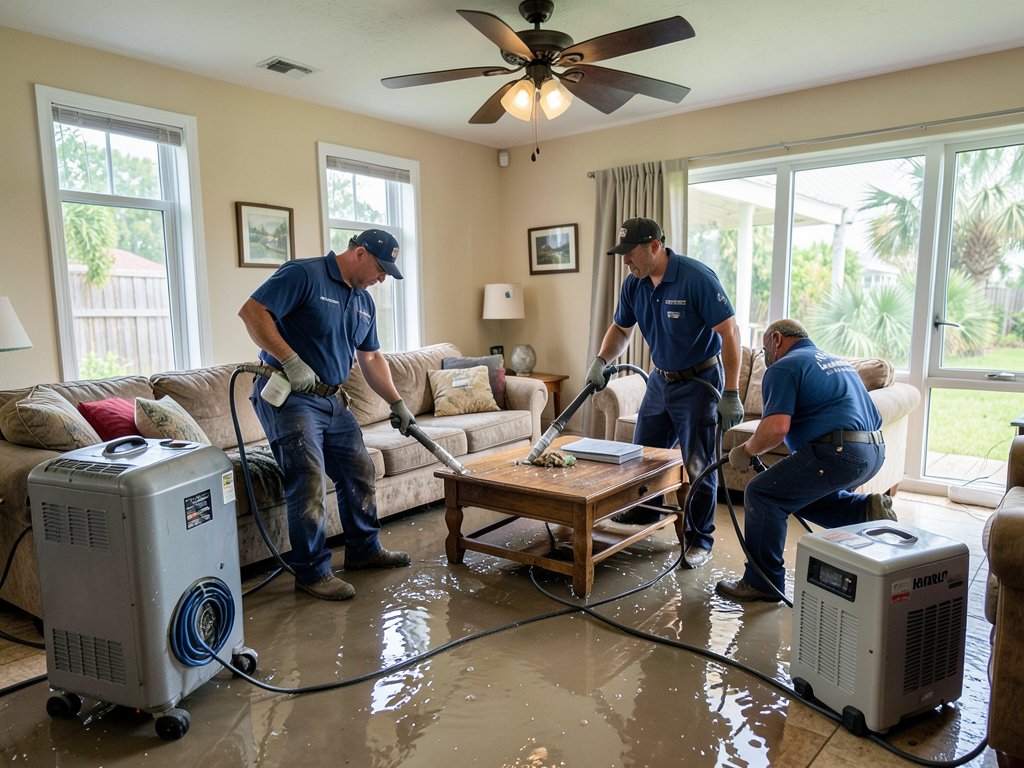
When water floods your property, immediate extraction prevents secondary damage to subflooring, wall cavities, and structural framing. Our crews arrive within one hour carrying truck-mount extraction systems that remove thousands of gallons per hour from carpets, tile, and hardwood. We pull furniture away from walls, lift area rugs, and extract water from crawl spaces and basements before it spreads. Fast water removal limits material loss and reduces drying time from weeks to days.
Visible water is only part of the problem. Moisture migrates into wall cavities, insulation, and subfloor assemblies where it stays trapped without proper drying equipment. We use thermal imaging cameras to map hidden moisture, then place commercial dehumidifiers and axial air movers to create controlled airflow that pulls moisture from building materials. Daily moisture meter readings track drying progress until materials reach industry dry standards, preventing mold growth and structural rot.
Florida's humidity allows mold spores to establish colonies within 24 to 48 hours after water exposure. Once materials reach dry standards, we apply EPA-registered antimicrobial agents to all affected surfaces, killing existing spores and preventing future growth. For properties where mold already established before we arrived, we contain affected areas with negative air pressure, remove contaminated materials following IICRC guidelines, and treat remaining structures with fungicide to eliminate remaining spores.
St. Petersburg's location on a peninsula between Tampa Bay and the Gulf of Mexico creates constant water intrusion threats that vary by neighborhood and property age. Coastal properties from Shore Acres to Venetian Isles face storm surge and king tide flooding during tropical weather systems. Inland areas near Boca Ciega Bay deal with drainage problems when summer thunderstorms overwhelm aging stormwater infrastructure. The city's high water table means even minor plumbing leaks can cause significant foundation moisture problems if not caught early.
Historic neighborhoods with older infrastructure face unique challenges. Properties in Kenwood, Historic Uptown, and the Old Northeast contain galvanized steel pipes installed decades ago that corrode from inside, causing pinhole leaks and sudden failures. These older homes often have limited attic ventilation, flat or low-slope roofs prone to ponding, and original plaster walls that absorb water like sponges. When leaks occur in these structures, water spreads quickly through lath and plaster assemblies, requiring extensive drying and sometimes material replacement.
Modern construction brings different problems. High-rise condos downtown and along Beach Drive face air handler condensation problems, rooftop HVAC drain line backups, and plumbing stack failures that send water cascading through multiple floors. These buildings require specialized extraction equipment and drying protocols to prevent water from traveling through concrete slabs into units below the source.
Properties near Tampa Bay and Boca Ciega Bay face flooding during tropical storms and king tides that push saltwater into ground-level spaces. Saltwater carries corrosive minerals that damage electrical systems, HVAC equipment, and structural fasteners if not treated immediately. Storm surge flooding requires specialized extraction, thorough rinsing of affected materials, and antimicrobial treatment to prevent ongoing corrosion and microbial growth from contaminated floodwater.
Many St. Petersburg homes built before 1980 contain galvanized steel supply lines that corrode from inside over decades. These pipes develop pinhole leaks that spray water into walls and attics for days before visible damage appears. By the time homeowners notice ceiling stains or wall discoloration, water has saturated insulation and drywall throughout entire rooms, requiring extensive demolition and structural drying.
St. Petersburg's high water table and sandy soil create pressure on concrete slab foundations. Copper supply lines embedded in slabs shift and develop leaks that go undetected until water bills spike or flooring damage appears. Slab leaks allow thousands of gallons to saturate subflooring, carpet, and baseboards before homeowners realize plumbing failure caused the moisture. Thermal imaging and moisture mapping locate hidden slab leaks before extensive demolition.
Tampa Bay's year-round humidity never drops below 70 percent, even in winter months. This constant moisture means any water intrusion creates ideal conditions for rapid mold colonization. Without immediate water extraction and controlled structural drying, mold establishes within 24 to 48 hours on drywall, insulation, carpet padding, and wood framing. Once colonies form, simple drying is insufficient. Affected materials require antimicrobial treatment or removal to eliminate health risks.
Water damage restoration follows a structured protocol from emergency contact through final repairs. When you call Fortress Water Damage Restoration Tampa, a certified technician answers immediately and begins coordinating your emergency response before ending the call. We dispatch the closest crew with appropriate equipment based on your damage description. Most St. Petersburg customers receive technician arrival within one hour of their initial call.
Upon arrival, our crew performs a damage assessment using moisture meters and thermal imaging to map visible and hidden water intrusion. We identify the water source, shut off supply lines if needed, and begin emergency extraction to stop damage progression. The first few hours focus on removing standing water and preventing further material saturation. We document everything with photographs and detailed moisture readings for insurance purposes.
After extraction, we establish controlled drying conditions using commercial dehumidifiers calibrated for room volume and moisture load. Air movers positioned at specific angles create airflow patterns that pull moisture from saturated materials into the air stream, where dehumidifiers remove it. We monitor drying progress daily with calibrated moisture meters, adjusting equipment placement until materials reach industry dry standards. Throughout the process, we maintain direct communication about progress, timeline expectations, and insurance coordination. You receive daily updates and access to view drying logs showing moisture level decreases in real time.
Our certified technicians arrive within one hour carrying professional moisture detection equipment and industrial extraction systems. We locate all water intrusion sources, shut off supply lines if necessary, and begin removing standing water immediately. Thermal imaging cameras map hidden moisture behind walls and under flooring that standard visual inspection misses. We document damage severity with photographs and moisture meter readings, creating detailed reports your insurance adjuster can review remotely to authorize emergency mitigation work without delay.
After extraction, we deploy commercial-grade dehumidifiers and axial air movers positioned using psychrometric calculations based on room volume, temperature, and humidity levels. Equipment runs continuously, pulling moisture from building materials into air streams where dehumidifiers remove it. Technicians visit daily to record moisture readings with calibrated meters, adjust equipment placement for maximum efficiency, and empty dehumidifier reservoirs. You receive written drying logs showing measurable progress toward industry dry standards.
Once materials reach certified dry standards, we apply EPA-registered antimicrobial agents to all affected surfaces, preventing mold establishment. Salvageable materials like hardwood flooring and trim receive cleaning and treatment rather than unnecessary replacement. We coordinate any required repairs with licensed contractors, ensuring work meets Florida building codes and manufacturer specifications. Final walkthrough confirms your property returns to pre-loss condition, and we provide documentation for insurance claim closure and future property records.
Water damage restoration requires immediate action followed by careful monitoring and controlled drying. Our three-phase approach stops damage progression fast, then uses science-based drying protocols to return your St. Petersburg property to safe, dry conditions.
Within one hour of your call, our crew arrives with truck-mount extraction systems capable of removing thousands of gallons per hour. We locate all water sources, stop active flooding, and extract standing water from carpets, flooring, and furnishings. Rapid extraction prevents water from spreading deeper into wall cavities, subflooring, and structural components. We move furniture, lift area rugs, and extract water from crawl spaces and basements to minimize material saturation and reduce total drying time.
After extraction, we deploy commercial dehumidifiers and air movers positioned to create controlled airflow through saturated materials. Thermal imaging identifies hidden moisture trapped in walls and under flooring. Equipment runs continuously while technicians visit daily to record moisture levels with calibrated meters. We adjust equipment placement based on drying progress until all materials reach industry dry standards. This controlled approach prevents mold growth while preserving building materials that aggressive demolition would needlessly destroy.
Once structures reach certified dry standards, we treat all affected surfaces with EPA-registered antimicrobial agents that kill existing mold spores and prevent future colonization. Salvageable materials receive professional cleaning and sanitization. We coordinate any necessary repairs with licensed contractors, ensuring work meets Florida building codes. Final documentation includes moisture readings, treatment records, and restoration completion reports for your insurance carrier and property records.
Professional water damage restoration relies on psychrometry, the science of air and moisture interaction. Understanding how temperature, humidity, and airflow affect drying rates separates certified restoration from amateur cleanup that leaves hidden moisture trapped in building assemblies. The Institute of Inspection Cleaning and Restoration Certification establishes industry standards through the IICRC S500 Standard for Water Damage Restoration, which governs moisture detection, structural drying procedures, and equipment deployment protocols.
Proper water damage mitigation requires calculating grain depression, the difference between moisture in the air and maximum moisture air can hold at a given temperature. Commercial dehumidifiers work efficiently only when room conditions maintain specific temperature and humidity relationships. Air movers create velocity and airflow patterns that release moisture from saturated materials into the air stream, where dehumidifiers capture it. Equipment placement follows scientific principles, not guesswork. Dehumidifiers positioned too close to walls create dead air pockets that trap moisture. Air movers aimed directly at walls waste energy without effective drying.
St. Petersburg's coastal climate complicates restoration because outdoor humidity often exceeds 80 percent. Bringing outside air into structures during drying actually adds moisture rather than removing it. We create closed drying environments, conditioning indoor air to specific temperature and humidity levels that maximize moisture removal from building materials. Thermal imaging cameras operating in the infrared spectrum detect temperature differentials caused by evaporative cooling, revealing hidden moisture standard visual inspection misses completely.
Florida's mold remediation industry follows standards established by the Florida Department of Business and Professional Regulation and the American Industrial Hygiene Association. Any water intrusion creates potential for microbial growth within 24 to 48 hours. Proper mitigation includes antimicrobial treatment using EPA-registered fungicides applied at manufacturer-specified dilution rates. Some restoration companies skip antimicrobial treatment to save costs, leaving properties vulnerable to mold colonization weeks after drying equipment is removed.
Professional restoration uses three moisture detection tools. Pin-type meters measure moisture content in wood and drywall by electrical resistance. Pinless meters detect moisture through electromagnetic scanning without surface penetration. Thermal imaging cameras show temperature differentials caused by evaporative cooling, revealing hidden moisture behind walls and under flooring. Combining all three technologies creates accurate moisture maps that guide equipment placement and verify drying completion.
Water damage restoration costs depend on water volume, contamination category, affected square footage, and material saturation depth. Clean water from supply lines costs less to remediate than gray water from appliances or black water from sewage. Storm flooding requires specialized treatment for contaminated floodwater. Costs increase when water spreads into wall cavities, insulation, and structural framing requiring demolition. Fast response limits damage severity and total restoration expense.
Structural drying duration depends on material types, saturation depth, and environmental conditions. Surface water on tile or hardwood dries within 24 to 48 hours with proper equipment. Drywall and insulation require three to five days. Concrete slabs and thick wood framing take seven to ten days to reach dry standards. Tampa Bay humidity extends drying times compared to arid climates. Daily monitoring with calibrated moisture meters ensures materials reach certified dry standards before equipment removal.
Florida insurance policies require property owners to mitigate damage immediately after water intrusion. Failure to begin emergency extraction and drying within 24 to 48 hours can result in claim denial for secondary damage like mold growth. Professional restoration companies provide documentation that satisfies carrier mitigation requirements, including timestamped photographs, moisture readings, and daily drying logs. This documentation protects your claim and speeds approval for emergency restoration work.
This video explains professional water damage restoration procedures for St. Petersburg properties, covering emergency water extraction, structural drying protocols, moisture detection technology, and mold prevention treatment. Viewers learn how IICRC-certified technicians use thermal imaging, commercial dehumidifiers, and daily moisture monitoring to restore water-damaged structures. The video demonstrates the difference between amateur cleanup and professional water damage remediation that prevents hidden moisture problems and mold growth in Tampa Bay's humid climate.
Fortress Water Damage Restoration Tampa serves the entire St. Petersburg metropolitan area from Tampa Bay to the Gulf of Mexico. Our rapid response coverage extends throughout Pinellas County, ensuring under-60-minute arrival times regardless of your location. We maintain equipment staging throughout the region so crews reach properties in downtown St. Petersburg, the Old Northeast Historic District, Shore Acres, Snell Isle, and Venetian Isles with truck-mount extraction systems and commercial drying equipment ready for immediate deployment.
Each St. Petersburg neighborhood faces unique water damage challenges based on elevation, proximity to water bodies, and infrastructure age. Coastal properties from Pass-a-Grille north through Treasure Island and up to Shore Acres deal with storm surge during tropical weather and king tide flooding that pushes saltwater into ground-level spaces. These waterfront communities require specialized restoration protocols because saltwater carries corrosive minerals that damage electrical systems and structural fasteners if not treated properly. Our technicians understand the difference between freshwater and saltwater intrusion, applying appropriate treatment protocols based on contamination source.
Historic neighborhoods including Kenwood, Historic Uptown, and the Old Northeast contain beautiful early 20th-century homes with aging infrastructure. Properties in these areas often feature galvanized steel plumbing installed decades ago that corrodes over time, causing pinhole leaks and catastrophic pipe failures. These older structures also have limited attic ventilation, flat roofs prone to ponding during heavy rain, and plaster walls that absorb water rapidly. When leaks occur in historic properties, water spreads quickly through lath and plaster assemblies, requiring careful drying to preserve original architectural details while preventing mold establishment.
Central St. Petersburg neighborhoods like Greater Pinellas Point, Lakewood Estates, and areas near Tyrone Square Mall face different challenges. These mid-century communities contain homes built during Florida's post-war construction boom with concrete slab foundations and limited crawl space access. Slab leaks from copper supply lines embedded in concrete create significant water intrusion that saturates flooring and baseboards before homeowners realize plumbing failure occurred. Detecting and treating slab leaks requires thermal imaging technology to map hidden moisture without extensive demolition.
Downtown St. Petersburg and the Beach Drive corridor feature modern high-rise construction with unique water damage risks. Condominiums and mixed-use buildings deal with HVAC condensation problems, rooftop drain line backups, and plumbing stack failures that send water cascading through multiple floors. These structures require specialized equipment and vertical drying protocols to prevent water from traveling through concrete slabs into units below the initial damage source.
We also serve communities throughout greater Pinellas County including Gulfport, South Pasadena, and areas near Boca Ciega Bay. Our response network covers properties from the Gateway area east through Lealman and extends south to St. Pete Beach. Whether you need emergency extraction after a washing machine supply line failure or complete storm flood restoration following a tropical system, Fortress Water Damage Restoration Tampa delivers the same rapid response and certified restoration protocols throughout the St. Petersburg metropolitan area.
Yes. Water damage restoration prevents long-term structural issues and mold growth in St. Petersburg's high-humidity climate. Unaddressed water intrusion deteriorates drywall, flooring, and framing. It also creates conditions for mold within 24-48 hours. Professional restoration extracts standing water, dries affected areas with commercial equipment, and prevents secondary damage. The cost of restoration is typically lower than repairing structural decay or addressing health issues from mold exposure. Most insurance policies cover water damage from sudden incidents like burst pipes or storm surge. Delaying restoration leads to compounding damage and higher out-of-pocket expenses.
Water remediation stops the damage from spreading. It includes emergency water extraction, moisture removal, and stabilizing the affected area. Remediation focuses on containment and drying. Water restoration is the next phase. It involves repairing and rebuilding damaged structures to pre-loss condition. This includes replacing drywall, flooring, cabinets, and repainting. In St. Petersburg, remediation must account for Florida's humidity levels to prevent mold during the drying phase. Restoration requires rebuilding to local building codes. Both steps are essential. Remediation addresses the immediate threat. Restoration returns your property to normal.
Water damage restoration includes inspection, water extraction, drying, dehumidification, cleaning, sanitizing, and reconstruction. Technicians assess the damage category and moisture levels using thermal cameras and meters. They remove standing water with pumps and extractors, then place air movers and dehumidifiers to dry structural materials. Antimicrobial treatments prevent mold. Once dry, damaged materials like drywall, insulation, and flooring are removed or restored. Final steps include reconstruction and restoring your property to pre-damage condition. In St. Petersburg, addressing salt air corrosion and humidity is critical during drying to prevent ongoing issues.
Yes. Water damage restoration prevents long-term structural issues and mold growth in St. Petersburg's high-humidity climate. Unaddressed water intrusion deteriorates drywall, flooring, and framing. It also creates conditions for mold within 24-48 hours. Professional restoration extracts standing water, dries affected areas with commercial equipment, and prevents secondary damage. The cost of restoration is typically lower than repairing structural decay or addressing health issues from mold exposure. Most insurance policies cover water damage from sudden incidents like burst pipes or storm surge. Delaying restoration leads to compounding damage and higher out-of-pocket expenses.
Water remediation stops the damage from spreading. It includes emergency water extraction, moisture removal, and stabilizing the affected area. Remediation focuses on containment and drying. Water restoration is the next phase. It involves repairing and rebuilding damaged structures to pre-loss condition. This includes replacing drywall, flooring, cabinets, and repainting. In St. Petersburg, remediation must account for Florida's humidity levels to prevent mold during the drying phase. Restoration requires rebuilding to local building codes. Both steps are essential. Remediation addresses the immediate threat. Restoration returns your property to normal.
Water damage restoration includes inspection, water extraction, drying, dehumidification, cleaning, sanitizing, and reconstruction. Technicians assess the damage category and moisture levels using thermal cameras and meters. They remove standing water with pumps and extractors, then place air movers and dehumidifiers to dry structural materials. Antimicrobial treatments prevent mold. Once dry, damaged materials like drywall, insulation, and flooring are removed or restored. Final steps include reconstruction and restoring your property to pre-damage condition. In St. Petersburg, addressing salt air corrosion and humidity is critical during drying to prevent ongoing issues.
Stop the water source if safe. Shut off the main water valve for plumbing failures. Turn off electricity to affected areas to prevent shock hazards. Move valuables and furniture to dry areas. Document damage with photos for insurance claims. Contact a restoration company immediately. In St. Petersburg's heat and humidity, mold can develop within 24 hours. Do not use household vacuums on standing water. Avoid entering rooms with electrical hazards or structural concerns. Quick response limits damage and reduces restoration costs. Professional water extraction and drying equipment are necessary to prevent secondary damage.
Restoration costs vary based on damage extent, water category, and affected materials. Minor incidents like a small leak may cost a few hundred dollars. Major flooding affecting multiple rooms can reach several thousand. Factors include square footage, water contamination level, mold presence, and structural repairs needed. St. Petersburg homes with slab foundations may face different costs than pier-and-beam structures. Insurance often covers sudden water damage but not gradual leaks or flood damage without separate flood insurance. Get a detailed estimate from a licensed restoration company. Most provide free inspections and work directly with insurance adjusters.
Mold can return if moisture issues persist. Proper remediation removes existing mold and treats surfaces with antimicrobial agents. If the underlying moisture source is not fixed, mold will regrow. St. Petersburg's humidity requires addressing ventilation, leaks, and condensation problems. Effective remediation includes moisture control strategies, not just surface cleaning. Post-remediation, monitor humidity levels below 60 percent and address leaks immediately. Poor ventilation in bathrooms and crawl spaces creates recurring mold conditions. Professional remediation paired with moisture prevention significantly reduces recurrence risk. Routine inspections help catch problems early.
Most homeowners insurance covers sudden and accidental water damage, like burst pipes, appliance malfunctions, or roof leaks from storm damage. Policies typically exclude gradual damage from neglected maintenance or flooding from external water sources. Flood damage requires separate flood insurance through FEMA's National Flood Insurance Program. In St. Petersburg, storm surge and hurricane-related water intrusion may fall under flood coverage, not standard homeowners policies. Review your policy's water damage exclusions. Restoration companies often work directly with adjusters to document damage and streamline claims. Document everything with photos and keep repair receipts.
Mold growth is extremely likely after water damage in St. Petersburg's humid climate. Mold spores are present everywhere and need only moisture and organic material to grow. Visible mold can appear within 24-48 hours after water intrusion. Hidden mold develops inside walls, under flooring, and in insulation if moisture is not fully extracted. Porous materials like drywall and carpet are especially susceptible. Professional drying with dehumidifiers and air movers reduces mold risk by quickly lowering moisture levels below the threshold for mold growth. Prompt action within the first 24 hours significantly reduces mold likelihood.
Your claim amount depends on your policy limits, deductible, and actual damage costs. Document all damage with photos, videos, and detailed lists of affected items. Include structural damage, personal property, and additional living expenses if displaced. St. Petersburg homeowners should note whether damage resulted from a covered peril like a burst pipe or excluded cause like flooding. Insurance adjusters assess damage and apply policy terms. Restoration companies provide detailed estimates that support your claim. Do not settle immediately. Review the adjuster's estimate against contractor bids. You can dispute underpayments through your insurer's appeals process.
Do not delay calling professionals. Every hour increases mold risk in St. Petersburg's humidity. Do not use electrical appliances in wet areas. Do not attempt to remove standing water with household vacuums, which pose shock risks. Avoid using fans without dehumidifiers, as they spread moisture and mold spores. Do not remove wet materials before documentation for insurance. Avoid walking on wet carpet with contaminated water, especially sewage backups. Do not ignore hidden moisture in walls or under flooring. Do not assume surfaces are dry based on touch. Professional moisture meters detect trapped water standard methods miss.
Stop the water source if safe. Shut off the main water valve for plumbing failures. Turn off electricity to affected areas to prevent shock hazards. Move valuables and furniture to dry areas. Document damage with photos for insurance claims. Contact a restoration company immediately. In St. Petersburg's heat and humidity, mold can develop within 24 hours. Do not use household vacuums on standing water. Avoid entering rooms with electrical hazards or structural concerns. Quick response limits damage and reduces restoration costs. Professional water extraction and drying equipment are necessary to prevent secondary damage.
Restoration costs vary based on damage extent, water category, and affected materials. Minor incidents like a small leak may cost a few hundred dollars. Major flooding affecting multiple rooms can reach several thousand. Factors include square footage, water contamination level, mold presence, and structural repairs needed. St. Petersburg homes with slab foundations may face different costs than pier-and-beam structures. Insurance often covers sudden water damage but not gradual leaks or flood damage without separate flood insurance. Get a detailed estimate from a licensed restoration company. Most provide free inspections and work directly with insurance adjusters.
Mold can return if moisture issues persist. Proper remediation removes existing mold and treats surfaces with antimicrobial agents. If the underlying moisture source is not fixed, mold will regrow. St. Petersburg's humidity requires addressing ventilation, leaks, and condensation problems. Effective remediation includes moisture control strategies, not just surface cleaning. Post-remediation, monitor humidity levels below 60 percent and address leaks immediately. Poor ventilation in bathrooms and crawl spaces creates recurring mold conditions. Professional remediation paired with moisture prevention significantly reduces recurrence risk. Routine inspections help catch problems early.
Most homeowners insurance covers sudden and accidental water damage, like burst pipes, appliance malfunctions, or roof leaks from storm damage. Policies typically exclude gradual damage from neglected maintenance or flooding from external water sources. Flood damage requires separate flood insurance through FEMA's National Flood Insurance Program. In St. Petersburg, storm surge and hurricane-related water intrusion may fall under flood coverage, not standard homeowners policies. Review your policy's water damage exclusions. Restoration companies often work directly with adjusters to document damage and streamline claims. Document everything with photos and keep repair receipts.
Mold growth is extremely likely after water damage in St. Petersburg's humid climate. Mold spores are present everywhere and need only moisture and organic material to grow. Visible mold can appear within 24-48 hours after water intrusion. Hidden mold develops inside walls, under flooring, and in insulation if moisture is not fully extracted. Porous materials like drywall and carpet are especially susceptible. Professional drying with dehumidifiers and air movers reduces mold risk by quickly lowering moisture levels below the threshold for mold growth. Prompt action within the first 24 hours significantly reduces mold likelihood.
Your claim amount depends on your policy limits, deductible, and actual damage costs. Document all damage with photos, videos, and detailed lists of affected items. Include structural damage, personal property, and additional living expenses if displaced. St. Petersburg homeowners should note whether damage resulted from a covered peril like a burst pipe or excluded cause like flooding. Insurance adjusters assess damage and apply policy terms. Restoration companies provide detailed estimates that support your claim. Do not settle immediately. Review the adjuster's estimate against contractor bids. You can dispute underpayments through your insurer's appeals process.
Do not delay calling professionals. Every hour increases mold risk in St. Petersburg's humidity. Do not use electrical appliances in wet areas. Do not attempt to remove standing water with household vacuums, which pose shock risks. Avoid using fans without dehumidifiers, as they spread moisture and mold spores. Do not remove wet materials before documentation for insurance. Avoid walking on wet carpet with contaminated water, especially sewage backups. Do not ignore hidden moisture in walls or under flooring. Do not assume surfaces are dry based on touch. Professional moisture meters detect trapped water standard methods miss.
We proudly serve the entire Tampa area with rapid-response water damage restoration services. Whether you’re downtown, in the suburbs, or operating a business near the bay, our expert team is just minutes away. Use the map below to view our service zone or find our nearest location. We’re ready to respond wherever you need us. Your peace of mind is only a call or click away.
Address:
St. Petersburg, FL, 33701

The Home Buyer Guide to Spotting Hidden Water Damage During a Westchase Open House Walking through an open house in Westchase should feel exciting. You imagine your family in the kitchen. You picture weekend barbecues…
How Clogged Gutters and Downspouts Can Lead to a Flooded Living Room in Wooded Lutz…

Why You Should Never Use Bleach to Clean Up Mold After a Leak in Your…

Dealing With Water Damage in Your Backyard ADU or Guest House in Seminole Heights Water…
Water spreads through your St. Petersburg property every minute you wait. Call Fortress Water Damage Restoration Tampa now at (656) 219-8088 for under-60-minute emergency response. Our certified technicians answer 24/7 and dispatch immediately with industrial extraction equipment to stop damage and begin restoration.