





Menu

Steps to Take After a Flood in Tampa – Your Complete Recovery Roadmap to Protect Your Property and Health

Navigate the critical first 24 to 72 hours after flooding with a clear, actionable plan designed specifically for Tampa homeowners facing water intrusion, structural threats, and mold risks in our humid Gulf Coast climate.

Slider Image 1
Slider Image 2
Slider Image 3
Slider Image 4
Slider Image 5
Slider Image 7
Slider Image 8
Slider Image 9
Slider Image 10
Slider Image 11

Why Tampa Floods Create Urgent Health and Structural Risks

When floodwater enters your Tampa home, you face a compound threat. Our location at sea level, combined with dense clay soils that drain poorly, means water sits longer on properties across neighborhoods like South Tampa, Hyde Park, and Temple Terrace. That stagnant water becomes a breeding ground for bacteria, sewage contaminants, and mold spores that thrive in our 80 percent average humidity.

The immediate actions after flooding determine whether you face a manageable cleanup or months of reconstruction. Within 24 hours, drywall begins wicking moisture upward. Within 48 hours, mold colonies establish. Within 72 hours, structural wood members begin warping and losing integrity. Tampa's heat accelerates every stage of this deterioration.

Most homeowners searching for what to do after a house flood feel paralyzed by the scope of damage. You see furniture floating, drywall sagging, and brown water pooling in hallways. The post-flood recovery checklist is not intuitive because you cannot see the hidden damage inside wall cavities, under flooring, or within HVAC ductwork.

The water damage clean up steps must follow a specific sequence. Skip one phase and you trap moisture that will destroy your home from the inside. This guide to handling flood damage reflects the realities of Tampa's building stock, most of which was constructed on slab foundations with minimal crawlspace access. That construction style complicates water extraction and requires specialized drying equipment to pull moisture from concrete and subfloors.

Your next moves will either contain the damage or allow it to spread through capillary action into unaffected areas of your home.

Why Tampa Floods Create Urgent Health and Structural Risks
The Professional Flood Recovery Protocol for Tampa Homes

The Professional Flood Recovery Protocol for Tampa Homes

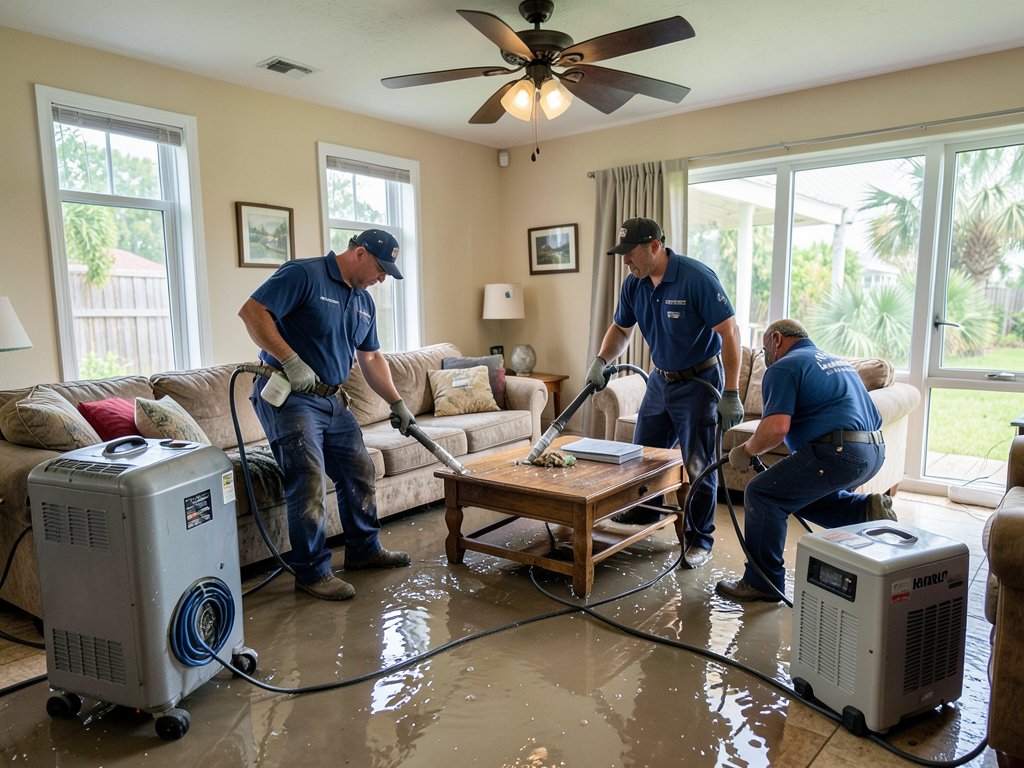
Effective flood recovery requires industrial-grade equipment and a methodical approach that addresses both visible water and trapped moisture. At Fortress Water Damage Restoration Tampa, we deploy truck-mounted extractors capable of removing thousands of gallons per hour, paired with low-grain refrigerant dehumidifiers that pull moisture from materials faster than Tampa's ambient humidity can replace it.

The process begins with safety assessment. We test for electrical hazards, structural stability, and contamination levels before any occupant re-enters the space. Floodwater in Tampa often contains sewage from overwhelmed treatment systems, agricultural runoff from areas east of the city, and petroleum products washed from roadways. This Category 3 water requires antimicrobial treatment and complete removal of porous materials like carpeting, padding, and baseboards.

We then establish drying chambers using containment barriers and negative air pressure to prevent cross-contamination. Thermal imaging cameras map moisture migration through walls and ceilings, guiding placement of air movers and dehumidifiers. We monitor daily using moisture meters pressed into drywall, subfloors, and framing lumber. The target is below 15 percent moisture content, the threshold where microbial growth cannot sustain itself.

Structural drying in Tampa takes longer than in arid climates. Your exterior walls are absorbing humidity from outside while we are extracting it from inside. We adjust equipment positioning every 24 hours to account for this, focusing airflow on areas with the slowest drying curves.

Documentation is critical for insurance claims. We photograph every stage, log moisture readings in a bound daily report, and create detailed scope documents that justify each line item of remediation work.

Your First 72 Hours After Discovering Flood Damage

Steps to Take After a Flood in Tampa – Your Complete Recovery Roadmap to Protect Your Property and Health
01

Immediate Safety and Stabilization

Before entering any flooded space, shut off electricity at the main breaker panel if you can reach it safely from a dry area. Do not walk through standing water with power still flowing. Contact your utility company if the meter or panel is submerged. Once power is confirmed off, document the damage with photos and video for your insurance claim. Move unaffected belongings to a dry, elevated location to prevent secondary damage from lingering humidity.
02

Water Extraction and Containment

Professional extraction removes water within hours, not days. Portable pumps and truck-mounted vacuum systems pull standing water from floors, while weighted extraction wands press into carpeting and padding to remove water held in fibers. We establish containment barriers to isolate affected rooms, preventing humidity migration into dry areas. Dehumidifiers and air movers are positioned based on moisture mapping data, creating controlled airflow patterns that accelerate evaporation without spreading contaminants.
03

Monitoring and Verification

Drying continues until moisture meters confirm all structural materials have returned to normal levels for Tampa's climate zone. We test drywall, framing studs, subflooring, and insulation daily, adjusting equipment as readings drop. Once verified dry, we conduct antimicrobial fogging to treat any surfaces exposed to contaminated water. Only then can reconstruction begin. You receive a certificate of drying completion that satisfies insurance requirements and protects you from future moisture-related claims disputes.

Why Tampa Homeowners Choose Local Flood Recovery Experts

Flood recovery is not a generic service. The techniques that work in Phoenix or Denver will fail in Tampa because our climate and construction methods differ fundamentally. We understand that most Tampa homes sit on post-tension slab foundations, which means you cannot simply rip out all the flooring without risking structural damage to the tensioned cables embedded in concrete. This requires selective demolition and strategic drying that preserves your foundation integrity.

Our crews are familiar with Tampa's building codes, including the windstorm provisions that govern reconstruction after hurricane-related flooding. We know which permits are required for drywall replacement, electrical work, and structural repairs. That knowledge keeps your project moving without the delays that occur when out-of-area contractors encounter unfamiliar regulations.

Insurance companies scrutinize flood claims because the costs are high and fraud is common. We have worked with every major carrier operating in Hillsborough County. Our detailed documentation and adherence to IICRC S500 water damage standards give adjusters the confidence to approve claims without prolonged disputes. We provide line-item estimates that match Xactimate pricing, the software most carriers use to evaluate bids.

You also gain access to our relationships with licensed plumbers, electricians, and mold remediation specialists who respond quickly when your project requires coordinated trades. Flood recovery often uncovers pre-existing issues like outdated wiring or corroded plumbing that must be addressed during reconstruction. We manage those subcontractors so you are not coordinating multiple schedules or dealing with finger-pointing when problems arise.

Choosing a local company means someone will still be here in five years if you discover latent damage or need documentation for a future home sale.

What Tampa Homeowners Can Expect During Flood Recovery

Response Time and Availability

We dispatch crews 24 hours a day, seven days a week because flood damage does not wait for business hours. Most emergency calls receive an on-site response within 90 minutes across the greater Tampa metro, including Carrollwood, Brandon, and Town 'n' Country. Our first responders arrive with truck-mounted extraction equipment and portable generators to begin water removal immediately, even if your power is still out. Speed matters because every hour of standing water adds days to the drying timeline and increases the scope of demolition required. We prioritize emergency stabilization so your property stops deteriorating while we develop a comprehensive recovery plan with your insurance adjuster.

Assessment and Scope Development

Your initial assessment includes moisture mapping with thermal imaging and invasive probing to determine how far water has traveled through walls and flooring systems. We classify the water category based on contamination level, which dictates which materials can be saved and which must be removed for health reasons. You receive a written scope document that breaks down each phase of work, estimated duration, and materials required. This scope is reviewed with your insurance adjuster before demolition begins, preventing disputes over what is covered. We explain the difference between emergency mitigation costs, which are typically covered with minimal depreciation, and full reconstruction costs, which may be subject to policy limits and deductibles.

Quality of Restoration Work

Drying is not complete when surfaces feel dry to the touch. We use calibrated moisture meters and hygrometers to verify materials have reached equilibrium with Tampa's ambient conditions, typically 10 to 12 percent moisture content for wood framing and below one percent for concrete slabs. All antimicrobial treatments are applied using EPA-registered products safe for occupied spaces after the appropriate dwell time. Reconstruction matches existing materials and finishes wherever possible, with upgrades available if you choose to improve beyond pre-loss condition. We do not consider a project complete until you have walked the space, confirmed all punch list items are addressed, and received copies of all drying logs and treatment records for your permanent files.

Post-Recovery Support and Monitoring

After reconstruction is complete, we provide guidance on preventing future water intrusion, including grading improvements, sump pump installation, and backflow preventer upgrades. Many flood losses reveal systemic issues like inadequate yard drainage or failing foundation seals that will cause repeat events unless corrected. We coordinate with civil engineers or foundation specialists when needed to develop permanent solutions. You also receive a humidity monitoring guide specific to Tampa's climate, helping you recognize early warning signs of trapped moisture or recurrent leaks. If you detect musty odors or notice new staining within the first year after restoration, we return to investigate at no diagnostic charge because our work is only successful if your home remains dry and healthy long-term.

Frequently Asked Questions

You Have Questions,
We Have Answers

What steps to take after a flood? +

First, ensure everyone is safe and avoid standing water near electrical outlets. Document the damage with photos and video for your insurance claim. Contact your insurance company immediately. Remove standing water as quickly as possible to prevent mold growth, which thrives in Tampa's humidity. Move wet furniture and belongings to a dry area. Call a professional water damage restoration company within 24 hours. Do not attempt electrical repairs yourself. Begin ventilation by opening windows if weather permits. Save all receipts for emergency repairs and temporary housing.

What should be done after the flood? +

After a flood, prioritize safety and structural assessment. Wear protective gear when entering the property. Check for structural damage before entering fully. Pump out standing water and start the drying process immediately. Tampa's high humidity makes rapid drying critical to prevent mold within 24 to 48 hours. Discard porous materials like drywall and insulation that absorbed contaminated water. Sanitize all surfaces with antimicrobial solutions. Contact a licensed restoration professional to assess hidden moisture in walls and subfloors. File your insurance claim promptly with complete documentation.

What step should be taken when there is a flood? +

When flooding occurs, evacuate to higher ground if water is rising. Turn off electricity at the main breaker if you can do so safely. Do not walk through moving water. Once the water recedes and authorities say it is safe, document all damage immediately. Remove standing water within the first 24 hours to minimize damage. Tampa's subtropical climate accelerates bacterial growth and mold formation. Contact your insurance adjuster and a certified water damage restoration company. Separate salvageable items from contaminated materials. Begin ventilation and dehumidification immediately.

What do people need after a flood? +

After a flood, people need immediate access to clean drinking water, safe shelter, and medical care if injured. You need protective equipment like gloves and boots when entering flooded areas. Emergency supplies include flashlights, batteries, and first aid kits. For property recovery, you need professional water extraction, dehumidifiers, and antimicrobial treatments. Tampa residents need rapid mold remediation services due to the humid climate. You also need documentation for insurance claims, temporary housing arrangements, and emotional support. Financial assistance programs may help cover restoration costs and living expenses during recovery.

How long to dry out a house after a flood? +

Drying time depends on the extent of flooding and materials affected. Surface drying may take three to five days with proper equipment. Complete structural drying in Tampa typically requires seven to fourteen days due to high ambient humidity. Concrete foundations and thick walls take longer. Professional restoration companies use industrial dehumidifiers, air movers, and moisture meters to track progress. Hidden moisture in wall cavities can linger for weeks without proper equipment. Rushing the process invites mold growth. A certified technician should verify complete dryness with moisture readings before reconstruction begins.

What are the 5 steps of disaster recovery? +

The five steps of disaster recovery are assessment, stabilization, water removal, drying and dehumidification, and restoration. First, assess the damage scope and safety hazards. Second, stabilize the property by stopping additional water intrusion. Third, extract standing water using pumps and vacuums. Fourth, dry all affected materials with commercial dehumidifiers and air movers. This step is critical in Tampa's humid environment. Fifth, restore and rebuild damaged structures. Each phase requires specialized equipment and expertise. Professional restoration companies follow this protocol to ensure thorough recovery and prevent secondary damage like mold colonization.

What are the 5 steps of preparedness? +

The five steps of preparedness are planning, assembling supplies, staying informed, securing your property, and practicing your plan. Create an evacuation plan with designated meeting points. Stock emergency supplies including water, non-perishable food, medications, and important documents in waterproof containers. Monitor weather alerts through local Tampa news and NOAA weather radio. Secure outdoor furniture and install flood barriers if you live in low-lying areas near the Hillsborough River. Practice your evacuation route annually. Know your flood zone designation and review your insurance policy. Keep your vehicle fueled during hurricane season.

Do you have to throw everything away after a flood? +

Not everything requires disposal after a flood. Non-porous items like metal, glass, and hard plastics can be sanitized and saved. Wood furniture may be salvageable if dried quickly. However, porous materials like carpet, padding, drywall, and insulation absorb contaminated water and must be discarded. Upholstered furniture soaked by floodwater cannot be fully sanitized. Mattresses and pillows should be thrown away. In Tampa's humid climate, any material holding moisture becomes a mold risk within 48 hours. When in doubt, consult a restoration professional. Insurance may cover replacement costs for destroyed items.

What are the 10 precautions of flood? +

Ten flood precautions include knowing your flood zone, purchasing flood insurance, creating an evacuation plan, assembling emergency supplies, elevating utilities and appliances, installing backflow valves, keeping gutters clean, grading your yard away from the foundation, securing important documents in waterproof containers, and monitoring weather alerts. Tampa residents near the bay or rivers face higher risk during tropical storms. Trim trees to prevent debris damage. Move vehicles to higher ground when flooding threatens. Never drive through standing water. Keep a battery-powered radio for updates. Anchor outdoor items. Review your insurance policy annually.

What are 5 safety tips for floods? +

Five flood safety tips are never walk through moving water, turn off utilities before evacuating, avoid contact with floodwater due to contamination, do not drive through flooded roads, and wait for official clearance before returning home. Six inches of moving water can knock you down. Floodwater in Tampa often contains sewage, chemicals, and bacteria. Submerged vehicles can stall and trap occupants. Once home, wear protective gear when cleaning. Use generators outdoors only to prevent carbon monoxide poisoning. Document damage before cleanup begins. Contact professionals for safe water extraction and structural assessment.

How Tampa's Gulf Coast Climate Accelerates Flood Damage Timelines

Tampa's average relative humidity hovers near 75 percent year-round, climbing above 85 percent during summer afternoons when afternoon thunderstorms dump two inches of rain in under an hour. That ambient moisture slows evaporation from flooded structures, meaning your home takes longer to dry than identical damage would in Atlanta or Charlotte. The warm temperatures, often in the 80s even in winter months, create ideal conditions for microbial amplification. Mold spores germinate within 24 to 48 hours on wet drywall, and colonies become visible within 72 hours. This compressed timeline means the difference between minor remediation and full gut demolition often comes down to how quickly you start professional drying after discovering flood damage.

Our crews train specifically on Tampa's housing stock, which includes a high percentage of concrete block construction and stucco exteriors that trap moisture differently than wood-frame homes in other regions. We understand how water migrates through the hollow cores of CMU blocks and how to inject drying air into those cavities without damaging exterior finishes. Many of our technicians are IICRC-certified in water damage restoration and applied structural drying, credentials that require continuing education and adherence to national standards. That training combined with local experience means we recognize the difference between cosmetic water staining and structural compromise in the moment, making decisions that protect your safety and your insurance coverage without unnecessary demolition.
Water Damage Restoration Services in The Tampa Area

We proudly serve the entire Tampa area with rapid-response water damage restoration services. Whether you’re downtown, in the suburbs, or operating a business near the bay, our expert team is just minutes away. Use the map below to view our service zone or find our nearest location. We’re ready to respond wherever you need us. Your peace of mind is only a call or click away.

Address:
Fortress Water Damage Restoration Tampa, 4830 W Kennedy Blvd #600, Tampa, FL, 33609

Additional Services We Offer

Our news updates

Latest Articles & News from The Blogs

The First 4 Hours After a Pipe Bursts in Your Gibsonton House When water starts spraying from a broken pipe…

The First 4 Hours After a Pipe Bursts in Your Gibsonton House

The First 4 Hours After a Pipe Bursts in Your Gibsonton House When water starts spraying from a broken pipe…

A Homeowner Guide to Choosing the Best Dehumidifier for Humidity Control in Seffner

A Homeowner Guide to Choosing the Best Dehumidifier for Humidity Control in Seffner Living in Seffner means dealing with Florida’s…

Why Your Kids Keep Sneezing After a Small Leak in Your Seffner Home

Why Your Kids Keep Sneezing After a Small Leak in Your Seffner Home Your child wakes up sneezing again. You…

Contact Us

Every hour matters when floodwater is inside your home. Call Fortress Water Damage Restoration Tampa now at (656) 219-8088 for 24/7 emergency response. We will dispatch a crew immediately to stop the damage, document your loss, and begin professional drying.