




Menu

Emergency Washing Machine Overflow Cleanup in Tampa – 24/7 Response in Under 60 Minutes

When your washing machine floods your home, you need immediate water extraction and structural drying to prevent mold growth in Tampa's humid climate. Fortress Water Damage Restoration Tampa dispatches certified technicians to your door fast, with industrial-grade equipment ready to restore your home before permanent damage sets in.

Slider Image 1
Slider Image 2
Slider Image 3
Slider Image 4
Slider Image 5
Slider Image 7
Slider Image 8
Slider Image 9
Slider Image 10
Slider Image 11

Why Washing Machine Overflows Cause Rapid Damage in Tampa Homes

A washing machine can discharge 15 to 20 gallons per minute when a hose ruptures or a drain line backs up. In Tampa's climate, where indoor humidity already hovers near 60 percent year-round, that water does not just sit on your tile or hardwood. It wicks into baseboards, seeps under cabinets, and saturates drywall within hours.

You might see standing water in your laundry room, but the real threat is what you cannot see. Water migrates through floor joists, especially in older Tampa homes built on slab foundations with minimal vapor barriers. The subtropical heat accelerates evaporation, which sounds helpful until you realize that moisture is now trapped inside your walls. Within 24 to 48 hours, mold spores begin colonizing. Within 72 hours, you are looking at structural wood rot and potential electrical hazards if water reaches outlets or service panels.

Washing machine flood cleanup services are not about mopping up visible water. Emergency washer flood remediation means stopping migration, extracting moisture from porous materials, and using thermal imaging to verify complete drying. Tampa's clay-heavy soil also creates hydrostatic pressure against foundation walls, which means exterior groundwater can compound the problem if your slab has existing microcracks.

If your washer overflowed in the last few hours, you are still in the critical window. Washer water damage restoration works best when you act before secondary damage multiplies your repair costs. The longer water sits, the more categories of damage you are paying to fix.

Why Washing Machine Overflows Cause Rapid Damage in Tampa Homes
How Professional Washing Machine Leak Water Extraction Works

How Professional Washing Machine Leak Water Extraction Works

You cannot fix a washing machine overflow with towels and a shop vacuum. Professional laundry machine overflow water removal starts with source control. We shut off the water supply, verify the appliance is de-energized, and identify whether the flood originated from a supply line failure, drain clog, or pump malfunction. This matters because each scenario creates different contamination categories under IICRC S500 standards.

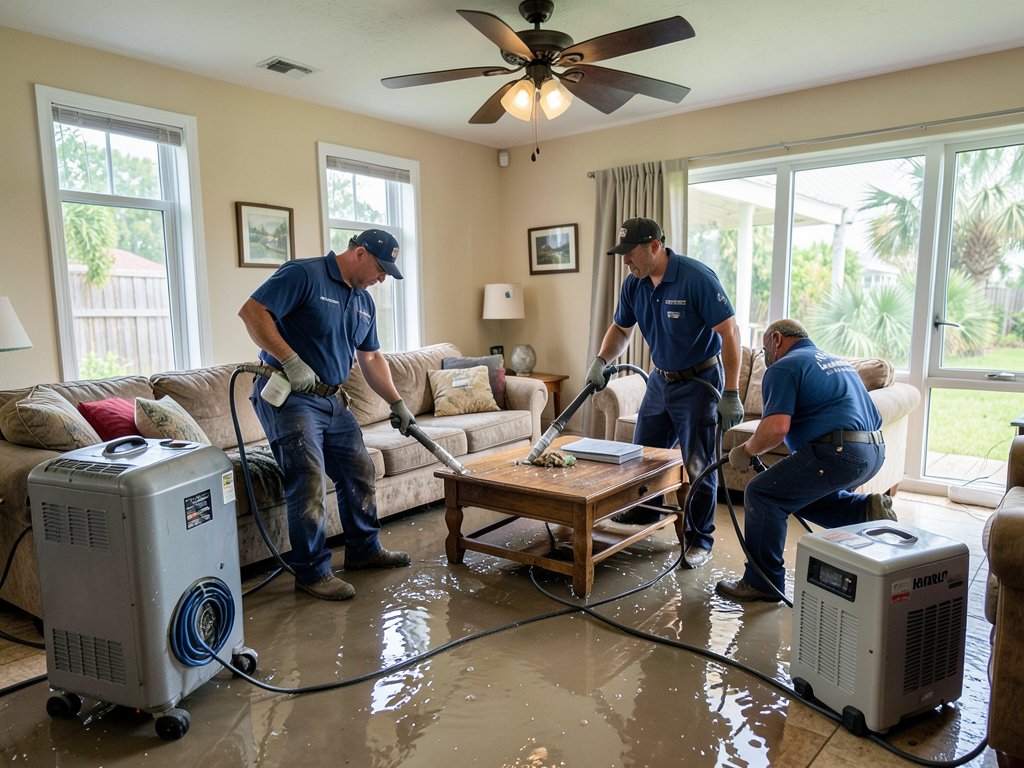
Next comes extraction using truck-mounted pumps capable of pulling hundreds of gallons per hour. We remove standing water first, then deploy weighted extraction tools that press into carpet padding and subfloors to pull moisture from below the surface. Hardwood floors require special attention. We monitor moisture content with pin-type and pinless meters because wood expands when wet, and improper drying causes cupping or crowning that requires replacement.

After extraction, we position commercial air movers and low-grain refrigerant dehumidifiers. Air movers create rapid airflow across wet surfaces, accelerating evaporation. Dehumidifiers pull that moisture out of the air before it condenses elsewhere. We measure grains per pound and relative humidity every 12 hours, adjusting equipment placement based on psychrometric data. This is not guesswork. We dry to ANSI/IICRC S500 standards, which specify target moisture levels for each material class.

Thermal imaging cameras reveal hidden moisture in wall cavities and under cabinets. If water reached drywall more than two feet above the floor, we often recommend controlled demo to prevent trapped moisture from creating long-term mold issues. Tampa's building codes require proper ventilation and moisture barriers during reconstruction, which we coordinate if structural repairs are needed. You get documentation for insurance, including moisture maps and daily drying logs.

What Happens When You Call for Washer Flood Cleanup

Emergency Washing Machine Overflow Cleanup in Tampa – 24/7 Response in Under 60 Minutes
01

Immediate Dispatch and Assessment

We answer your call 24/7 and dispatch a response team to your Tampa address within 60 minutes. While en route, we ask about the water source, how long it has been flowing, and what areas are affected. Upon arrival, our technician identifies the appliance failure point, stops active water flow, and performs a room-by-room inspection using moisture meters and thermal imaging. You receive a verbal overview of damage severity and the extraction plan before we move equipment inside.
02

Water Removal and Monitoring

We extract all standing water using high-capacity pumps, then transition to weighted extraction wands for carpet and padding. Air movers and dehumidifiers are positioned based on airflow dynamics and material saturation levels. We take initial moisture readings in floors, walls, and baseboards, then return every 12 to 24 hours to log progress. Equipment runs continuously, and we adjust placement as readings drop. This phase typically lasts three to five days depending on material type and saturation depth.
03

Final Verification and Clearance

Drying is complete when moisture readings match unaffected reference areas in your home. We document final readings with photos and generate a certificate of drying for your insurance claim. If any materials remain above acceptable moisture content, we extend drying or recommend selective removal. You receive a full report showing before-and-after data, equipment logs, and any recommendations for appliance repair or plumbing upgrades to prevent future washing machine overflows.

Why Tampa Homeowners Trust Fortress Water Damage Restoration for Washer Floods

Washing machine overflows happen without warning, often while you are at work or asleep. You need a team that understands Tampa's construction methods, from the concrete block walls common in Seminole Heights to the pier-and-beam foundations in older Ybor City homes. We know how water behaves in these structures, and we know which materials require aggressive drying versus controlled humidity reduction.

Our technicians hold IICRC certifications in Water Damage Restoration and Applied Structural Drying. That training matters when you are deciding whether to remove baseboards, pull carpet, or open wall cavities. We do not over-demo to inflate costs, and we do not under-dry to finish fast. We follow science-based drying protocols and provide third-party documentation that satisfies insurance adjusters and mortgage lenders.

We also work directly with your insurance carrier. Most washer floods fall under sudden and accidental discharge coverage, but claim approval depends on proper documentation. We photograph damage, log moisture readings, and provide detailed estimates that match Xactimate pricing. You are not navigating the claim alone, and you are not waiting weeks to start drying while mold takes hold.

Tampa's humidity makes speed critical. We stock enough equipment to handle multi-room floods without waiting on rentals. Our warehouse is local, so if we need additional air movers or a larger dehumidifier, we retrieve it within the hour. When you call Fortress Water Damage Restoration Tampa, you get a team that lives and works in this climate. We have dried hundreds of washer floods in Tampa homes, and we know what works here.

What to Expect During Emergency Washer Water Damage Restoration

Response Time and Availability

We operate 24 hours a day, 365 days a year, because washing machine floods do not wait for business hours. When you call, you speak with a live technician, not an answering service. We dispatch immediately and arrive at most Tampa addresses within 60 minutes. Our trucks carry extraction pumps, air movers, dehumidifiers, moisture meters, and thermal cameras, so we begin mitigation on the first visit. You do not wait days for equipment delivery or schedule conflicts. If your washer flooded overnight, we are pulling water by sunrise.

Damage Assessment and Documentation

Our initial inspection maps all affected areas using moisture meters and infrared cameras. We check walls, cabinets, flooring, and subfloors to determine saturation depth. You receive a written scope of work that explains what materials need drying, what requires removal, and what remains unaffected. We photograph everything and create a moisture map showing readings in grains per pound. This documentation is essential for insurance claims. We also identify the failure point, whether it is a burst hose, clogged drain, or faulty pump, so you can coordinate appliance repair separately.

Drying Quality and Completion Standards

We do not remove equipment based on appearance. Drying is complete when moisture content readings match unaffected reference areas in your home. We monitor daily, adjusting airflow and dehumidification as needed. Hardwood floors are dried slowly to prevent warping. Drywall is verified at multiple heights. Carpet padding is checked with penetrating probes. When readings stabilize within IICRC guidelines, we document final conditions with photos and generate a certificate of completion. You get a full report showing every reading taken, equipment runtime hours, and any materials that required removal.

Post-Mitigation Recommendations and Prevention

After drying is verified, we provide a summary of what caused the overflow and how to prevent it from happening again. Most washer floods originate from aging rubber hoses, which should be replaced every five years, or from clogged drain lines caused by detergent buildup and lint. We recommend installing a washing machine pan with a drain line and an automatic shut-off valve that stops water flow when the pan fills. If structural repairs are needed, we coordinate with licensed contractors and provide referrals. You also receive digital copies of all documentation for your records and future home sales.

Frequently Asked Questions

You Have Questions,
We Have Answers

How to clean a washing machine overflow pipe? +

Turn off the water supply to your washing machine immediately. Disconnect the overflow pipe from the back of the unit. Use a wet-dry vacuum to suction out standing water and debris inside the pipe. Flush the pipe with hot water mixed with a mild detergent to break down soap scum and lint buildup. For stubborn clogs in Tampa's humid climate, use a plumbing snake to clear blockages. Rinse thoroughly with clean water. Reattach the pipe and check for leaks. If water damage occurred during the overflow, act fast to prevent mold growth in your flooring or drywall.

How do you remove black mold from a washing machine rubber seal? +

Black mold thrives on washing machine rubber seals due to Tampa's high humidity and moisture retention. Mix equal parts white vinegar and water in a spray bottle. Spray the affected seal thoroughly and let it sit for 10 minutes. Scrub with a stiff brush or old toothbrush to lift mold from the rubber grooves. Wipe clean with a microfiber cloth. For persistent mold, use a diluted bleach solution (one part bleach to four parts water), but rinse immediately to prevent rubber degradation. Always leave the washer door open after use to reduce moisture buildup and future mold growth.

How to clean up a washing machine flood? +

Stop the machine immediately and turn off the water supply. Unplug the unit to prevent electrical hazards. Remove standing water using a wet-dry vacuum or towels. Pull the washing machine away from the wall to check for water under and behind the unit. Extract water from carpets, baseboards, and subflooring quickly. Tampa's humidity accelerates mold growth within 24 to 48 hours, so time matters. Use fans and dehumidifiers to dry affected areas. If water has soaked drywall or flooring, professional extraction and drying equipment may be necessary to prevent structural damage and microbial contamination.

What to do if the washing machine overflows? +

Shut off the water supply valves behind the machine immediately. Stop the wash cycle and unplug the unit. Remove standing water from the floor using towels or a wet-dry vacuum. Check the drain hose for kinks, clogs, or disconnections. Inspect the overflow pipe and drain pump filter for lint buildup or foreign objects. In Tampa homes, hair, soap residue, and lint accumulate faster due to frequent laundry cycles. Move the machine to assess water damage to flooring or walls. If overflow caused significant water intrusion, contact a water damage restoration professional within hours to prevent mold and structural issues.

Can I pour bleach down a washing machine drain pipe? +

You can pour a small amount of bleach down a washing machine drain pipe to disinfect and eliminate odors, but use caution. Mix one cup of bleach with a gallon of hot water and pour slowly. Never mix bleach with other cleaners, especially ammonia or vinegar, as this creates toxic fumes. Bleach can corrode older metal pipes or damage rubber seals if used excessively. In Tampa's older plumbing systems, frequent bleach use may weaken pipes over time. For routine maintenance, use enzyme-based drain cleaners or baking soda and vinegar to break down organic buildup without harsh chemicals.

How do you clean the overflow pipe? +

Disconnect the overflow pipe from your appliance. Use a wet-dry vacuum to remove loose debris and standing water. Flush the pipe with hot water and dish soap to dissolve grease and soap scum. For stubborn clogs, insert a plumbing snake or flexible brush to scrape the interior walls. Rinse thoroughly with clean water until it drains freely. In Tampa's humid environment, moisture and lint buildup happen quickly, so clean overflow pipes every three to six months. If the pipe shows cracks or leaks, replace it immediately to prevent water damage to floors, cabinets, or walls during future overflows.

How do you deep clean a washing machine rubber seal? +

Remove the detergent dispenser and wash it separately in hot, soapy water. Pull back the rubber door seal to expose hidden folds where mold and mildew hide. Mix equal parts white vinegar and water, then spray the entire seal. Let it sit for 15 minutes. Scrub with a stiff brush or toothbrush, focusing on grooves and crevices. Wipe clean with a damp cloth. For stubborn residue, use a baking soda paste. Rinse thoroughly and dry with a towel. In Tampa's muggy climate, leave the washer door open between loads to prevent moisture accumulation and mold regrowth.

What kills mold better, bleach or vinegar? +

Bleach kills mold faster on non-porous surfaces, but vinegar penetrates porous materials better. Bleach disinfects and whitens but releases harsh fumes and can damage rubber seals or fabrics over time. Vinegar is safer, non-toxic, and effective on most household mold, though it takes longer to work. For washing machine seals and drains, vinegar is the better choice for regular maintenance. Use bleach only for heavy mold contamination and rinse immediately. In Tampa's humid conditions, prevention matters more than the cleaner you choose. Keep surfaces dry, ventilate laundry areas, and clean seals weekly to stop mold before it starts.

Can vinegar damage the washing machine seal? +

Vinegar does not damage washing machine seals when used correctly. White vinegar is acidic enough to dissolve soap scum and kill mold but mild enough to avoid degrading rubber. Use a diluted solution (equal parts vinegar and water) and avoid prolonged soaking. Rinse the seal thoroughly after cleaning. Problems arise when vinegar is used undiluted repeatedly or left sitting for extended periods. In Tampa's climate, weekly vinegar wipes prevent mold buildup without harming seals. Avoid harsh chemicals like undiluted bleach or ammonia-based cleaners, which break down rubber faster and cause cracking, leaks, and premature seal failure.

How Tampa's Humidity and Older Homes Increase Washer Flood Damage Risk

Tampa's year-round humidity keeps indoor moisture levels high, even with air conditioning running. When a washing machine dumps 50 gallons into your laundry room, that water evaporates faster in warm air, but the moisture has nowhere to go except into walls, insulation, and subflooring. Homes built before 1980, common in neighborhoods like Hyde Park and Palma Ceia, often lack proper vapor barriers in slab foundations. Water wicks laterally into adjacent rooms and saturates baseboards made of pressed wood, which swells and disintegrates when wet. The combination of high ambient humidity and porous building materials means mold growth starts faster here than in drier climates.

Fortress Water Damage Restoration Tampa understands how local construction styles respond to water intrusion. We work in historic districts where permits and preservation rules affect drying methods. We know which Tampa homes have crawl spaces versus slab foundations, which changes how we access subfloors. Our team also coordinates with Hillsborough County building inspectors when structural repairs require permits. Choosing a local provider means faster response, familiarity with regional building codes, and relationships with adjusters who handle Tampa claims daily. We live here, we work here, and we know how to dry homes in this climate.
Water Damage Restoration Services in The Tampa Area

We proudly serve the entire Tampa area with rapid-response water damage restoration services. Whether you’re downtown, in the suburbs, or operating a business near the bay, our expert team is just minutes away. Use the map below to view our service zone or find our nearest location. We’re ready to respond wherever you need us. Your peace of mind is only a call or click away.

Address:
Fortress Water Damage Restoration Tampa, 4830 W Kennedy Blvd #600, Tampa, FL, 33609

Additional Services We Offer

Our news updates

Latest Articles & News from The Blogs

The First 4 Hours After a Pipe Bursts in Your Gibsonton House When water starts spraying from a broken pipe…

The First 4 Hours After a Pipe Bursts in Your Gibsonton House

The First 4 Hours After a Pipe Bursts in Your Gibsonton House When water starts spraying from a broken pipe…

A Homeowner Guide to Choosing the Best Dehumidifier for Humidity Control in Seffner

A Homeowner Guide to Choosing the Best Dehumidifier for Humidity Control in Seffner Living in Seffner means dealing with Florida’s…

Why Your Kids Keep Sneezing After a Small Leak in Your Seffner Home

Why Your Kids Keep Sneezing After a Small Leak in Your Seffner Home Your child wakes up sneezing again. You…

Contact Us

If your washing machine is flooding right now, stop the water and call Fortress Water Damage Restoration Tampa at (656) 219-8088. We dispatch immediately, arrive fast, and start extracting water before it destroys your floors and walls. Do not wait. Every hour increases damage and cost.