





Menu

Cupping or Buckling Wood Floors in Tampa – Expert Diagnosis and Permanent Moisture Control Solutions

We identify the hidden moisture sources destroying your hardwood and deploy industrial-grade drying protocols to stop cupping or buckling wood floors before they require full replacement across Tampa Bay.

Slider Image 1
Slider Image 2
Slider Image 3
Slider Image 4
Slider Image 5
Slider Image 7
Slider Image 8
Slider Image 9
Slider Image 10
Slider Image 11

Why Tampa's Climate Turns Perfect Hardwood Into Warped Disasters

You walk into your living room and notice the hardwood planks no longer sit flat. The edges have lifted. The boards feel spongy underfoot. What started as a smooth, beautiful floor now looks like a wave pattern running through your home.

Tampa's humidity and storm exposure create the perfect conditions for cupping or buckling wood floors. When moisture penetrates from below or above, the wood fibers absorb water unevenly. The planks swell, distort, and push against each other. You end up with swollen wood planks that peak at the joints or lifting floorboards that no longer lock together.

The problem accelerates in older Tampa homes where crawl spaces trap moisture year-round. A small plumbing leak under the slab goes unnoticed for weeks. A roof leak during hurricane season saturates the subfloor. Even high indoor humidity from poor ventilation can cause warped hardwood flooring over time.

Cupping happens when the edges of the plank rise higher than the center. The board forms a concave curve. Buckling occurs when the entire plank lifts away from the subfloor, creating raised wood floor edges that catch your foot as you walk. Both conditions signal active or recent moisture intrusion.

Ignoring peaking hardwood joints leads to permanent structural damage. The wood loses its ability to return to its original shape. Mold colonies establish themselves in the damp subfloor. The longer moisture sits, the more expensive the fix becomes. Fortress Water Damage Restoration Tampa treats the source, not just the symptom, so your floors actually recover instead of just looking better for a few months.

Why Tampa's Climate Turns Perfect Hardwood Into Warped Disasters
How We Stop Moisture at the Source and Reverse Wood Floor Damage

How We Stop Moisture at the Source and Reverse Wood Floor Damage

We do not sand down cupping or buckling wood floors and call it fixed. That approach ignores the moisture driving the distortion. The boards will warp again within months.

Our process starts with moisture mapping using thermal imaging cameras and pin-type moisture meters. We measure moisture content at multiple depths in the wood and subfloor. This data tells us whether the water came from above, below, or through the slab. We trace the exact path of intrusion.

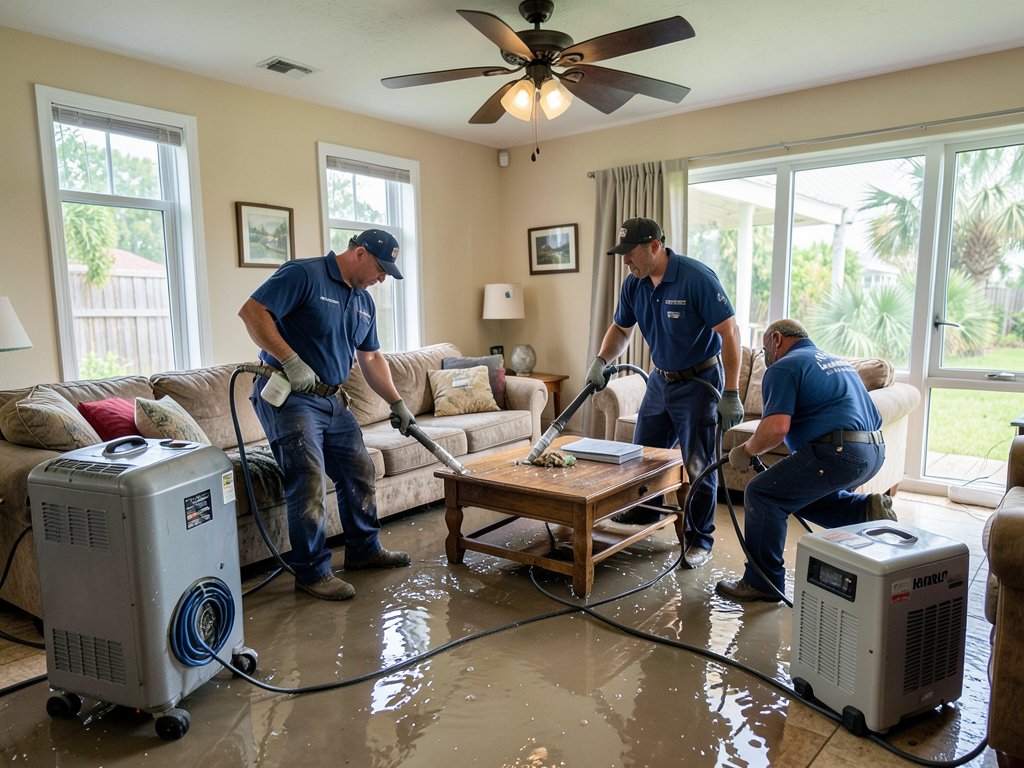
Once we identify the source, we deploy trailer-mounted desiccant dehumidifiers and floor mat drying systems. These tools pull moisture out of the wood slowly and evenly. Rapid drying causes the planks to crack or split. Controlled drying allows the wood fibers to contract uniformly, which lets the boards return to their original profile.

For concrete slab moisture, we use specialty injection systems that create a vapor barrier beneath the flooring. This prevents ground moisture from wicking up through the concrete and into the wood. For crawl space issues, we install vapor barriers and address drainage problems that allow standing water to accumulate.

We monitor moisture levels daily using data loggers. The wood must reach equilibrium moisture content, which in Tampa typically sits between 9 and 12 percent depending on the season. Pulling moisture below that range causes shrinkage and gaps. Leaving it above that range invites future warping.

After drying, we assess whether the planks have returned to acceptable flatness tolerances. Minor cupping often self-corrects. Severe buckling may require selective board replacement. We never guess. We measure, document, and explain exactly what your floor needs to stay flat long-term.

What Happens When You Call Us About Warped Floors

Cupping or Buckling Wood Floors in Tampa – Expert Diagnosis and Permanent Moisture Control Solutions
01

Initial Moisture Assessment

We arrive with calibrated moisture meters and infrared cameras to map the affected area. You get a moisture content reading for every section of flooring, the subfloor beneath, and any adjacent walls. This tells us whether you have an active leak, residual moisture from a past event, or chronic humidity infiltration. We trace the water to its origin point, whether that is a pinhole pipe leak, slab seepage, or exterior grading failure.
02

Controlled Drying Deployment

We place commercial-grade dehumidifiers and air movers in a calculated pattern based on the moisture map. For under-floor moisture, we use injecti-dry systems that force warm, dry air beneath the planks without removing them. The equipment runs continuously while we monitor moisture levels twice daily. Drying happens in phases to prevent shock damage to the wood. Tampa's humidity requires longer drying cycles than drier climates, so we adjust our protocols to match local conditions.
03

Final Inspection and Prevention

Once the wood reaches target moisture content, we remove the equipment and reassess the floor's profile. We measure flatness using a straightedge and document any remaining deviations. If cupping has reversed, we explain how to maintain stable indoor humidity. If planks remain buckled, we outline repair options and provide a written scope of work. You also receive a detailed report showing before and after moisture readings, which helps with insurance claims.

Why Tampa Homeowners Choose Local Moisture Control Experts

National restoration chains follow the same drying protocol in Tampa that they use in Phoenix. That does not work. Tampa's dewpoint, rainfall patterns, and groundwater table require different equipment settings, longer drying times, and humidity control strategies that account for year-round moisture infiltration.

Fortress Water Damage Restoration Tampa operates exclusively in the Tampa Bay area. We understand how the Hillsborough River floodplain affects homes near Seminole Heights. We know that properties in South Tampa with older clay sewer lines experience chronic foundation moisture. We recognize that Westchase homes built in the 1990s often have subfloor ventilation issues due to design trends at the time.

This local knowledge changes how we approach cupping or buckling wood floors. We do not assume the cause. We verify it based on the specific construction methods, soil conditions, and weather exposure common to your neighborhood.

Our equipment inventory includes dehumidifiers rated for high-humidity environments. Standard models cannot pull moisture effectively when outdoor humidity sits above 70 percent for months. We use desiccant-based units that work regardless of ambient conditions, which matters when you are drying a floor in July.

We also coordinate with local building inspectors when subfloor repairs require permits. We know which Tampa code sections apply to moisture barriers, crawl space ventilation, and structural wood replacement. This prevents delays and ensures the repair meets current standards.

You are not hiring a call center that dispatches the closest available crew. You are hiring a Tampa-based team that has dried hundreds of wood floors in the same humidity, the same soil, and the same building stock as your home. That experience translates to fewer surprises, faster results, and repairs that actually last.

What You Can Expect During the Restoration Process

Response Time and Scheduling

We dispatch a moisture assessment team within four hours of your call. The initial inspection takes 45 to 90 minutes depending on the size of the affected area. You receive a written moisture report and drying plan before we deploy equipment. If the situation requires emergency water extraction, we bring extraction units on the first visit. Drying equipment typically remains in place for five to ten days, with daily monitoring visits to adjust settings and track progress. We schedule equipment pickup within 24 hours of hitting target moisture levels.

How We Assess Your Floors

Our technicians use a combination of pin-type and pinless moisture meters to measure wood moisture content without causing additional damage. We take readings at the center and edges of affected planks to determine cupping severity. Thermal imaging cameras reveal hidden moisture in the subfloor, joists, or walls that visual inspection misses. We document floor flatness using a six-foot straightedge and measure deviations in fractions of an inch. You receive photos, moisture charts, and a written summary explaining what we found and why it happened.

The Final Result You Get

When drying is complete, your hardwood should return to a moisture content between 9 and 12 percent, which matches the equilibrium level for Tampa's climate. Minor cupping often flattens completely once moisture equalizes. Severe buckling may require sanding or board replacement, which we outline in a separate scope of work. You also receive a final moisture report showing that the wood and subfloor are dry. This documentation supports insurance claims and provides proof that the issue was properly addressed, not just cosmetically covered.

Ongoing Monitoring and Prevention

We provide humidity control recommendations tailored to your home's ventilation, HVAC capacity, and construction type. If crawl space moisture or slab vapor intrusion caused the damage, we connect you with trusted waterproofing contractors who can install permanent solutions. We also offer optional moisture monitoring services where we return every six months to recheck moisture levels in previously affected areas. This catches new leaks or humidity problems before they warp your floors again. Preventing future damage costs less than repeated repairs.

Frequently Asked Questions

You Have Questions,
We Have Answers

What is the difference between wood buckling and cupping? +

Cupping happens when the edges of wood planks rise higher than the center, creating a concave shape. Moisture absorbs into the bottom of the board faster than the top, causing uneven expansion. Buckling is more severe. The entire plank lifts away from the subfloor, often creating visible gaps or peaks. Buckling means the fasteners have failed or the wood expanded so much it has nowhere to go. In Tampa's humid climate, both issues stem from moisture intrusion, but buckling signals more aggressive water damage or improper installation. Cupping is surface level. Buckling is structural.

Will cupped hardwood floors flatten out? +

Sometimes. If you catch cupping early and eliminate the moisture source, floors can flatten as they dry. This takes weeks or months. Tampa's high humidity slows drying. Do not sand cupped floors immediately. The wood needs to reach equilibrium moisture content first. If you sand too soon, the floor may crown later as it continues drying. Use fans, dehumidifiers, and professional moisture meters to track progress. Severe cupping that persists after drying often requires sanding and refinishing. Patience is critical. Rushing the process creates worse problems.

What does a buckled hardwood floor look like? +

A buckled floor shows dramatic lifting. Planks pull away from the subfloor, creating raised humps or peaks that you can see and feel. Gaps appear between the floor and baseboard. In severe cases, entire sections tent upward. The damage looks chaotic, not uniform like cupping. Buckled floors often crack or splinter because the wood is under extreme stress. You may hear hollow sounds when walking over affected areas. Tampa homes with slab foundations see buckling after plumbing leaks or flooding. The visual is unmistakable. The floor looks broken, not just warped.

Can cupped wood floors be fixed? +

Yes, but success depends on severity and timing. Minor cupping caused by seasonal humidity can reverse with dehumidification and airflow. Moderate cupping may require professional drying, then sanding and refinishing once moisture content stabilizes. Severe cupping that has permanently deformed the wood means replacement. Tampa's humidity complicates repairs. You must fix the moisture source first, whether it is a leaky AC drain pan, poor crawl space ventilation, or storm water intrusion. Attempting cosmetic fixes without addressing the root cause guarantees the problem returns. Professional assessment prevents wasted money.

Will buckled hardwood floors go back to normal? +

Not always. Mild buckling caused by temporary water exposure may relax once the floor dries completely. The planks can settle back if the subfloor adhesive or fasteners still hold. Severe buckling that has torn fasteners or cracked boards requires replacement. Tampa homes built on concrete slabs face tougher odds. Once moisture migrates through the slab and buckles the floor, drying takes longer and damage runs deeper. Even if planks flatten, the subfloor may need remediation. Do not assume the floor will self-correct. Professional inspection determines whether drying or replacement is realistic.

Can wood floor cupping be reversed? +

Yes, if the wood has not reached its elastic limit. Remove the moisture source, then dry the floor slowly using dehumidifiers and air movers. Monitor moisture content with a pin or pinless meter. Tampa's ambient humidity requires aggressive dehumidification. Once the wood reaches 6 to 9 percent moisture content, the cupping should reduce. If cupping persists after full drying, light sanding can level the surface. Heavy sanding risks removing too much wear layer. Engineered hardwood has less room for correction than solid wood. Patience and proper drying reverse most cupping.

How much does it cost to repair cupping wood floors? +

Costs vary widely based on damage extent and floor type. Minor cupping treated with drying and dehumidification may cost a few hundred dollars if you act fast. Sanding and refinishing cupped solid hardwood ranges from two to four dollars per square foot in the Tampa area. Full board replacement for severe cupping or buckling runs higher, especially if subfloor repairs are needed. Insurance may cover water damage repairs if the cause is sudden and accidental. Always document the damage and get professional moisture readings before starting work. Cost depends on speed and scope.

What would cause hardwood floors to cup? +

Moisture imbalance causes cupping. Water enters the wood from below through concrete slab vapor transmission, plumbing leaks, or crawl space humidity. Tampa's heavy summer rains and high water table make slab homes vulnerable. Improperly installed vapor barriers or missing moisture barriers under the floor allow water to migrate upward. Flooding, AC condensate leaks, or even mopping with too much water can trigger cupping. The bottom of the plank absorbs moisture faster than the top, causing expansion and the edges to lift. Fixing cupping means controlling moisture at the source.

Will a dehumidifier pull water from under the floor? +

A dehumidifier removes airborne moisture but does not pull water directly from beneath flooring. It lowers relative humidity, which helps the floor release trapped moisture into the air. This is a slow process. In Tampa, where humidity stays high year-round, dehumidifiers must run continuously to create a drying gradient. For water trapped under flooring or in the subfloor, you need professional drying equipment like floor mat systems or injectidry systems that force air beneath the surface. Dehumidifiers support drying but are not standalone solutions for water trapped below the floor.

How Tampa's Water Table and Storm Surge Risk Accelerate Wood Floor Damage

Tampa sits on a peninsula surrounded by Tampa Bay, Old Tampa Bay, and the Hillsborough River. The water table in many neighborhoods sits less than ten feet below the surface. This proximity to groundwater means slab moisture and crawl space humidity are constant threats to hardwood flooring. After heavy rains or tropical storms, the water table rises even closer to the surface, pushing moisture up through concrete slabs and into wood subfloors. Homes in flood-prone areas like Palma Ceia or near Bayshore Boulevard experience this cycle multiple times per year. The result is chronic cupping or buckling wood floors that never fully dry between weather events.

Fortress Water Damage Restoration Tampa works exclusively in this high-humidity, high-water-table environment. We use drying equipment and moisture control strategies designed for coastal climates where outdoor humidity rarely drops below 60 percent. Our technicians understand the construction methods used in Tampa homes from the 1950s through today, including the common subfloor ventilation failures in mid-century concrete block homes and the vapor barrier omissions in 1990s-era wood frame construction. This local expertise means we identify the true cause of warped hardwood flooring faster and deploy the correct fix the first time.
Water Damage Restoration Services in The Tampa Area

We proudly serve the entire Tampa area with rapid-response water damage restoration services. Whether you’re downtown, in the suburbs, or operating a business near the bay, our expert team is just minutes away. Use the map below to view our service zone or find our nearest location. We’re ready to respond wherever you need us. Your peace of mind is only a call or click away.

Address:
Fortress Water Damage Restoration Tampa, 4830 W Kennedy Blvd #600, Tampa, FL, 33609

Additional Services We Offer

Our news updates

Latest Articles & News from The Blogs

The First 4 Hours After a Pipe Bursts in Your Gibsonton House When water starts spraying from a broken pipe…

The First 4 Hours After a Pipe Bursts in Your Gibsonton House

The First 4 Hours After a Pipe Bursts in Your Gibsonton House When water starts spraying from a broken pipe…

A Homeowner Guide to Choosing the Best Dehumidifier for Humidity Control in Seffner

A Homeowner Guide to Choosing the Best Dehumidifier for Humidity Control in Seffner Living in Seffner means dealing with Florida’s…

Why Your Kids Keep Sneezing After a Small Leak in Your Seffner Home

Why Your Kids Keep Sneezing After a Small Leak in Your Seffner Home Your child wakes up sneezing again. You…

Contact Us

Call Fortress Water Damage Restoration Tampa at (656) 219-8088 right now. We will dispatch a moisture assessment team today, map the damage, and start drying your floors before the warping becomes permanent.