





Clearwater sits on a peninsula surrounded by Tampa Bay, the Gulf of Mexico, and the Intracoastal Waterway. This geography creates constant humidity averaging 75 percent year-round, which accelerates mold growth within 24 to 48 hours of water intrusion. The area's limestone bedrock and high water table mean basements flood easily during Florida's intense summer thunderstorms and tropical systems. Properties near Clearwater Beach, Island Estates, and Harbor Oaks face saltwater intrusion during storm surge events, which corrodes building materials faster than freshwater. Older homes in neighborhoods like North Greenwood and Skycrest were built before modern Florida Building Code flood mitigation requirements, leaving them vulnerable to plumbing failures and roof leaks. The combination of afternoon thunderstorms dropping two inches of rain in an hour, aging infrastructure, and homes built at or below base flood elevation creates a perfect environment for water damage. Clearwater averaged 51 inches of rainfall last year, with most falling between June and September. When water enters your property through a burst pipe, failed appliance, or compromised building envelope, every hour of delay increases repair costs and the risk of permanent structural damage.
Fortress Water Damage Restoration Tampa operates multiple response units serving Pinellas County, which means we reach Clearwater properties faster than regional franchises dispatching crews from Tampa or St. Petersburg. Our teams carry truck-mounted extraction systems and thermal imaging cameras to every job, finding hidden moisture in wall cavities and under flooring that handheld moisture meters miss. We staff certified water damage technicians trained in IICRC S500 standards, not subcontractors learning on your property. When your call comes in at 2 AM because a water heater failed or a toilet overflowed, our dispatcher sends a crew immediately, not a voicemail promising a callback. We document every phase of water removal and structural drying with photo evidence and moisture readings your insurance adjuster needs to approve your claim. Most Clearwater water damage jobs involve working with Citizens Property Insurance, Universal Property & Casualty, or other Florida carriers who demand specific documentation protocols. We know exactly what those adjusters require because we submit claims to them every week. Our crews arrive with commercial air movers, dehumidifiers, and antimicrobial treatments ready to deploy, not to evaluate whether they need equipment. We remove baseboards, drill weep holes, and set up drying chambers to pull moisture from structural materials before mold colonies establish. That aggressive approach prevents the secondary damage that turns a $3,000 cleanup into a $15,000 remediation project requiring licensed mold assessors and contractors.

Our crews dispatch from Pinellas County locations within one hour of your call, arriving with truck-mounted extraction equipment and moisture detection technology. Every minute of delay allows water to migrate deeper into building materials, increasing restoration costs. We move fast to stop the damage before it spreads to structural framing and insulation.

We handle claims documentation for Citizens, Universal, Heritage, and other Florida carriers daily. Our technicians photograph damage, log moisture readings, and provide the detailed reports adjusters need to approve your claim. You avoid the back-and-forth of missing documentation that delays payment and extends the restoration timeline.
Our water damage crews hold certifications in Water Damage Restoration and Applied Structural Drying from the Institute of Inspection, Cleaning and Restoration Certification. That training covers psychrometry, moisture mapping, and category classification required to restore properties to pre-loss condition. We follow science-based drying protocols, not guesswork.
We know which Clearwater neighborhoods sit in FEMA flood zones, which properties have cast iron plumbing prone to failure, and how saltwater exposure from Gulf storms affects building materials differently than freshwater. That local expertise means faster problem diagnosis and restoration plans designed for your property's specific construction and exposure risks.
Water damage restoration involves multiple phases beyond pumping out standing water. Fortress provides emergency water removal, structural drying, contamination control, and reconstruction services that take your Clearwater property from disaster to move-in ready. We handle Category 1 clean water from supply line breaks, Category 2 gray water from appliance overflows, and Category 3 black water from sewage backups or flood events. Our crews extract water using portable and truck-mounted pumps, then deploy air movers and commercial dehumidifiers to pull moisture from structural materials before mold growth begins. We remove water-damaged materials like baseboards, drywall, and insulation that cannot be salvaged, then clean and disinfect affected areas. Once drying is complete and moisture readings confirm materials have returned to normal levels, our reconstruction team rebuilds what was removed. That complete approach means one company manages your entire restoration from emergency call to final walkthrough, eliminating coordination headaches between water removal contractors, mold companies, and rebuild crews.
Our crews arrive with truck-mounted extraction systems that remove hundreds of gallons per minute from flooded properties. We pump standing water, extract moisture from carpets and padding, and remove wet contents to prevent further damage. Immediate extraction stops water from wicking into wall cavities and subfloors where it causes hidden structural damage. We deploy emergency tarping for roof leaks and board-up services for storm damage to secure your property while restoration continues.
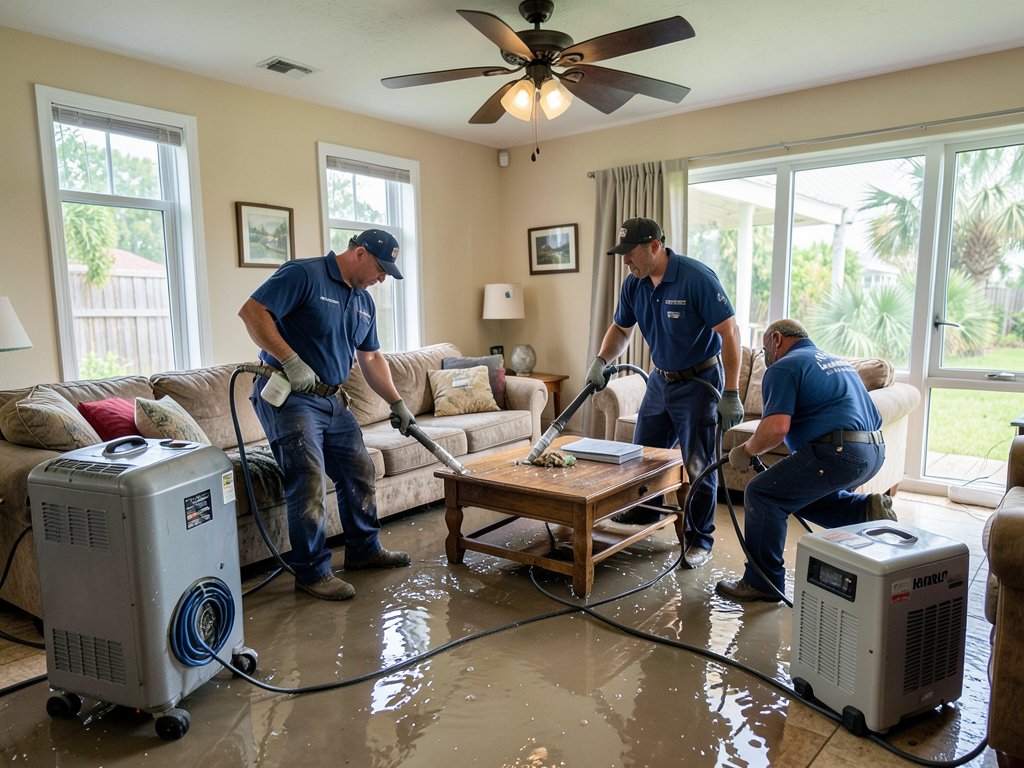
After extraction, our technicians use thermal imaging and moisture meters to map wet building materials. We create drying chambers using commercial air movers and dehumidifiers positioned to pull moisture from structural framing, subfloors, and wall cavities. Daily moisture readings track drying progress until materials return to normal levels. This phase prevents mold growth and structural deterioration that occur when moisture remains trapped in building materials. Proper structural drying takes three to five days depending on conditions.
Once drying is complete, our licensed contractors rebuild removed materials. We install new drywall, baseboards, flooring, and cabinetry to match your existing finishes. Our reconstruction services include plumbing repairs, electrical work, and painting to return your property to pre-loss condition. We handle permit applications with Clearwater Building Department and coordinate required inspections. Single-source reconstruction eliminates delays waiting for separate contractors and ensures warranty coverage for all restoration work under one agreement.
Clearwater's coastal climate and aging housing stock create predictable water damage patterns. Properties built before 1990 often have cast iron drain pipes that corrode from the inside out, causing sudden sewage backups. Homes near the coast face saltwater intrusion during storm surge, which corrodes electrical systems and metal fasteners. Central Florida's intense afternoon thunderstorms dump inches of rain in minutes, overwhelming gutters and causing roof leaks at flashing and valley joints. Air conditioning systems running constantly in summer humidity produce condensate that overflows drain pans when lines clog. Water heaters installed in attics fail catastrophically, flooding ceilings and walls. Clearwater's high water table means slab foundations crack and allow groundwater seepage during heavy rain. These common failure points mean most homeowners face water damage at some point, making fast response and proper restoration critical to preventing expensive secondary damage.
Water supply lines fail from corrosion, freezing during rare cold snaps, and water hammer pressure spikes. A quarter-inch supply line releases 650 gallons per hour under typical pressure. Burst pipes flood properties quickly, requiring immediate shutoff at the main valve and emergency extraction to prevent structural damage and electrical hazards.
Central air systems produce 10 to 20 gallons of condensate daily during summer. When drain lines clog with algae, water overflows drain pans into ceilings and walls. Attic air handlers cause ceiling collapses if overflows go undetected. Regular AC maintenance prevents most condensate flooding, but failures still occur when float switches malfunction.
Tropical storms and hurricanes push Gulf water inland, flooding low-lying Clearwater neighborhoods. Wind-driven rain penetrates building envelopes at window seals, roof penetrations, and siding joints. Saltwater intrusion corrodes electrical systems and metal framing faster than freshwater. Properties near the coast require specialized cleanup protocols to remove salt contamination before reconstruction begins.
Cast iron drain pipes in older Clearwater homes corrode and collapse, causing sewage backups into bathrooms and laundry rooms. Tree roots infiltrate clay sewer laterals, blocking flow. Category 3 black water contamination requires antimicrobial treatment and disposal of porous materials like drywall and carpeting. Sewage cleanup involves health risks requiring proper protective equipment and disinfection protocols.
Water damage creates panic. Your home is flooding, belongings are ruined, and you need help immediately. When you call Fortress Water Damage Restoration Tampa, our dispatcher answers 24/7 and sends a crew to your Clearwater property within 60 minutes. We arrive with extraction equipment ready to deploy, not to provide an estimate. Our technicians shut off water sources, extract standing water, and begin emergency mitigation to stop damage from spreading. We document everything with photos and moisture readings for your insurance claim. You receive clear communication about the restoration timeline, what materials can be saved, and what requires replacement. No surprise fees or scope changes once work begins. We provide written estimates before reconstruction starts and handle permit applications with the city. Our goal is removing the stress and confusion that comes with water damage by managing every phase professionally and keeping you informed throughout the process.
Our dispatcher takes your call 24 hours a day and sends the nearest available crew immediately. You receive a callback within 10 minutes confirming arrival time. Our trucks carry extraction equipment, moisture detection tools, and drying equipment to every emergency call. We begin water removal as soon as we arrive, not after a separate inspection appointment. Speed matters because water migrates quickly through building materials, turning manageable cleanup into extensive reconstruction projects if response is delayed.
We photograph damage before starting work and provide daily updates on drying progress. Our technicians log moisture readings showing when materials return to normal levels. You receive written scope documents explaining what work is required and why. We answer your questions directly and explain technical processes in plain language. Insurance claims require specific documentation, and we provide exactly what adjusters need to approve your claim without requests for additional information that delay payment.
Fortress handles water removal, structural drying, mold prevention, and reconstruction. You work with one company from emergency call to final walkthrough, eliminating coordination between multiple contractors. Our project managers track timelines and ensure work progresses efficiently. We handle permit applications and inspection scheduling with Clearwater Building Department. Final invoices match approved estimates, and we provide warranty documentation for all restoration work. You get your property back to pre-loss condition without managing a construction project.
Water damage restoration follows a logical sequence from emergency response to final reconstruction. This process ensures thorough moisture removal and prevents secondary damage like mold growth and structural failure.
Our crew inspects your property to identify water sources, assess damage category, and map affected areas using thermal imaging and moisture meters. We shut off active water sources and extract standing water using truck-mounted pumps and portable extractors. Water-damaged contents are removed or relocated to dry areas. We document pre-mitigation conditions with photos and moisture readings for insurance claims. This phase typically takes four to eight hours depending on property size and water volume.
After extraction, we deploy commercial air movers and dehumidifiers positioned to create airflow across wet surfaces and pull moisture from building materials. Technicians monitor moisture levels daily using penetrating and non-invasive meters. We adjust equipment placement based on drying progress. This phase continues until moisture readings confirm materials have returned to normal levels, typically three to five days. Proper drying prevents mold growth and structural deterioration.
Once drying is verified complete, our licensed contractors remove unsalvageable materials like water-damaged drywall and baseboards. We clean and disinfect affected areas, then rebuild using materials matching your existing finishes. Reconstruction includes drywall installation, painting, flooring replacement, and trim work. We handle required permits and inspections with the city. The reconstruction timeline depends on damage extent, typically one to three weeks for residential properties.
Professional water damage restoration follows standards established by the Institute of Inspection, Cleaning and Restoration Certification. The IICRC S500 Standard guides water damage restoration, defining contamination categories, moisture measurement protocols, and structural drying procedures. Category 1 clean water originates from sanitary sources like supply lines and does not pose health risks. Category 2 gray water contains contamination from sources like washing machine overflows and dishwasher leaks, requiring antimicrobial treatment. Category 3 black water contains pathogenic contamination from sewage backups or flood water, requiring disposal of porous materials and thorough disinfection. Florida's humid climate accelerates mold growth, with spores colonizing wet building materials within 24 to 48 hours. Proper structural drying requires understanding psychrometry, the science of moisture behavior in air and materials. Technicians use specific humidity measurements and temperature readings to calculate vapor pressure differentials that drive drying. Commercial dehumidifiers remove moisture from air while air movers create airflow across wet surfaces, maximizing evaporation rates. Moisture meters measure water content in materials using electrical resistance or radio frequency signals. Infrared cameras detect temperature differentials caused by evaporative cooling, revealing hidden moisture in wall cavities and under flooring. Florida Building Code requires licensed contractors for structural repairs exceeding $1,000 in value. Clearwater issues permits for work involving electrical systems, plumbing modifications, and structural framing. Proper restoration maintains your property's insurability and resale value by ensuring work meets code requirements and industry standards.
Contamination level determines restoration procedures. Category 1 clean water requires standard extraction and drying. Category 2 gray water requires antimicrobial treatment of affected surfaces. Category 3 black water requires disposal of porous materials like drywall and carpeting that cannot be adequately disinfected. Water category can escalate over time as clean water absorbs contaminants from building materials and contents.
Water damage restoration costs depend on water volume, contamination category, affected materials, and response time. Immediate extraction prevents moisture migration into structural framing and insulation. Delayed response allows secondary damage requiring mold remediation and extensive reconstruction. Insurance typically covers sudden water damage from burst pipes and appliance failures but excludes gradual leaks and flood events requiring separate flood insurance through NFIP.
Proper structural drying takes three to seven days depending on building materials, outdoor humidity, and water volume. Concrete and masonry hold moisture longer than wood framing. Drying cannot be rushed without risking trapped moisture that causes mold and rot. Daily moisture readings verify drying progress. Equipment remains in place until readings confirm materials have reached normal moisture content for Florida's climate.
Florida requires state-licensed contractors for restoration work exceeding minor repairs. Clearwater Building Department issues permits for plumbing modifications, electrical work, and structural repairs. Unpermitted work creates liability issues and complicates property sales. Licensed contractors carry workers compensation and liability insurance protecting property owners from job site injuries and property damage. Verify contractor licenses through Florida Department of Business and Professional Regulation before signing contracts.
This video explains professional water damage restoration procedures for Clearwater, Florida properties. Topics include emergency water extraction techniques, structural drying protocols, contamination category classification, moisture measurement methods, and insurance documentation requirements. Viewers learn how rapid response prevents mold growth and structural failure in Florida's humid climate, what equipment professional restoration companies use, and how the complete mitigation and reconstruction process works from initial damage through final repairs.
Fortress Water Damage Restoration Tampa serves all Clearwater neighborhoods from our Pinellas County response locations. We reach properties in Downtown Clearwater near Cleveland Street and the Clearwater Marine Aquarium within minutes of dispatch. Our crews regularly respond to water damage calls in Clearwater Beach, where saltwater exposure from Gulf storms creates unique restoration challenges requiring specialized corrosion mitigation. Island Estates properties on private islands connected by causeways face flooding during storm surge and king tides, requiring rapid pump deployment and structural drying before moisture penetrates concrete block construction. North Greenwood and Skycrest homes built in the 1950s and 1960s often have cast iron plumbing and original plumbing fixtures prone to failure, creating sudden flooding that requires immediate extraction. Harbor Oaks and Countryside properties near Countryside Mall and the Pinellas Trail face water intrusion during summer thunderstorms when drainage systems overflow. East Lake and Feather Sound neighborhoods near Tampa Bay have newer construction with PEX plumbing, but water heaters and AC systems still fail unexpectedly. We serve properties along Gulf-to-Bay Boulevard, US Highway 19, and State Road 60, understanding traffic patterns that affect response times during rush hour and special events at Coachman Park. Clearwater sits between Tampa to the east across Old Tampa Bay and St. Petersburg to the south, making it central to our Pinellas County service area. Properties near Clearwater Country Club and Crest Lake Park face different water damage risks than beachfront condos, and our technicians adapt restoration strategies based on construction type, age, and coastal exposure. Whether your property sits on Clearwater Harbor, overlooks the Intracoastal Waterway, or sits inland near Safety Harbor, we provide the same rapid response and professional restoration that prevents minor water damage from becoming major reconstruction projects.
Most water damage restoration companies in Clearwater offer 24/7 emergency response and arrive within 60 to 90 minutes of your call. Fast response matters because water spreads quickly through your home, causing more damage each hour. Companies keep teams on standby to handle floods, pipe bursts, and storm damage at any time. When you call, describe your situation clearly so crews bring the right equipment. The faster professionals start extraction and drying, the better your chances of preventing mold growth and structural damage.
Water damage restoration in Clearwater follows a structured five-step process. First, technicians inspect your property and identify the water source and damage extent. Second, they extract standing water using pumps and vacuums. Third, crews set up industrial fans and dehumidifiers to dry affected areas completely. Fourth, they clean and sanitize surfaces to prevent bacterial growth. Fifth, restoration begins with repairs to walls, floors, and damaged materials. Throughout the process, teams document everything for your records and monitor moisture levels daily.
Water damage restoration expenses in Clearwater vary widely based on damage severity, affected square footage, and water contamination level. Minor incidents affecting one room typically fall on the lower end, while whole-house flooding costs significantly more. Category 3 water damage from sewage or storms requires more extensive cleaning and costs more than clean water incidents. Your total depends on extraction needs, drying time, materials requiring replacement, and mold remediation if needed. Request detailed written estimates from multiple local companies before making your decision.
Most water damage restoration companies in Clearwater offer 24/7 emergency response and arrive within 60 to 90 minutes of your call. Fast response matters because water spreads quickly through your home, causing more damage each hour. Companies keep teams on standby to handle floods, pipe bursts, and storm damage at any time. When you call, describe your situation clearly so crews bring the right equipment. The faster professionals start extraction and drying, the better your chances of preventing mold growth and structural damage.
Water damage restoration in Clearwater follows a structured five-step process. First, technicians inspect your property and identify the water source and damage extent. Second, they extract standing water using pumps and vacuums. Third, crews set up industrial fans and dehumidifiers to dry affected areas completely. Fourth, they clean and sanitize surfaces to prevent bacterial growth. Fifth, restoration begins with repairs to walls, floors, and damaged materials. Throughout the process, teams document everything for your records and monitor moisture levels daily.
Water damage restoration expenses in Clearwater vary widely based on damage severity, affected square footage, and water contamination level. Minor incidents affecting one room typically fall on the lower end, while whole-house flooding costs significantly more. Category 3 water damage from sewage or storms requires more extensive cleaning and costs more than clean water incidents. Your total depends on extraction needs, drying time, materials requiring replacement, and mold remediation if needed. Request detailed written estimates from multiple local companies before making your decision.
Coverage depends on what caused the water damage. Most homeowners policies in Clearwater cover sudden, accidental incidents like burst pipes, appliance malfunctions, and roof leaks from storms. Your policy typically excludes flood damage, which requires separate flood insurance, and damage from poor maintenance or gradual leaks. Review your policy documents or call your agent immediately after water damage occurs. Document everything with photos and videos. Many restoration companies work directly with insurers and help you file claims to streamline the process.
Simple water damage restoration in Clearwater takes three to five days. Larger projects involving multiple rooms or severe flooding need one to two weeks. Extensive damage requiring structural repairs extends timelines to several weeks. The timeline depends on water volume, affected materials, humidity levels, and structural damage extent. Drying alone takes 48 to 72 hours minimum. High humidity in Clearwater sometimes lengthens drying time. Mold remediation adds several days. Your restoration company provides a timeline after the initial inspection and adjusts as work progresses.
Look for IICRC certification, the industry standard for water damage restoration professionals. The Institute of Inspection, Cleaning and Restoration Certification trains technicians in proper water extraction, drying, and restoration methods. WRT (Water Damage Restoration Technician) and ASD (Applied Structural Drying) certifications show advanced training. Companies should maintain proper business licenses for operating in Clearwater. Ask about technician training, experience with your specific damage type, and whether they use EPA-registered products. Check online reviews and Better Business Bureau ratings before hiring.
Yes. Clearwater's humid subtropical climate creates ideal conditions for mold growth after water damage. Mold spores start growing within 24 to 48 hours when moisture and organic materials combine. Temperatures between 77 and 86 degrees, common year-round in Clearwater, accelerate growth. Water damage restoration must include thorough drying to prevent mold. Professional teams use moisture meters to confirm complete drying before closing walls or replacing materials. If you spot mold or smell musty odors after water damage, call specialists immediately for testing and remediation.
Water damage restoration addresses the complete problem from start to finish. This includes water extraction, structural drying, dehumidification, cleaning, sanitizing, and returning your home to pre-damage condition. Restoration prevents secondary damage like mold and structural decay. Water damage repair focuses only on fixing visible damage like replacing drywall, flooring, or baseboards. Repair without proper restoration leaves hidden moisture behind, leading to mold and rot. Professional restoration companies in Clearwater handle both processes, ensuring your home dries completely before repairs begin.
Leaving depends on damage extent and location. Minor water damage in one room usually lets you stay home during restoration. Major flooding affecting multiple rooms, especially bedrooms and bathrooms, makes staying difficult due to noise from equipment and limited access to spaces. If restoration involves sewage or Category 3 water contamination, you should leave for health and safety. Extensive mold growth also requires temporary relocation. Your restoration company advises whether staying is safe. Plan for hotel stays if needed and ask your insurance about additional living expense coverage.
Watch for these warning signs of hidden water damage in your Clearwater property. Musty odors indicate moisture trapped in walls or under floors. Warped or buckling flooring suggests water underneath. Discolored patches or water stains on ceilings and walls show active or past leaks. Peeling paint or bubbling wallpaper means moisture behind surfaces. Higher than normal water bills point to hidden pipe leaks. Soft spots in floors or walls indicate water-damaged materials. Schedule professional inspections using moisture meters and thermal imaging cameras to detect problems before major damage occurs.
Coverage depends on what caused the water damage. Most homeowners policies in Clearwater cover sudden, accidental incidents like burst pipes, appliance malfunctions, and roof leaks from storms. Your policy typically excludes flood damage, which requires separate flood insurance, and damage from poor maintenance or gradual leaks. Review your policy documents or call your agent immediately after water damage occurs. Document everything with photos and videos. Many restoration companies work directly with insurers and help you file claims to streamline the process.
Simple water damage restoration in Clearwater takes three to five days. Larger projects involving multiple rooms or severe flooding need one to two weeks. Extensive damage requiring structural repairs extends timelines to several weeks. The timeline depends on water volume, affected materials, humidity levels, and structural damage extent. Drying alone takes 48 to 72 hours minimum. High humidity in Clearwater sometimes lengthens drying time. Mold remediation adds several days. Your restoration company provides a timeline after the initial inspection and adjusts as work progresses.
Look for IICRC certification, the industry standard for water damage restoration professionals. The Institute of Inspection, Cleaning and Restoration Certification trains technicians in proper water extraction, drying, and restoration methods. WRT (Water Damage Restoration Technician) and ASD (Applied Structural Drying) certifications show advanced training. Companies should maintain proper business licenses for operating in Clearwater. Ask about technician training, experience with your specific damage type, and whether they use EPA-registered products. Check online reviews and Better Business Bureau ratings before hiring.
Yes. Clearwater's humid subtropical climate creates ideal conditions for mold growth after water damage. Mold spores start growing within 24 to 48 hours when moisture and organic materials combine. Temperatures between 77 and 86 degrees, common year-round in Clearwater, accelerate growth. Water damage restoration must include thorough drying to prevent mold. Professional teams use moisture meters to confirm complete drying before closing walls or replacing materials. If you spot mold or smell musty odors after water damage, call specialists immediately for testing and remediation.
Water damage restoration addresses the complete problem from start to finish. This includes water extraction, structural drying, dehumidification, cleaning, sanitizing, and returning your home to pre-damage condition. Restoration prevents secondary damage like mold and structural decay. Water damage repair focuses only on fixing visible damage like replacing drywall, flooring, or baseboards. Repair without proper restoration leaves hidden moisture behind, leading to mold and rot. Professional restoration companies in Clearwater handle both processes, ensuring your home dries completely before repairs begin.
Leaving depends on damage extent and location. Minor water damage in one room usually lets you stay home during restoration. Major flooding affecting multiple rooms, especially bedrooms and bathrooms, makes staying difficult due to noise from equipment and limited access to spaces. If restoration involves sewage or Category 3 water contamination, you should leave for health and safety. Extensive mold growth also requires temporary relocation. Your restoration company advises whether staying is safe. Plan for hotel stays if needed and ask your insurance about additional living expense coverage.
Watch for these warning signs of hidden water damage in your Clearwater property. Musty odors indicate moisture trapped in walls or under floors. Warped or buckling flooring suggests water underneath. Discolored patches or water stains on ceilings and walls show active or past leaks. Peeling paint or bubbling wallpaper means moisture behind surfaces. Higher than normal water bills point to hidden pipe leaks. Soft spots in floors or walls indicate water-damaged materials. Schedule professional inspections using moisture meters and thermal imaging cameras to detect problems before major damage occurs.
We proudly serve the entire Tampa area with rapid-response water damage restoration services. Whether you’re downtown, in the suburbs, or operating a business near the bay, our expert team is just minutes away. Use the map below to view our service zone or find our nearest location. We’re ready to respond wherever you need us. Your peace of mind is only a call or click away.
Address:
Clearwater, FL, 33756

The Home Buyer Guide to Spotting Hidden Water Damage During a Westchase Open House Walking through an open house in Westchase should feel exciting. You imagine your family in the kitchen. You picture weekend barbecues…
How Clogged Gutters and Downspouts Can Lead to a Flooded Living Room in Wooded Lutz…

Why You Should Never Use Bleach to Clean Up Mold After a Leak in Your…

Dealing With Water Damage in Your Backyard ADU or Guest House in Seminole Heights Water…
Water damage spreads every minute you wait. Call Fortress Water Damage Restoration Tampa at (656) 219-8088 for immediate dispatch to your Clearwater property. Our crews respond 24/7 with extraction equipment ready to stop the damage and start the restoration process.