




Pinellas Park sits in a high water table zone where the Boca Ciega Bay meets inland neighborhoods. Homes near Park Boulevard and 49th Street North sit barely six feet above sea level. Summer storms drop three inches of rain in an hour, overwhelming drainage systems built in the 1960s. The combination of afternoon thunderstorms, aging plumbing in post-war construction, and coastal humidity creates the perfect conditions for water intrusion.
Properties near Cross Bayou Canal and Gateway Mall see regular flooding during king tides. The sandy soil drains poorly, leaving standing water in crawl spaces and against foundation slabs. When AC systems fail in Florida heat, condensate lines dump gallons into walls before anyone notices. The 90 percent humidity means wet drywall never dries on its own. Within 48 hours, mold spores activate and spread through HVAC ducts.
Insurance companies require professional water extraction and documentation. Homeowners who try to dry properties themselves end up with denied claims and black mold six months later. Pinellas Park properties need immediate extraction, controlled drying with dehumidifiers, and moisture mapping to confirm complete dryness. The difference between a three-day restoration and a six-month mold remediation project comes down to how fast you call a certified crew.
Fortress Water Damage Restoration Tampa keeps trucks and equipment staged in Pinellas Park because we know minutes matter when water is spreading. While other companies dispatch from Tampa or Clearwater, our crews arrive at your 66th Street North property or Gateway area home in under an hour. We carry truck-mounted extraction units that pull 200 gallons per minute, not the small shop-vacs other companies use for the first visit.
Our technicians are IICRC certified in water damage restoration and applied structural drying. That certification means we understand vapor pressure, psychrometrics, and how to calculate grain depression in Florida humidity. We use thermal imaging to find hidden water in walls and ceilings before it causes structural damage. Our moisture meters give exact readings so we know when a structure is truly dry, not just dry enough to pass a visual inspection.
We work directly with every major insurance carrier in Pinellas County. Our project managers handle the entire claims process including emergency documentation, loss itemization, and scope negotiation. Most insurance companies trust our estimates because we follow Xactimate pricing and IICRC S500 standards. You get a single point of contact who coordinates with your adjuster while our crews focus on extraction and drying.
Every job gets a drying plan based on your specific structure, materials, and moisture readings. We set equipment to create negative pressure that prevents moisture migration into unaffected areas. Our industrial dehumidifiers run 24/7 with daily monitoring until moisture content matches pre-loss readings. That process based approach is why we close jobs in three to five days while other companies drag restoration out for weeks.

Trucks and crews stationed in Pinellas Park mean we arrive at your property within one hour of your call. Fast extraction prevents secondary damage and reduces total restoration time. We carry commercial grade equipment on every truck so work starts immediately, not after a second trip for proper gear.

We handle your entire insurance claim from emergency contact through final approval. Our estimates follow Xactimate pricing that adjusters accept without negotiation. You never wait for reimbursement checks or fight with your carrier over covered costs. We bill insurance directly so you focus on getting back to normal.
Every crew member holds current certification in applied structural drying and water damage restoration. That training means we dry your property using measured science, not guesswork. We follow IICRC S500 standards that insurance companies and building departments require for proper restoration documentation.
We know Pinellas Park construction from 1950s block homes near 58th Street to new builds near Mainlands. Our crews understand local water table issues, soil drainage problems, and humidity challenges specific to properties between Boca Ciega Bay and Cross Bayou Canal. That local knowledge prevents the mistakes that out of area companies make.
Water damage restoration requires different approaches based on water source, affected materials, and contamination level. Clean water from a supply line needs fast extraction and drying. Gray water from an AC overflow requires antimicrobial treatment. Black water from a sewer backup demands full containment and disposal protocols.
Fortress Water Damage Restoration Tampa handles every category of water intrusion that affects Pinellas Park properties. Our trucks carry equipment for truck-mounted extraction, structural drying, moisture mapping, and antimicrobial application. We respond to burst pipes, roof leaks, appliance failures, AC condensate problems, and storm flooding with the same 60-minute response time.
Each water damage scenario gets a custom mitigation plan based on IICRC standards. We document pre-loss conditions, track moisture content throughout drying, and provide final clearance readings that satisfy insurance requirements. Our comprehensive approach covers everything from emergency water removal through final reconstruction coordination. Property owners get one company managing the entire restoration instead of coordinating multiple contractors for extraction, drying, mold prevention, and repairs.
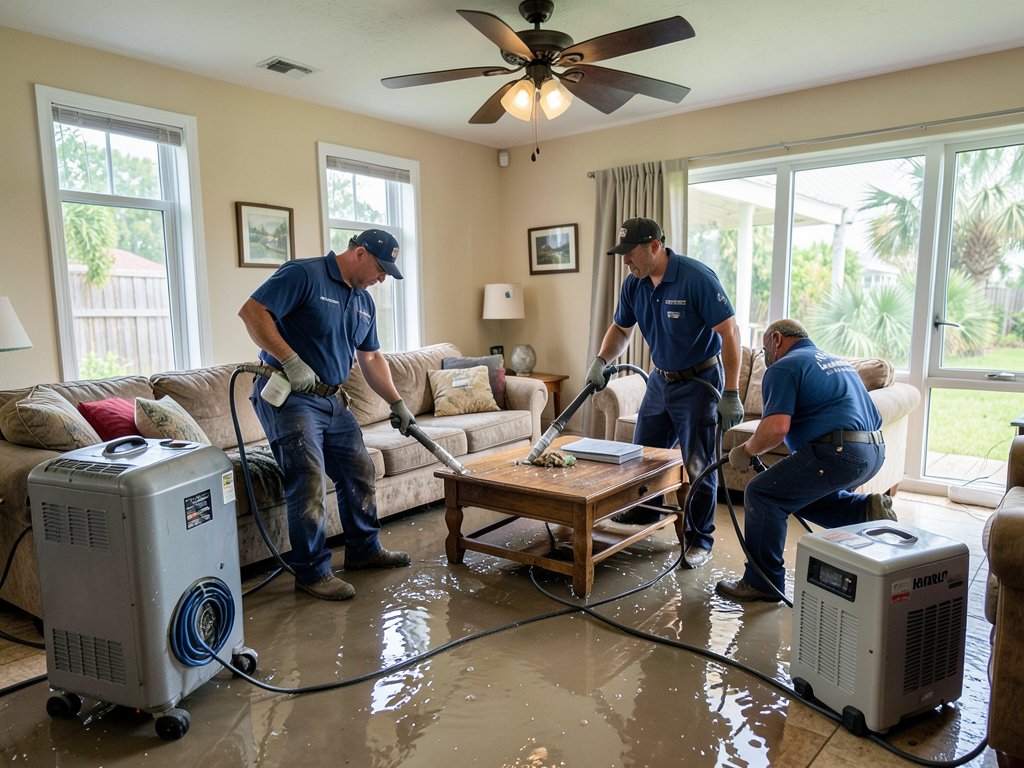
Immediate response to stop water damage progression. Our truck-mounted extractors pull standing water from carpets, tile, and concrete at 200 gallons per minute. We remove soaked materials that cannot be saved, extract water from wall cavities, and set up air movers within the first hour. Rapid extraction prevents subfloor damage, reduces mold risk, and cuts total drying time in half compared to delayed response.
Complete drying using commercial dehumidifiers, air movers, and daily moisture monitoring. We create controlled environments that extract moisture from framing, drywall, insulation, and subflooring. Thermal imaging finds hidden water in ceiling cavities and behind walls. Moisture meters track grain depression until readings match pre-loss levels. Every material is dried to industry standards that prevent future mold growth and structural compromise.
Professional cleaning and restoration of water damaged belongings. We pack out and inventory affected contents, then clean and dry items at our climate controlled facility. Furniture gets dried and treated to prevent mold. Documents are freeze dried using specialized equipment. Electronics receive ultrasonic cleaning. Most items insurance companies would total can be saved with proper intervention within 48 hours of water exposure.
Pinellas Park properties face water intrusion from multiple sources. The high water table means groundwater pushes against foundation slabs during heavy rain. Properties built before 2000 have galvanized supply lines that corrode and burst without warning. AC systems work overtime in Florida heat, creating condensate that overflows when drain lines clog with algae.
Summer storms drop intense rainfall that overwhelms roof valleys and gutter systems. Water finds every gap in flashing and works behind stucco walls. The coastal humidity prevents natural drying, so small leaks turn into major problems before property owners notice water stains. Older homes near Park Boulevard and 49th Street have cast iron drain stacks that crack and leak sewage into wall cavities.
Insurance claims spike after hurricanes when storm surge pushes bay water into neighborhoods near Boca Ciega Bay. Wind driven rain enters through damaged roof shingles and soffit vents. The combination of multiple water entry points and extended exposure time means these properties need complete structural drying, not just surface cleanup. Fast professional response determines whether you face a week of restoration or months of mold remediation and reconstruction.
Air handlers in attics and closets generate gallons of condensate every day. When drain lines clog or pans crack, water dumps into walls and ceilings before anyone notices. The constant moisture flow saturates insulation and drywall, creating perfect conditions for mold growth. By the time you see a water stain, structural damage is already extensive.
Homes built before 2000 have galvanized pipes that corrode from inside. The pipes look fine externally but rust internally until they burst under normal pressure. These failures happen without warning and flood properties with hundreds of gallons before the main valve gets closed. Fast extraction is the only way to prevent subfloor and wall cavity damage.
Summer thunderstorms test every weak point in roof systems. Missing shingles, failed valley flashing, and damaged soffit vents let wind driven rain enter attics and wall cavities. The water travels along framing before appearing as ceiling stains far from the entry point. Without thermal imaging and moisture mapping, the actual leak source stays hidden while damage spreads.
Properties in low lying areas near Cross Bayou Canal sit barely above sea level. Heavy rain raises the water table until groundwater pushes through foundation slabs and creates standing water in homes. The sandy soil offers little drainage, so water stays present for days after rain stops. This creates ongoing moisture problems that require professional extraction and drying equipment.
Water damage creates panic. You need help now, not tomorrow. When you call Fortress Water Damage Restoration Tampa, you talk immediately to a project manager who coordinates your emergency response. We ask about the water source, affected areas, and safety concerns. Within five minutes of that call, a crew is dispatched to your Pinellas Park property with extraction equipment and drying gear.
Our arrival time averages 45 to 60 minutes from your initial call. The crew chief assesses damage, identifies the water source, and starts extraction immediately. You get a verbal overview of the mitigation process and timeline before equipment gets set. We take photos and moisture readings for insurance documentation while water extraction is in progress.
Most properties have air movers and dehumidifiers running within two hours of our arrival. You receive daily updates on moisture readings and drying progress. Our project manager handles all insurance communication so you never wait on hold with claims adjusters. Equipment typically runs for three to five days depending on materials affected and initial moisture levels. We pull equipment only after final readings confirm complete dryness to prevent future mold issues.
Your call triggers immediate crew dispatch to your Pinellas Park property. We arrive in under 60 minutes with truck mounted extraction equipment and moisture detection tools. The crew chief walks your property to identify water sources, assess affected materials, and determine safety concerns. You get a clear explanation of the mitigation process and expected timeline before work begins. Emergency water extraction starts within minutes of arrival to prevent additional damage.
We photograph all damage, document moisture readings, and create detailed loss inventories for your insurance claim. Our project manager contacts your carrier the same day to report the loss and begin approval processing. You receive copies of all documentation for your records. We handle estimate negotiations and answer adjuster questions so you avoid the back and forth. Most carriers approve our scopes without revision because we follow industry standard pricing.
Our technicians visit your property daily to check moisture readings and adjust equipment placement. You receive text updates showing moisture levels and expected completion dates. Dehumidifiers and air movers run continuously until moisture content matches pre-loss readings in all affected materials. We only pull equipment after final clearance testing confirms your property is completely dry. That thorough approach prevents mold growth and structural problems that appear months after incomplete drying.
Speed and science determine restoration success. We follow IICRC protocols that get properties dry fast while preventing secondary damage. Our three phase process covers emergency stabilization, controlled drying, and final verification.
Crews arrive within 60 minutes with truck mounted extraction units. We pull standing water at 200 gallons per minute from floors, carpets, and pad. Soaked materials that cannot be saved get removed immediately. Water in wall cavities is extracted using specialty tools. Antimicrobial treatment is applied to all affected surfaces. Initial moisture readings are documented for insurance and to establish drying baselines. Your property is stabilized and ready for controlled drying within hours of our arrival.
Commercial dehumidifiers and air movers are positioned based on thermal imaging and moisture mapping. We create controlled airflow that extracts moisture from framing, drywall, and subflooring. Equipment runs continuously with daily monitoring and adjustment. Moisture readings are taken at multiple points to track drying progress. The setup is designed to achieve complete dryness in three to five days depending on materials affected and initial saturation levels.
Equipment is pulled only after moisture content matches pre-loss readings in all building materials. Final thermal imaging confirms no hidden moisture remains in wall cavities or ceiling spaces. You receive clearance documentation showing your property is completely dry and ready for repairs. That verification prevents mold growth and structural problems that occur after incomplete drying. Most properties are ready for reconstruction within one week of initial water damage.
The IICRC S500 Standard guides proper water damage restoration and sets the protocols insurance companies require for claim approval. This standard categorizes water by contamination level and defines required treatment for each category. Category 1 is clean water from supply lines. Category 2 is gray water from appliances and AC systems. Category 3 is black water from sewage or flooding that requires full containment and disposal protocols.
Proper mitigation follows psychrometric principles that control moisture transfer. Florida humidity makes structural drying challenging because ambient moisture competes with drying equipment. Commercial dehumidifiers must remove more moisture from the air than the building materials release. That requires calculating grain depression and maintaining proper temperature and humidity levels throughout the drying process.
Applied structural drying uses specific equipment placement based on material type and moisture content. Air movers create laminar airflow across wet surfaces to accelerate evaporation. Dehumidifiers lower ambient humidity so air movers can carry moisture away from materials. The equipment must run continuously because starting and stopping extends drying time and increases total project cost.
Moisture content is measured using pin type and pinless meters calibrated for different materials. Wood framing should dry to 12 to 15 percent moisture content. Concrete slabs need to reach below 4 percent. Drywall is considered dry at 1 percent or less. These measurements are taken at multiple depths and locations to confirm complete dryness, not just surface readings. Thermal imaging verifies no hidden pockets of moisture remain behind walls or in ceiling cavities.
Insurance companies deny claims when contractors use inadequate equipment or skip moisture monitoring. A home that appears dry can have hidden moisture that activates mold growth weeks later. Proper restoration requires industrial equipment, daily monitoring, and final verification testing. Cutting corners on the drying process creates bigger problems than the original water damage.
Water is classified by contamination level. Category 1 clean water needs extraction and drying. Category 2 gray water requires antimicrobial treatment. Category 3 black water demands containment, disposal of porous materials, and full disinfection. Using the wrong protocol causes claim denials and creates health hazards. Every water source gets evaluated and treated according to IICRC standards.
Pricing depends on water category, affected square footage, and materials saturated. Clean water costs less than sewage because treatment protocols differ. Hardwood floors cost more to dry than tile. Equipment must run for days, creating labor and power costs. Insurance typically covers emergency mitigation including extraction, drying, and antimicrobial treatment. Reconstruction costs are separate and depend on materials that could not be saved.
Structural drying takes three to seven days depending on materials affected and initial saturation. Concrete slabs dry slower than wood framing. Florida humidity extends drying time compared to dry climates. Equipment must run continuously, not just during business hours. Companies promising 24 hour drying are cutting corners that lead to mold problems. Proper restoration follows measured science, not arbitrary timelines.
IICRC certification proves technicians understand applied structural drying and psychrometrics. This training is required for insurance approved contractors. The S500 Standard defines proper mitigation procedures that insurance companies expect. Companies without certified technicians make mistakes that lead to claim denials and incomplete drying. Hiring certified contractors protects your property and your insurance coverage.
Professional overview of water damage restoration services in Pinellas Park FL. This video covers emergency water extraction, structural drying protocols, IICRC S500 standards, moisture monitoring procedures, and insurance claim coordination. Learn why Pinellas Park properties face elevated water damage risk from high water tables, summer storms, and coastal humidity. See how IICRC certified technicians use thermal imaging and moisture meters to ensure complete drying and prevent mold growth.
Fortress Water Damage Restoration Tampa maintains fast response across every Pinellas Park neighborhood from the Gateway area east to the St. Petersburg border. We know the construction differences between older block homes near Park Boulevard and 49th Street North and newer builds around Mainlands Golf Course. Properties in the northwest section near Cross Bayou Canal face different water table issues than homes in the southern sections near 62nd Avenue North.
Our crews respond daily to water damage calls throughout the corridor between US Highway 19 and I-275. We know which neighborhoods have older galvanized plumbing that fails without warning and which areas see regular AC condensate problems due to humidity patterns near Boca Ciega Bay. The low elevation properties between 66th Street North and Seminole struggle with groundwater intrusion during summer storms. Those homes need different mitigation approaches than properties on higher ground near Mainlands.
We also serve surrounding Pinellas County communities including St. Petersburg, Largo, Seminole, and Kenneth City. Our central location allows 60 minute response times throughout the county. Properties near Park Street and 58th Street get the same rapid service as homes in the Gateway commercial district. We understand the mix of residential and commercial properties that define Pinellas Park and adjust our approach based on building type and construction era.
Neighborhoods near major intersections like Park Boulevard and 49th Street see more water main breaks due to traffic vibration affecting aging infrastructure. The commercial corridor along US 19 has different insurance requirements than residential areas. We handle water damage for single family homes, apartments, retail spaces, offices, and industrial buildings with equal expertise. Our knowledge of local construction methods, common problem areas, and insurance carrier expectations comes from years working exclusively in Pinellas County.
Properties in every section of Pinellas Park benefit from our staged equipment and local crews. We do not dispatch from distant locations or make you wait while teams finish jobs in other cities. Your Park Boulevard business or 66th Street home gets immediate attention because we are already in Pinellas Park when you call. That local presence combined with IICRC training and commercial equipment makes us the first choice for water damage restoration across the entire community.
Yes. Water damage spreads fast in Pinellas Park's high humidity climate. What starts as a small leak can warp floors, rot framing, and trigger mold growth within 24 to 48 hours. Professional restoration stops the cascade. Technicians extract standing water, dry hidden moisture in walls and subfloors, and document the damage for your insurance claim. Ignoring water damage costs more long-term. You face structural repairs, mold remediation, and potential health risks. Restoration protects your home's value and keeps your family safe.
Water damage restoration is a multi-step process. First, technicians assess the damage category and identify the water source. Next, they extract standing water using pumps and vacuums. Industrial dehumidifiers and air movers dry affected materials like drywall, insulation, and subfloors. Crews remove unsalvageable items and apply antimicrobial treatments to prevent mold. Finally, they restore your property by repairing or replacing damaged structures. In Pinellas Park, humidity control is critical during drying. The goal is to return your home to pre-loss condition while documenting every step for insurance.
In Florida, the responsible party depends on the source. If water damage comes from a sudden event like a burst pipe or storm, your homeowner's insurance typically covers mold remediation. If mold results from neglect or long-term moisture problems, you pay out of pocket. Landlords must address mold in rental properties under Florida health codes. Review your policy carefully. Some insurers cap mold coverage or exclude certain scenarios. Document everything and file claims quickly. Pinellas Park's humid climate accelerates mold growth, so act within 48 hours.
Yes. Water damage spreads fast in Pinellas Park's high humidity climate. What starts as a small leak can warp floors, rot framing, and trigger mold growth within 24 to 48 hours. Professional restoration stops the cascade. Technicians extract standing water, dry hidden moisture in walls and subfloors, and document the damage for your insurance claim. Ignoring water damage costs more long-term. You face structural repairs, mold remediation, and potential health risks. Restoration protects your home's value and keeps your family safe.
Water damage restoration is a multi-step process. First, technicians assess the damage category and identify the water source. Next, they extract standing water using pumps and vacuums. Industrial dehumidifiers and air movers dry affected materials like drywall, insulation, and subfloors. Crews remove unsalvageable items and apply antimicrobial treatments to prevent mold. Finally, they restore your property by repairing or replacing damaged structures. In Pinellas Park, humidity control is critical during drying. The goal is to return your home to pre-loss condition while documenting every step for insurance.
In Florida, the responsible party depends on the source. If water damage comes from a sudden event like a burst pipe or storm, your homeowner's insurance typically covers mold remediation. If mold results from neglect or long-term moisture problems, you pay out of pocket. Landlords must address mold in rental properties under Florida health codes. Review your policy carefully. Some insurers cap mold coverage or exclude certain scenarios. Document everything and file claims quickly. Pinellas Park's humid climate accelerates mold growth, so act within 48 hours.
Call immediately when you discover standing water, ceiling stains, or soaked flooring. Speed matters in Pinellas Park's humid environment. Mold can colonize within 24 to 48 hours. If you smell musty odors, see buckling floors, or notice peeling paint, you already have hidden moisture. After hurricanes or tropical storms, call even if damage looks minor. Water migrates behind walls and under floors. Sewage backups and appliance failures also demand urgent response. Waiting turns a manageable cleanup into a full gut job. Professional water restoration crews operate around the clock.
Restoration costs vary by damage severity, water category, and affected square footage. Minor cleanups start around a few hundred dollars. Extensive flooding with structural damage can reach several thousand. Category 3 water (sewage) costs more due to contamination protocols. In Pinellas Park, humidity extends drying time, which can increase costs. Your insurance deductible and coverage limits matter. Most companies offer free inspections and work directly with insurers. Get a detailed estimate before work begins. Delaying restoration only raises the final bill due to secondary damage like mold and rot.
Usually, yes. Most homeowner policies cover sudden and accidental water damage, like burst pipes, appliance failures, or storm-related flooding. Insurance typically pays for water extraction, drying, and repairs. Flood damage requires separate flood insurance through FEMA. Gradual leaks or maintenance neglect are often excluded. In Pinellas Park, document damage immediately with photos and video. File your claim within 24 hours. Restoration companies can bill your insurer directly and help navigate the claims process. Review your policy details. Some insurers cap mold coverage or limit certain water categories.
Very likely if you wait longer than 24 to 48 hours. Pinellas Park's high humidity and warm temperatures create ideal mold conditions. Porous materials like drywall, insulation, and carpet absorb moisture fast. Mold spores are always in the air. They just need water and organic material to colonize. Even if surfaces look dry, hidden moisture in wall cavities or under flooring feeds growth. Professional drying equipment and moisture meters detect problems you cannot see. Fast water extraction and thorough drying prevent mold. Delay turns a water loss into a mold remediation project.
Category 3 water damage involves grossly contaminated water. You see sewage backups, toilet overflows with feces, or floodwater from rivers and canals. The water is dark, smells foul, and contains bacteria, viruses, and parasites. Affected areas require complete removal of porous materials like drywall, insulation, and carpet. You cannot save these items. Technicians wear protective gear and use hospital-grade disinfectants. In Pinellas Park, storm surge and sewer line failures cause Category 3 events. This damage poses serious health risks. Professional remediation is non-negotiable.
Pricing depends on the scope and your specific situation. Some customers feel national franchises charge more due to overhead and brand recognition. Others value the consistency and resources larger companies provide. In Pinellas Park, local water restoration companies often offer competitive rates with faster response times. Always get multiple estimates. Compare what each includes, like moisture monitoring, antimicrobial treatment, and insurance coordination. Ask for itemized breakdowns. Cheap bids can mean shortcuts or hidden fees later. Focus on certifications, equipment quality, and customer reviews rather than brand names alone.
Mold remediation costs range widely based on contamination extent and location. Small areas like bathroom walls may cost a few hundred dollars. Whole-home remediation with structural removal can reach several thousand. Hidden mold in HVAC systems or crawl spaces increases costs. In Pinellas Park, high humidity often means mold spreads beyond the visible area. Professionals use containment barriers, air scrubbers, and antimicrobial treatments. Your insurance may cover mold if it resulted from a covered water loss. Get a detailed inspection and written estimate before work starts. Costs rise when you delay treatment.
Call immediately when you discover standing water, ceiling stains, or soaked flooring. Speed matters in Pinellas Park's humid environment. Mold can colonize within 24 to 48 hours. If you smell musty odors, see buckling floors, or notice peeling paint, you already have hidden moisture. After hurricanes or tropical storms, call even if damage looks minor. Water migrates behind walls and under floors. Sewage backups and appliance failures also demand urgent response. Waiting turns a manageable cleanup into a full gut job. Professional water restoration crews operate around the clock.
Restoration costs vary by damage severity, water category, and affected square footage. Minor cleanups start around a few hundred dollars. Extensive flooding with structural damage can reach several thousand. Category 3 water (sewage) costs more due to contamination protocols. In Pinellas Park, humidity extends drying time, which can increase costs. Your insurance deductible and coverage limits matter. Most companies offer free inspections and work directly with insurers. Get a detailed estimate before work begins. Delaying restoration only raises the final bill due to secondary damage like mold and rot.
Usually, yes. Most homeowner policies cover sudden and accidental water damage, like burst pipes, appliance failures, or storm-related flooding. Insurance typically pays for water extraction, drying, and repairs. Flood damage requires separate flood insurance through FEMA. Gradual leaks or maintenance neglect are often excluded. In Pinellas Park, document damage immediately with photos and video. File your claim within 24 hours. Restoration companies can bill your insurer directly and help navigate the claims process. Review your policy details. Some insurers cap mold coverage or limit certain water categories.
Very likely if you wait longer than 24 to 48 hours. Pinellas Park's high humidity and warm temperatures create ideal mold conditions. Porous materials like drywall, insulation, and carpet absorb moisture fast. Mold spores are always in the air. They just need water and organic material to colonize. Even if surfaces look dry, hidden moisture in wall cavities or under flooring feeds growth. Professional drying equipment and moisture meters detect problems you cannot see. Fast water extraction and thorough drying prevent mold. Delay turns a water loss into a mold remediation project.
Category 3 water damage involves grossly contaminated water. You see sewage backups, toilet overflows with feces, or floodwater from rivers and canals. The water is dark, smells foul, and contains bacteria, viruses, and parasites. Affected areas require complete removal of porous materials like drywall, insulation, and carpet. You cannot save these items. Technicians wear protective gear and use hospital-grade disinfectants. In Pinellas Park, storm surge and sewer line failures cause Category 3 events. This damage poses serious health risks. Professional remediation is non-negotiable.
Pricing depends on the scope and your specific situation. Some customers feel national franchises charge more due to overhead and brand recognition. Others value the consistency and resources larger companies provide. In Pinellas Park, local water restoration companies often offer competitive rates with faster response times. Always get multiple estimates. Compare what each includes, like moisture monitoring, antimicrobial treatment, and insurance coordination. Ask for itemized breakdowns. Cheap bids can mean shortcuts or hidden fees later. Focus on certifications, equipment quality, and customer reviews rather than brand names alone.
Mold remediation costs range widely based on contamination extent and location. Small areas like bathroom walls may cost a few hundred dollars. Whole-home remediation with structural removal can reach several thousand. Hidden mold in HVAC systems or crawl spaces increases costs. In Pinellas Park, high humidity often means mold spreads beyond the visible area. Professionals use containment barriers, air scrubbers, and antimicrobial treatments. Your insurance may cover mold if it resulted from a covered water loss. Get a detailed inspection and written estimate before work starts. Costs rise when you delay treatment.
We proudly serve the entire Tampa area with rapid-response water damage restoration services. Whether you’re downtown, in the suburbs, or operating a business near the bay, our expert team is just minutes away. Use the map below to view our service zone or find our nearest location. We’re ready to respond wherever you need us. Your peace of mind is only a call or click away.
Address:
Pinellas Park, FL, 33781

The Home Buyer Guide to Spotting Hidden Water Damage During a Westchase Open House Walking through an open house in Westchase should feel exciting. You imagine your family in the kitchen. You picture weekend barbecues…
How Clogged Gutters and Downspouts Can Lead to a Flooded Living Room in Wooded Lutz…

Why You Should Never Use Bleach to Clean Up Mold After a Leak in Your…

Dealing With Water Damage in Your Backyard ADU or Guest House in Seminole Heights Water…
Call Fortress Water Damage Restoration Tampa now at (656) 219-8088 for 60 minute emergency response anywhere in Pinellas Park. Our crews are standing by with extraction equipment and commercial dryers. We handle your insurance claim while getting your property dry and safe. Every hour you wait increases damage and restoration costs.