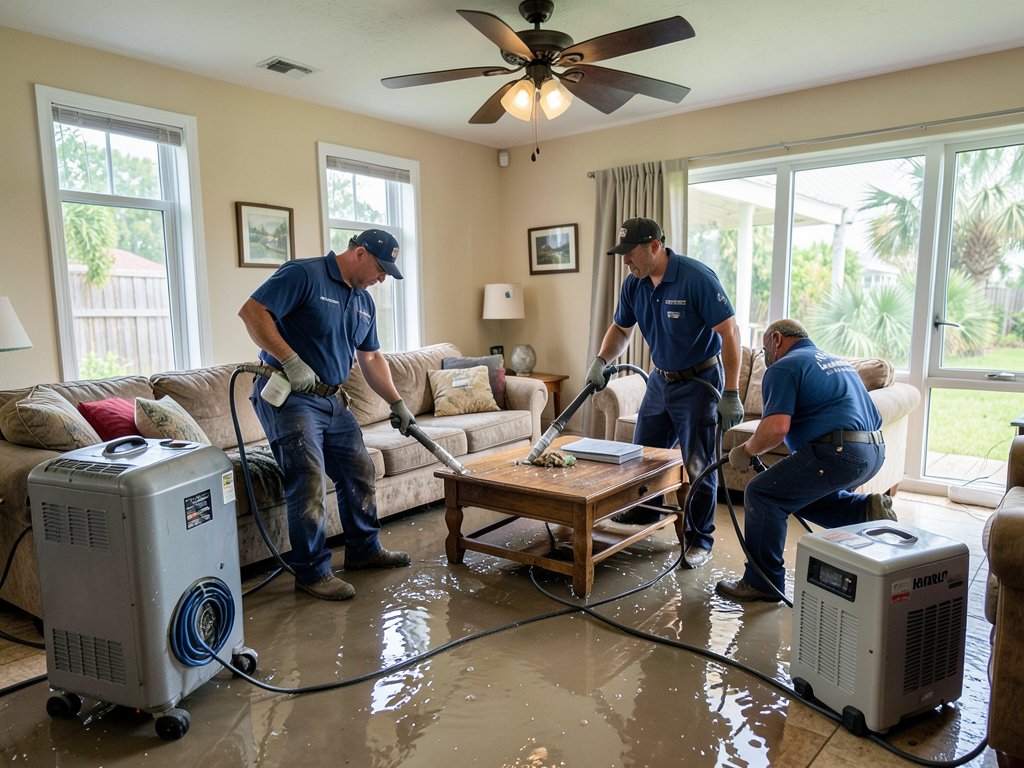








Tampa averages 46 inches of rain annually, most falling between June and September during afternoon thunderstorms that dump two inches in 30 minutes. That precipitation overwhelms roof drainage systems and saturates soil around foundations. High water tables in neighborhoods near Bayshore Boulevard and along the Interbay Peninsula mean groundwater sits just 18 inches below slab foundations. When barometric pressure drops during storms, that moisture wicks up through concrete via capillary action. Combine that with 85 percent outdoor humidity and inadequate indoor ventilation, and you get chronic damp conditions perfect for microbial growth and musty odors.
Properties built before 1990 lack modern moisture barriers and proper vapor retarders in crawlspaces. Older homes in Seminole Heights and Tampa Heights were constructed when builders did not account for Florida's extreme humidity levels. Fortress Water Damage Restoration Tampa understands these construction deficiencies because we work on these properties weekly. We know where moisture hides in double-wythe brick walls common in historic districts and how to dry out terrazzo floors without cracking them. Local knowledge prevents costly mistakes that out-of-town contractors make when they treat Tampa properties like they are in Georgia or Alabama.