





Dunedin sits along the Gulf Coast where humidity averages 75% year-round, creating perfect conditions for rapid mold growth after water intrusion. The combination of afternoon thunderstorms, aging plumbing in historic downtown homes, and storm surge threats from hurricanes means water damage can strike without warning. Properties near St. Joseph Sound and the Dunedin Causeway face elevated flood risk during heavy rain events and king tides.
The sandy soil common throughout Pinellas County drains poorly, causing standing water to pool around foundations after storms. This saturation can seep through concrete slabs and penetrate crawlspaces in older homes near Honeymoon Island. With daily temperatures that support rapid microbial growth, water damage becomes a health hazard within 24 to 48 hours if not addressed immediately.
Florida's high water table compounds the problem. Even minor plumbing leaks can introduce persistent moisture into walls and subflooring, leading to structural rot and electrical hazards. Dunedin homeowners also face risks from HVAC condensation failures, which are common in systems working overtime against coastal humidity. Every hour of delay increases restoration costs and extends the time your property remains uninhabitable.
Fortress Water Damage Restoration Tampa built our reputation on speed and thoroughness across the greater Dunedin area. We maintain trucks stationed near downtown Dunedin and along the Pinellas Trail corridor, ensuring we reach your property within 60 minutes of your call, day or night. Our technicians carry thermal imaging cameras, industrial water extractors, and commercial-grade dehumidifiers on every truck, so we start mitigation the moment we arrive.
We understand Dunedin's building stock. Many homes in the Patricia Avenue Historic District feature pier-and-beam foundations that require different drying techniques than concrete slab homes near Edgewater Drive. Our crews train specifically on coastal construction methods and Florida building codes, including moisture barriers, vapor retarders, and hurricane-resistant materials. This expertise prevents secondary damage that generic restoration companies miss.
Insurance coordination sets us apart. We document every stage of water damage with detailed photo evidence, moisture readings, and thermal scans that support your claim. Our team communicates directly with adjusters from major carriers serving Pinellas County, streamlining the approval process so restoration begins immediately instead of waiting weeks for paperwork. We handle contents pack-out, storage, and cleaning while structural drying happens, reducing your stress during an already difficult situation.
Fortress also specializes in microbial remediation. Coastal humidity means mold colonies establish within 48 hours of water exposure. We don't just dry your property; we treat affected areas with antimicrobial solutions, remove contaminated materials following IICRC S520 standards, and verify complete dryness with moisture meters before reconstruction begins. This thorough approach prevents callback issues and protects your family's health.

Our trucks stage throughout Dunedin with locations near Main Street, the Pinellas Trail, and along Alt 19, guaranteeing arrival within 60 minutes. We carry full extraction and drying equipment on every vehicle, eliminating delays while we start water removal and damage mitigation the moment we walk through your door.

We work directly with your insurance carrier to document damage, provide detailed estimates using Xactimate software, and coordinate approvals. This eliminates the paperwork burden on you and accelerates claim processing so restoration begins immediately instead of waiting for adjusters to schedule multiple visits and reviews.
Thermal imaging cameras and penetrating moisture meters reveal hidden water in wall cavities, under flooring, and inside ceiling assemblies. We map moisture migration patterns to locate every wet material, preventing mold growth in concealed spaces that standard visual inspections miss. This technology-driven approach ensures complete drying and eliminates future problems.
Dunedin's mix of historic pier-and-beam homes, concrete block construction, and modern elevated structures requires specialized knowledge. Our technicians understand how water behaves in each building type, from crawlspace drainage to vapor barrier installation, ensuring restoration methods match your specific home and comply with Florida building codes.
Fortress Water Damage Restoration Tampa provides end-to-end water damage remediation services across Dunedin, from initial emergency response through final reconstruction. Water intrusion requires a coordinated approach that addresses immediate threats, hidden moisture, structural damage, and contamination risks. Our service structure covers every phase of restoration so your property returns to pre-loss condition.
We categorize water damage by contamination level. Category 1 water from supply lines requires different handling than Category 3 sewage backups common in older neighborhoods near Palm Boulevard. Each service tier addresses specific hazards while following IICRC S500 water damage restoration standards. Our crews carry equipment and protective gear for all contamination classes, allowing immediate response regardless of water source.
Emergency water removal services focus on stopping ongoing damage. Structural drying services address hidden moisture in building assemblies. Complete restoration services rebuild damaged areas to original condition. This phased approach ensures nothing gets overlooked while insurance documentation remains clear and organized. Every service includes moisture mapping, antimicrobial treatment, and verification testing to confirm complete dryness before we consider the job finished.
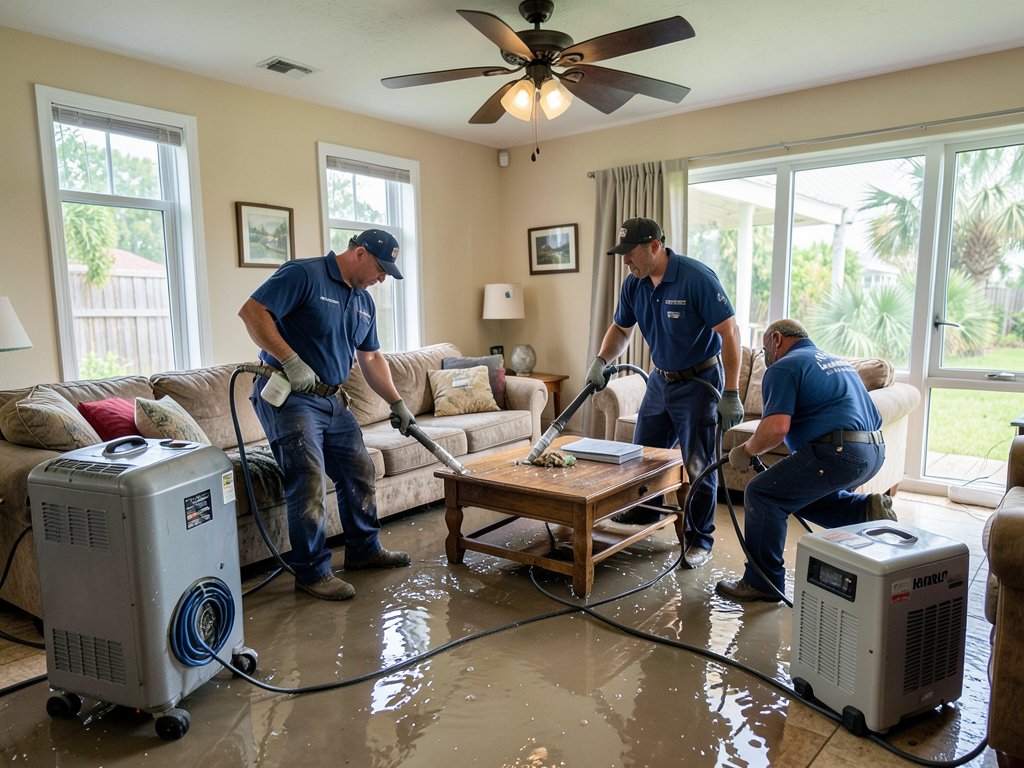
Immediate water extraction stops ongoing damage when pipes burst, appliances fail, or storms flood your property. Our trucks carry truck-mounted extractors and submersible pumps that remove thousands of gallons per hour from flooded basements, soaked carpets, and standing water in living spaces. We remove furniture, protect valuables with emergency board-up services, and begin structural drying within minutes of arrival. This rapid response prevents secondary damage that occurs when water sits for hours.
Water migrates into wall cavities, insulation, subflooring, and ceiling assemblies where it causes rot, mold growth, and structural failure. Industrial air movers and commercial dehumidifiers create airflow that evaporates moisture from building materials over three to five days. We monitor drying progress with daily moisture readings and thermal imaging to locate stubborn wet spots. This thorough approach returns materials to acceptable moisture content before reconstruction, preventing future problems.
Sewage backups and toilet overflows contain bacteria, viruses, and pathogens that create health hazards requiring specialized cleanup procedures. Our technicians wear protective suits and respirators while removing contaminated materials, disinfecting affected surfaces, and treating areas with EPA-registered antimicrobial solutions. We dispose of sewage-damaged materials following biohazard protocols and sanitize your property to safe, habitable conditions. This service includes odor removal and air scrubbing to eliminate lingering contamination.
Dunedin's coastal location and aging infrastructure create specific water damage vulnerabilities that affect properties throughout the area. Storm surge from tropical systems impacts homes near Honeymoon Island and along the Dunedin Causeway, while afternoon thunderstorms dump several inches of rain in under an hour, overwhelming drainage systems. The Gulf's humid air keeps moisture levels elevated year-round, slowing natural drying and accelerating mold growth after water intrusion.
Many homes in historic downtown Dunedin feature original plumbing systems installed decades ago. Cast iron drain pipes corrode from the inside out, eventually failing without warning and flooding living spaces with sewage. Galvanized supply lines develop pinhole leaks that spray water inside walls for days before homeowners notice moisture stains. Properties built before modern building codes lack proper moisture barriers, allowing ground moisture to wick into concrete slabs and wooden framing members.
HVAC systems working against coastal humidity produce gallons of condensate daily. When drain lines clog or overflow pans crack, this water saturates ceilings, attics, and interior walls. Florida's high water table means even properly functioning sump pumps in low-lying areas near the Pinellas Trail run constantly during rainy season, and when they fail, crawlspaces flood within hours.
Properties near St. Joseph Sound and along barrier islands face storm surge that pushes Gulf water into homes during hurricanes and tropical storms. This saltwater intrusion corrodes electrical systems, damages drywall, and requires immediate removal to prevent permanent material degradation. Surge events often affect entire neighborhoods, creating service delays during the critical first 24 hours when damage prevention matters most.
Cast iron drain stacks and galvanized water supply lines installed in homes built before 1980 corrode from mineral deposits, acidic water, and age. These failures happen without warning, flooding bathrooms, kitchens, and laundry rooms with hundreds of gallons before anyone notices. The slow internal corrosion means pipes that look fine externally are paper-thin inside, ready to burst under normal water pressure.
Air conditioning systems in coastal Florida produce two to three gallons of condensate daily. When drain lines clog with algae or overflow pans rust through, this water saturates attic insulation, drips into walls, and creates ceiling stains that indicate much larger hidden damage. These leaks often go unnoticed for weeks, causing extensive rot and mold growth before homeowners spot visible water damage.
Braided stainless steel washing machine hoses fail after five to seven years of use, rupturing under full supply pressure and flooding laundry rooms with eight to ten gallons per minute. These failures typically happen when machines are not in use, allowing water to run for hours before discovery. The high flow rate spreads water into adjacent rooms, hallways, and down through ceiling assemblies into lower levels.
When you call Fortress Water Damage Restoration Tampa, you reach a live person who immediately dispatches our nearest crew to your Dunedin property. We ask about the water source, affected areas, and any immediate safety concerns like electrical hazards or structural instability. This initial conversation helps our technicians arrive with the right equipment and safety gear for your specific situation.
Our crew typically arrives within 60 minutes of your call, often faster for properties near our staging locations along Alt 19 and Main Street. The first technician on-site conducts a safety assessment, locates the water source, and begins damage mitigation while additional team members unload equipment. We communicate clearly about what we're doing, why each step matters, and how long the process will take.
You can expect transparency throughout restoration. We document everything with photos, moisture readings, and detailed notes that support your insurance claim. Our project manager provides daily updates, explains drying progress, and answers questions about timeline and costs. We treat your home like our own, using floor protection, wearing boot covers, and maintaining a clean work area throughout the restoration process.
Your call reaches a trained coordinator who gathers critical information about your water emergency while simultaneously dispatching the nearest crew. We ask about water source, affected rooms, and visible damage to ensure our technicians arrive prepared with appropriate extraction and drying equipment. You receive an estimated arrival time and our technician's direct phone number for real-time updates. This coordinated response eliminates confusion and gets help to your property fast when every minute counts.
We photograph every affected area before, during, and after restoration work. Moisture meters and thermal imaging cameras provide measurable data that insurance adjusters require for claim approval. Our technicians create detailed room-by-room inventories of damaged materials, equipment placement logs, and daily drying progress reports. This documentation eliminates disputes with insurance carriers and provides you with complete records of all work performed. We send reports directly to your adjuster and keep you copied on all communications.
We don't leave until moisture readings confirm your property meets industry dryness standards. Technicians test multiple locations in affected areas with penetrating moisture meters, comparing readings to unaffected areas and manufacturer specifications for each material type. Wall cavities, subflooring, and framing members must reach acceptable moisture content before we remove drying equipment and begin reconstruction. You receive a final moisture map showing all test locations and readings, documenting complete remediation.
Fortress follows a systematic approach that stops damage, removes all moisture, and restores your property to pre-loss condition. This process follows IICRC standards while adapting to Dunedin's specific climate challenges and building construction methods.
Our crew arrives with truck-mounted extractors and portable pumps to remove standing water immediately. Technicians locate the water source, shut off supply lines if needed, and assess damage extent using moisture meters and thermal cameras. We move furniture to dry areas, remove soaked contents for cleaning or disposal, and extract water from carpets, padding, and flooring. Emergency board-up services protect your property from weather or security threats while restoration happens.
Industrial air movers and commercial dehumidifiers run continuously for three to five days, creating airflow that evaporates moisture from building materials. We position equipment strategically to dry wall cavities, subflooring, and ceiling assemblies. Technicians visit daily to record moisture levels, adjust equipment placement, and monitor drying progress. Antimicrobial treatments prevent mold growth during the drying period. We don't remove equipment until moisture readings confirm complete dryness.
Once materials reach acceptable moisture content, our reconstruction crew rebuilds damaged areas. This includes drywall replacement, flooring installation, paint, trim work, and any structural repairs needed. We match existing finishes and materials so restored areas blend seamlessly with unaffected parts of your home. Final walkthrough confirms all work meets your satisfaction before we consider the project complete and process final insurance payments.
Professional water damage restoration in Dunedin requires adherence to multiple technical standards and Florida-specific building codes. The Institute of Inspection, Cleaning and Restoration Certification publishes the IICRC S500 Standard for water damage restoration, which establishes protocols for moisture assessment, drying procedures, and documentation requirements. This standard categorizes water by contamination level and defines appropriate response procedures for each category.
Category 1 water originates from sanitary sources like supply lines and carries minimal contamination. Category 2 water contains biological or chemical contamination that can cause illness if ingested, such as washing machine discharge or toilet bowl water without feces. Category 3 water is grossly contaminated and includes sewage, rising floodwater, and any water that has contacted contaminated surfaces. Each category requires specific handling procedures, protective equipment, and disposal methods.
Florida's climate demands faster response times than IICRC minimum standards suggest. While the S500 standard recommends beginning mitigation within 24 to 48 hours, coastal humidity means mold colonies establish within 24 hours of water exposure. Professional restoration companies serving Dunedin should respond within four hours of notification and begin active drying within six hours to prevent microbial amplification.
Psychrometric calculations guide equipment placement and drying strategy. Technicians measure temperature, relative humidity, and moisture content to calculate grain depression and vapor pressure. These measurements determine how many air movers and dehumidifiers are needed based on affected square footage, material types, and ambient conditions. Proper calculations prevent under-drying, which leaves hidden moisture, and over-drying, which wastes energy and extends timelines.
The Florida Building Code requires moisture barriers under concrete slabs and vapor retarders in wall assemblies for new construction and substantial renovations. Restoration work that involves rebuilding must meet current code requirements even if original construction predates these standards. This often means upgrading moisture protection during reconstruction, which prevents future water intrusion problems but requires coordination with local building departments for proper permitting and inspection.
Antimicrobial treatments must use EPA-registered products applied according to manufacturer specifications. Product selection depends on surface type, contamination level, and whether affected areas remain visible or become concealed during reconstruction. Treatments applied to surfaces that will be covered require different chemistry than those remaining exposed. All antimicrobial applications require documentation of product name, EPA registration number, application rate, and coverage area for insurance and health safety records.
The water damage restoration standard establishes procedures for assessment, water removal, drying, cleaning, and restoration. It defines four classes of water damage based on evaporation rate and three categories based on contamination level. Professional restoration companies follow these protocols to ensure complete drying, prevent microbial growth, and maintain documentation that insurance carriers require for claim processing and payment.
Penetrating moisture meters measure water content in wood, drywall, and concrete using electrical resistance or electromagnetic waves. Readings compare affected areas to unaffected reference areas to determine dryness. Different materials have different acceptable moisture content percentages. Wood framing should measure below 15 percent, while concrete can retain higher moisture levels. These measurements guide equipment placement and verify completion.
Structural drying typically requires three to five days of continuous air movement and dehumidification. Timeline varies based on material thickness, water category, ambient humidity, and temperature. Hardwood flooring and concrete slabs take longer than drywall and carpet. Category 3 water requires material removal rather than drying in many cases. Rushing the drying process leaves hidden moisture that causes mold growth and structural damage months later.
Reconstruction work requires building permits when it involves structural members, electrical systems, or plumbing. The Florida Building Code mandates specific moisture barriers, insulation R-values, and wind load requirements based on Dunedin's location in the High Velocity Hurricane Zone. Restoration contractors must pull permits, pass inspections, and provide code compliance documentation. This protects property owners from liability and ensures rebuilt areas meet current safety standards.
This video explains professional water damage restoration procedures for Dunedin Florida properties. Content covers emergency water extraction techniques, structural drying methods using commercial dehumidifiers and air movers, moisture detection with thermal imaging, and insurance documentation requirements. The video discusses coastal Florida's unique water damage challenges including hurricane storm surge, high humidity mold growth, and aging plumbing failures common in historic homes. Viewers learn what to expect during the restoration process and why rapid response within 60 minutes prevents secondary damage and reduces overall costs.
Fortress Water Damage Restoration Tampa maintains rapid response capabilities across every Dunedin neighborhood from Honeymoon Island to the Dunedin Causeway. Our service area includes historic downtown properties along Main Street and Broadway, waterfront homes near St. Joseph Sound, and residential neighborhoods spreading inland toward Alt 19. We understand how water damage patterns differ across these areas based on elevation, construction era, and proximity to Gulf waters.
Properties in the Patricia Avenue Historic District face unique challenges from aging plumbing systems and pier-and-beam foundations that require specialized drying techniques. These homes built in the 1920s through 1940s often lack moisture barriers and feature wood framing members susceptible to rot when exposed to prolonged dampness. Our crews train specifically on historic preservation techniques that dry these structures without damaging original materials or architectural details.
Waterfront properties along Edgewater Drive and near the Dunedin Marina experience different water threats. Storm surge during tropical systems pushes saltwater into these homes, requiring immediate freshwater flushing and specialized corrosion treatment for electrical systems and metal fixtures. The proximity to Gulf waters means these properties maintain higher ambient humidity year-round, extending drying times and demanding more aggressive dehumidification strategies.
Inland neighborhoods between Scotland Street and San Mateo Drive near the Pinellas Trail typically feature concrete block construction on concrete slabs common to homes built from the 1970s through 1990s. Water damage in these properties often involves HVAC condensate leaks, washing machine failures, and plumbing supply line bursts. The slab-on-grade construction can trap moisture underneath flooring materials, requiring specialized drying mats and extended monitoring to prevent tile delamination and mold growth in tile mortar beds.
We also serve newer developments along Alternate 19 and near the Dunedin Highlands Golf Course where modern construction includes impact-resistant windows and elevated first-floor heights designed to minimize flood risk. These properties benefit from current building code moisture barriers but still face water damage from appliance failures, roof leaks, and plumbing issues. Our familiarity with current construction methods allows faster damage assessment and more efficient drying strategies.
The northern sections of Dunedin near Curlew Road and the Clearwater border face drainage challenges from afternoon thunderstorms that dump several inches of rain in under an hour. Low-lying areas experience street flooding that backs up into garages and threatens foundation walls. We respond quickly to these weather events, understanding that multiple properties often need service simultaneously during major storm systems.
Water damage restoration is worth it if you act fast. In Dunedin, high humidity accelerates mold growth within 24 to 48 hours. Without professional extraction and drying, you face structural rot, electrical hazards, and mold contamination. Restoration stops secondary damage, preserves your property value, and protects your health. Most insurance policies cover sudden water events, which makes professional help affordable. Delaying restoration turns a manageable loss into a total gut job. If water touches drywall, flooring, or insulation, call a restoration company immediately.
Water remediation stops the immediate problem. Technicians extract standing water, dry out the structure, and remove contaminated materials. Restoration rebuilds what was damaged. This includes replacing drywall, flooring, cabinets, and repainting. Remediation is emergency response. Restoration is reconstruction. Most Dunedin homeowners need both after a flood or pipe burst. The same company often handles both phases, which streamlines the insurance claim. Remediation happens first to prevent mold. Restoration follows once the structure is dry and safe.
If you need an alternative to ServPro in Dunedin, look for a local company with fast response times and direct insurance billing. Local firms often respond faster because they are based in the area, not dispatched from a regional hub. They know Dunedin's climate challenges, including afternoon thunderstorms and coastal humidity. Check for IICRC certification, 24/7 availability, and thermal imaging equipment. A local provider gives you direct access to the owner, not a call center. That makes communication clearer and claim resolution faster.
Water damage restoration is worth it if you act fast. In Dunedin, high humidity accelerates mold growth within 24 to 48 hours. Without professional extraction and drying, you face structural rot, electrical hazards, and mold contamination. Restoration stops secondary damage, preserves your property value, and protects your health. Most insurance policies cover sudden water events, which makes professional help affordable. Delaying restoration turns a manageable loss into a total gut job. If water touches drywall, flooring, or insulation, call a restoration company immediately.
Water remediation stops the immediate problem. Technicians extract standing water, dry out the structure, and remove contaminated materials. Restoration rebuilds what was damaged. This includes replacing drywall, flooring, cabinets, and repainting. Remediation is emergency response. Restoration is reconstruction. Most Dunedin homeowners need both after a flood or pipe burst. The same company often handles both phases, which streamlines the insurance claim. Remediation happens first to prevent mold. Restoration follows once the structure is dry and safe.
If you need an alternative to ServPro in Dunedin, look for a local company with fast response times and direct insurance billing. Local firms often respond faster because they are based in the area, not dispatched from a regional hub. They know Dunedin's climate challenges, including afternoon thunderstorms and coastal humidity. Check for IICRC certification, 24/7 availability, and thermal imaging equipment. A local provider gives you direct access to the owner, not a call center. That makes communication clearer and claim resolution faster.
Water damage restoration includes water extraction, structural drying, dehumidification, mold prevention, and content restoration. Technicians remove standing water with pumps and extractors, then set up air movers and dehumidifiers to dry framing, subfloors, and insulation. They monitor moisture levels daily using moisture meters and thermal cameras. Antimicrobial treatments prevent mold growth. Contents like furniture and documents are cleaned or dried separately. In Dunedin, restoration also includes checking for hidden moisture in walls and attics, where Florida humidity complicates drying. Restoration ends when moisture levels return to normal.
Restoration for water damage in Dunedin ranges from a few hundred dollars for minor leaks to several thousand for major flooding. Cost depends on water category, affected square footage, and materials damaged. Clean water from a supply line is cheaper to clean than sewage backups. Drying a single room costs less than drying an entire home. Most homeowners insurance policies cover sudden water damage, so your out-of-pocket expense is often just the deductible. Get a detailed estimate before work begins. Avoid companies that refuse to document scope and pricing.
Water damage repair can be expensive if you delay action. Minor leaks caught early cost less than widespread flooding. The longer water sits, the more it spreads into subfloors, wall cavities, and insulation. In Dunedin, high humidity accelerates mold growth, which adds remediation costs. A small bathroom leak might cost a few hundred dollars to dry. A flooded home with mold contamination can exceed ten thousand. Insurance often covers sudden events, which reduces your burden. Fast response lowers total repair costs by preventing secondary damage.
Insurance pays for water restoration if the damage is sudden and accidental. Burst pipes, washing machine overflows, and roof leaks from storms are usually covered. Gradual damage from slow leaks or poor maintenance is not. In Dunedin, hurricane-related flooding requires separate flood insurance through FEMA. Standard homeowners policies exclude rising water. Most restoration companies work directly with insurers, handle documentation, and bill your carrier. Review your policy before filing. Deductibles apply. If you are unsure, call your adjuster immediately after discovering water damage.
Mold growth after water damage is highly likely in Dunedin. Florida's humidity and heat create ideal conditions for spore germination. Mold begins growing within 24 to 48 hours of water exposure. If drywall, insulation, or carpet stays wet beyond that window, mold colonies establish. Professional drying prevents this by removing moisture quickly and treating surfaces with antimicrobials. Visible mold means hidden growth exists behind walls. If you smell musty odors or see discoloration after water damage, assume mold is present. Immediate extraction and dehumidification reduce mold risk significantly.
You can claim the full cost of covered water damage, minus your deductible. This includes water extraction, drying, demolition, reconstruction, and contents cleaning. Your adjuster determines the payout based on your policy limits and the scope of damage. Document everything with photos and keep all receipts. In Dunedin, storm damage may fall under wind or flood policies, depending on the source. If your claim is denied or undervalued, you can dispute it with documentation from your restoration company. Never start repairs before your adjuster inspects the damage.
SERVPRO offers national brand recognition and standardized processes. They have predictable quality and insurance companies know their procedures. The downside is slower response times because dispatchers route calls regionally, not locally. You deal with corporate layers, not the owner. Local Dunedin companies respond faster, give you direct access to decision makers, and often charge less because they have lower overhead. SERVPRO works well for large commercial losses. For residential water damage, a local IICRC-certified company offers better service, faster communication, and equal technical skill.
Water damage restoration includes water extraction, structural drying, dehumidification, mold prevention, and content restoration. Technicians remove standing water with pumps and extractors, then set up air movers and dehumidifiers to dry framing, subfloors, and insulation. They monitor moisture levels daily using moisture meters and thermal cameras. Antimicrobial treatments prevent mold growth. Contents like furniture and documents are cleaned or dried separately. In Dunedin, restoration also includes checking for hidden moisture in walls and attics, where Florida humidity complicates drying. Restoration ends when moisture levels return to normal.
Restoration for water damage in Dunedin ranges from a few hundred dollars for minor leaks to several thousand for major flooding. Cost depends on water category, affected square footage, and materials damaged. Clean water from a supply line is cheaper to clean than sewage backups. Drying a single room costs less than drying an entire home. Most homeowners insurance policies cover sudden water damage, so your out-of-pocket expense is often just the deductible. Get a detailed estimate before work begins. Avoid companies that refuse to document scope and pricing.
Water damage repair can be expensive if you delay action. Minor leaks caught early cost less than widespread flooding. The longer water sits, the more it spreads into subfloors, wall cavities, and insulation. In Dunedin, high humidity accelerates mold growth, which adds remediation costs. A small bathroom leak might cost a few hundred dollars to dry. A flooded home with mold contamination can exceed ten thousand. Insurance often covers sudden events, which reduces your burden. Fast response lowers total repair costs by preventing secondary damage.
Insurance pays for water restoration if the damage is sudden and accidental. Burst pipes, washing machine overflows, and roof leaks from storms are usually covered. Gradual damage from slow leaks or poor maintenance is not. In Dunedin, hurricane-related flooding requires separate flood insurance through FEMA. Standard homeowners policies exclude rising water. Most restoration companies work directly with insurers, handle documentation, and bill your carrier. Review your policy before filing. Deductibles apply. If you are unsure, call your adjuster immediately after discovering water damage.
Mold growth after water damage is highly likely in Dunedin. Florida's humidity and heat create ideal conditions for spore germination. Mold begins growing within 24 to 48 hours of water exposure. If drywall, insulation, or carpet stays wet beyond that window, mold colonies establish. Professional drying prevents this by removing moisture quickly and treating surfaces with antimicrobials. Visible mold means hidden growth exists behind walls. If you smell musty odors or see discoloration after water damage, assume mold is present. Immediate extraction and dehumidification reduce mold risk significantly.
You can claim the full cost of covered water damage, minus your deductible. This includes water extraction, drying, demolition, reconstruction, and contents cleaning. Your adjuster determines the payout based on your policy limits and the scope of damage. Document everything with photos and keep all receipts. In Dunedin, storm damage may fall under wind or flood policies, depending on the source. If your claim is denied or undervalued, you can dispute it with documentation from your restoration company. Never start repairs before your adjuster inspects the damage.
SERVPRO offers national brand recognition and standardized processes. They have predictable quality and insurance companies know their procedures. The downside is slower response times because dispatchers route calls regionally, not locally. You deal with corporate layers, not the owner. Local Dunedin companies respond faster, give you direct access to decision makers, and often charge less because they have lower overhead. SERVPRO works well for large commercial losses. For residential water damage, a local IICRC-certified company offers better service, faster communication, and equal technical skill.
We proudly serve the entire Tampa area with rapid-response water damage restoration services. Whether you’re downtown, in the suburbs, or operating a business near the bay, our expert team is just minutes away. Use the map below to view our service zone or find our nearest location. We’re ready to respond wherever you need us. Your peace of mind is only a call or click away.
Address:
Dunedin, FL, 34698

The Home Buyer Guide to Spotting Hidden Water Damage During a Westchase Open House Walking through an open house in Westchase should feel exciting. You imagine your family in the kitchen. You picture weekend barbecues…
How Clogged Gutters and Downspouts Can Lead to a Flooded Living Room in Wooded Lutz…

Why You Should Never Use Bleach to Clean Up Mold After a Leak in Your…

Dealing With Water Damage in Your Backyard ADU or Guest House in Seminole Heights Water…
Water damage gets worse every hour. Protect your Dunedin property with rapid response and professional restoration. Fortress Water Damage Restoration Tampa answers calls 24/7 with crews ready to respond. Contact us now at (656) 219-8088 for immediate dispatch and stop damage before it spreads.