




Menu

Water Damage Restoration in Tampa | 24/7 Emergency Response Backed by Advanced Moisture Detection Technology

Fortress Water Damage Restoration Tampa combines rapid emergency dispatch with thermal imaging and hygrometric equipment to stop water damage progression in your home or business before secondary damage takes hold.

Slider Image 1
Slider Image 2
Slider Image 3
Slider Image 4
Slider Image 5
Slider Image 7
Slider Image 8
Slider Image 9
Slider Image 10
Slider Image 11

Why Tampa Properties Face Constant Water Damage Threats

Tampa sits at the intersection of multiple water damage risk factors. The Gulf Coast humidity creates persistent indoor moisture levels above 60 percent, which accelerates mold colonization within 24 to 48 hours of any water intrusion. Add the average 46 inches of annual rainfall, concentrated heavily during June through September, and you face near-constant stress on building envelopes.

The water table sits high across Hillsborough County. Homes in South Tampa, Hyde Park, and neighborhoods near Bayshore Boulevard experience groundwater seepage during heavy rain events. Older properties built on pier and beam foundations before modern waterproofing standards face chronic crawl space flooding. Slab foundations in newer developments like New Tampa crack under soil expansion and contraction, creating pathways for water infiltration.

Hurricane season brings storm surge risks to waterfront properties along Tampa Bay and the Hillsborough River. Even inland locations face wind-driven rain that breaches roof penetrations and window flashing. The combination of aging infrastructure, tropical weather patterns, and coastal geography makes water damage remediation a recurring need rather than a rare emergency.

Burst supply lines, failed water heaters, and backed-up sewer laterals add to weather-related threats. When any of these failures happen, the clock starts immediately. Water damage cleanup must begin within hours to prevent structural decay, electrical hazards, and microbial growth that threatens indoor air quality.

Why Tampa Properties Face Constant Water Damage Threats
How Professional Water Damage Mitigation Actually Works

How Professional Water Damage Mitigation Actually Works

Water damage repair starts with stopping the source. We isolate the water supply, secure the breach point, and document the affected areas with moisture mapping. This is not guesswork. We use infrared thermal cameras to identify hidden moisture in wall cavities, under flooring, and above ceilings where visual inspection misses problems.

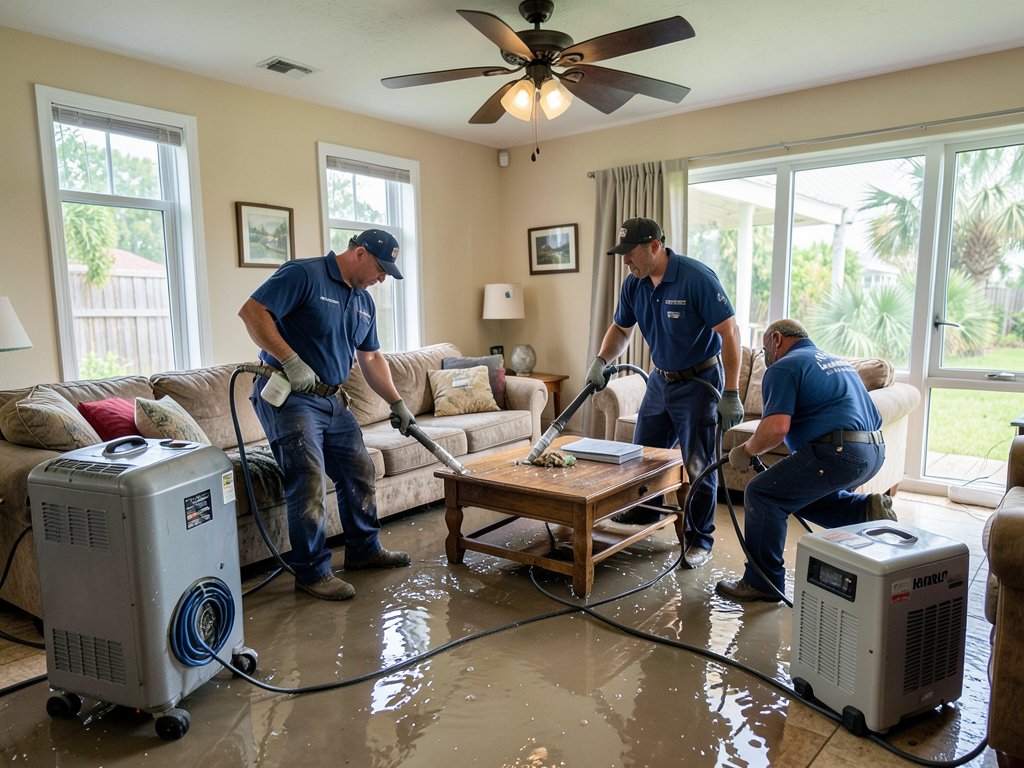
Extraction follows immediately. Truck-mounted extractors remove standing water faster than shop vacuums or mops. We pull water from carpets, padding, and porous materials before it migrates deeper into the structure. Speed matters because Category 2 water (from appliances or clean supply lines) becomes Category 3 (grossly contaminated) after contact with building materials.

Drying comes next. Commercial-grade air movers and low-grain refrigerant dehumidifiers create controlled evaporation. We do not just point fans at wet spots. Psychrometric calculations determine the right equipment placement and runtime based on material types, air temperature, and relative humidity. We monitor daily with moisture meters and adjust the drying plan until materials return to acceptable moisture content levels.

Antimicrobial treatments address contamination risks. If the water source involved sewage, we apply EPA-registered disinfectants after cleaning. Even clean water events require mold prevention because Tampa's humidity gives spores ideal conditions. We treat affected areas and verify dryness before reconstruction begins.

Water damage mitigation is not about making things look normal. It is about returning the structure to pre-loss moisture levels and eliminating microbial growth conditions. Cosmetic repairs come last, after verification that the building is dry and safe.

What Happens When You Call for Emergency Water Removal Services

Water Damage Restoration in Tampa | 24/7 Emergency Response Backed by Advanced Moisture Detection Technology
01

Immediate Dispatch and Assessment

You call our emergency line. We dispatch a technician to your Tampa property within 60 to 90 minutes. The technician performs a visual inspection, uses moisture detection equipment to map the damage, and documents everything for your insurance claim. You receive a verbal scope of work before any equipment touches your property. We explain the category of water, affected materials, and estimated timeline.
02

Water Extraction and Drying

We remove standing water with truck-mounted extractors, then position air movers and dehumidifiers based on psychrometric data. Equipment runs continuously. We monitor moisture levels daily using pin-type and non-invasive meters. You receive daily updates on drying progress. If readings show hidden moisture in walls or subfloors, we adjust equipment placement or add specialty drying equipment like injecti-dry systems for enclosed cavities.
03

Verification and Rebuild Clearance

When moisture readings match pre-loss levels or industry dry standards, we remove equipment and document final readings. You receive a completion certificate stating that affected materials have returned to acceptable moisture content. If reconstruction is needed, we coordinate with licensed contractors or your insurance-preferred vendors. The structure is dry, safe, and ready for repairs. No shortcuts. No guessing. Just verified dryness.

Why Tampa Property Owners Choose Fortress Water Damage Restoration Tampa

You need a water damage restoration company that understands Tampa's specific challenges. We have managed flood mitigation in Davis Islands after storm surge events. We have dried historic bungalows in Seminole Heights where original heart pine floors require careful moisture control to prevent cupping and buckling. We know that stucco exteriors common across Tampa hide moisture problems until interior damage appears.

Local building codes matter. Tampa amended its flood ordinances after multiple hurricane seasons. Properties in Special Flood Hazard Areas face stricter base flood elevation requirements. We document our work to meet these standards because improper mitigation affects your insurability and resale value. We understand the difference between FEMA compliance and insurance carrier requirements.

Insurance coordination removes friction from the claims process. We work directly with adjusters from Citizens Property Insurance, Florida Peninsula, and national carriers active in the Tampa market. We provide detailed moisture logs, equipment placement documentation, and daily progress photos. This transparency speeds claim approval and reduces disputes over scope or necessity.

We do not subcontract critical work. Our technicians hold IICRC certifications in water damage restoration. They operate the moisture detection equipment, manage the drying process, and make decisions about antimicrobial treatments. You get consistent quality because the same team that assesses the damage completes the mitigation.

Emergency availability is real. We answer calls 24 hours a day, every day. Water does not wait for business hours. Neither do we. When you call at 2 a.m. because a supply line failed, you reach a person who can dispatch help immediately, not an answering service that takes messages.

What to Expect During the Water Damage Cleanup Process

Response Time and Availability

We arrive at Tampa properties within 60 to 90 minutes of your emergency call. This applies to Westshore, Carrollwood, Town 'N' Country, and every neighborhood we serve. Our trucks carry extraction equipment, air movers, dehumidifiers, and moisture detection tools. We do not need to return to the shop for gear. The initial visit includes damage assessment, moisture mapping, and equipment setup. You do not wait days for the mitigation to begin. We start immediately because every hour of delay increases secondary damage and raises restoration expense.

Initial Inspection and Moisture Mapping

The assessment uses thermal imaging cameras and moisture meters to identify all affected materials. We check areas you cannot see like wall cavities, subfloors, and ceiling plenums. The technician documents moisture readings at multiple points and photographs everything. This creates a baseline for tracking drying progress. You receive a written scope explaining what materials are wet, the water category, and which materials require removal versus drying in place. This documentation supports your insurance claim and ensures we address all damage, not just visible problems.

Structural Drying and Final Results

We monitor moisture levels daily until readings meet IICRC S500 dry standards. Most residential water damage mitigation takes three to five days, depending on materials and extent of saturation. You receive daily updates showing moisture reduction progress. When drying is complete, we provide a certificate of completion with final moisture readings. The goal is not just dry surfaces but verified structural dryness that prevents mold growth and material degradation. If materials like drywall or insulation sustained Category 3 contamination, we remove and dispose of them properly rather than attempting to dry contaminated materials.

Documentation for Insurance Claims

We create detailed records throughout the water removal services process. This includes initial moisture readings, daily monitoring logs, equipment placement diagrams, and photographic documentation. Your insurance adjuster receives this information directly if you authorize it. We itemize all services and materials on invoices that break down extraction, drying, and antimicrobial treatments. This transparency prevents claim disputes and speeds payment. If the adjuster requests additional documentation or questions our scope, we provide technical justification. You do not navigate insurance language alone. We handle the technical communication.

Frequently Asked Questions

You Have Questions,
We Have Answers

How much will it cost to repair water damage? +

Water damage repair costs depend on the source, extent, and affected materials. Minor repairs might involve drywall replacement and drying, while major flooding requires structural work, mold remediation, and full demolition. Tampa homes face unique challenges from high humidity, which accelerates mold growth and increases costs. Your insurance policy often determines out-of-pocket expenses. Category 1 clean water costs less than Category 3 sewage backup. Get a professional inspection before committing to DIY repairs. Most Tampa restoration companies offer free assessments and work directly with your insurance adjuster to document damage and streamline claims.

What does water damage restoration include? +

Water damage restoration includes emergency water extraction, structural drying, moisture monitoring, and damage assessment. Technicians remove standing water using truck-mounted extractors, then place industrial dehumidifiers and air movers to dry walls, floors, and framing. They document moisture levels daily to prevent mold growth, which thrives in Tampa's humid climate. The process includes antimicrobial treatments, demolition of unsalvageable materials like soaked drywall or insulation, and content pack-out for salvageable belongings. Restoration teams coordinate with your insurance company, photograph damage, and provide detailed scope reports. The goal is to return your property to pre-loss condition while preventing secondary damage.

Can water damage be repaired? +

Yes, water damage can be repaired if addressed quickly. Speed matters in Tampa's humid environment, where mold colonizes within 24 to 48 hours. Professionals extract water, dry affected areas with commercial equipment, and replace damaged materials. Minor damage might require only drywall patching and paint, while severe flooding demands subfloor replacement, insulation removal, and structural repairs. Quick response prevents secondary damage like warping floors, swollen framing, or microbial growth. Delaying restoration increases costs and risks permanent structural compromise. Professional restoration ensures hidden moisture in wall cavities and subflooring gets addressed, not just surface fixes that hide bigger problems.

Is water damage restoration worth it? +

Yes, professional water damage restoration is worth it. DIY efforts miss hidden moisture trapped in wall cavities, under flooring, and within insulation, which leads to mold growth and structural rot. Tampa's humidity makes thorough drying critical. Professionals use thermal imaging cameras and moisture meters to find water you cannot see. They extract water fast, preventing warping and swelling. Insurance typically covers restoration when you act quickly, making professional service cost-effective. Skipping restoration saves money short-term but leads to expensive mold remediation, health issues, and structural repairs later. Professional documentation also protects your claim if your insurer disputes coverage.

Is water damage in walls covered by insurance? +

Insurance covers water damage in walls only if the cause is sudden and accidental. A burst pipe or washing machine hose failure typically qualifies. Gradual damage from slow leaks, poor maintenance, or neglect gets denied. Tampa homeowners must review their policy for exclusions related to flood versus water damage. Standard policies exclude flooding from storms or storm surge, which requires separate flood insurance through FEMA. Hidden leaks behind walls complicate claims. Your adjuster determines coverage based on the source and timeline. Document damage immediately with photos and contact your insurance company within 24 hours to protect your claim.

Why is water damage so expensive? +

Water damage restoration is expensive because it requires specialized equipment, skilled labor, and fast response. Industrial dehumidifiers, air movers, moisture meters, and extractors cost thousands to operate. Technicians work 24/7 to prevent mold, which colonizes in Tampa's humid climate within 48 hours. Structural drying takes days, not hours. Labor-intensive tasks include demolition, content pack-out, antimicrobial treatment, and reconstruction. Water migrates through porous materials like drywall and insulation, requiring extensive removal. Delayed response increases costs exponentially as secondary damage spreads. Professional restoration prevents bigger expenses like mold remediation, foundation repairs, and health-related costs from prolonged exposure to contaminated materials.

How Tampa's Hurricane History Demands Better Water Damage Preparedness

Tampa sits in one of the most hurricane-vulnerable metros in the United States. The last major direct hit was the 1921 Tampa Bay Hurricane, but near-misses like Irma in 2017 and Ian in 2022 caused widespread water intrusion from wind-driven rain and storm surge flooding. Properties along Bayshore Boulevard, Harbor Island, and the Channelside District face particular risk when tropical systems approach from the Gulf. Even inland areas experience flooding when the Hillsborough River rises during sustained rainfall. This history means water damage restoration readiness is not optional for Tampa property owners. It is essential infrastructure maintenance.

Hillsborough County enforces specific wind mitigation and flood protection standards that affect how water damage repair must be performed. Work in Special Flood Hazard Areas requires compliance with FEMA elevation requirements. Insurance carriers like Citizens Property Insurance demand documentation showing that mitigation followed industry standards. Using a local water damage restoration company familiar with these requirements protects your coverage and maintains your property value. We know which materials meet Florida Building Code standards for moisture resistance and which documentation your insurance adjuster expects to see in the claim file.
Water Damage Restoration Services in The Tampa Area

We proudly serve the entire Tampa area with rapid-response water damage restoration services. Whether you’re downtown, in the suburbs, or operating a business near the bay, our expert team is just minutes away. Use the map below to view our service zone or find our nearest location. We’re ready to respond wherever you need us. Your peace of mind is only a call or click away.

Address:
Fortress Water Damage Restoration Tampa, 4830 W Kennedy Blvd #600, Tampa, FL, 33609

Additional Services We Offer

Our news updates

Latest Articles & News from The Blogs

How Clogged Gutters and Downspouts Can Lead to a Flooded Living Room in Wooded Lutz Neighborhoods When heavy afternoon thunderstorms…

How Clogged Gutters and Downspouts Can Lead to a Flooded Living Room in Wooded Lutz Neighborhoods

How Clogged Gutters and Downspouts Can Lead to a Flooded Living Room in Wooded Lutz Neighborhoods When heavy afternoon thunderstorms…

Why You Should Never Use Bleach to Clean Up Mold After a Leak in Your Tampa Palms Home

Why You Should Never Use Bleach to Clean Up Mold After a Leak in Your Tampa Palms Home When you…

Dealing With Water Damage in Your Backyard ADU or Guest House in Seminole Heights

Dealing With Water Damage in Your Backyard ADU or Guest House in Seminole Heights Water damage in a Seminole Heights…

Contact Us

Water damage gets worse every hour you wait. Call Fortress Water Damage Restoration Tampa at (656) 219-8088 for immediate dispatch. We answer 24/7 and arrive ready to start extraction and drying. Do not let water destroy your property while you search for help.