




Menu

School & University Restoration in Tampa – Minimize Downtime, Protect Your Academic Mission

Fortress Water Damage Restoration Tampa delivers rapid, large-scale educational facility water damage restoration designed to preserve continuity, meet strict compliance standards, and protect your institution's reputation.

Slider Image 1
Slider Image 2
Slider Image 3
Slider Image 4
Slider Image 5
Slider Image 7
Slider Image 8
Slider Image 9
Slider Image 10
Slider Image 11

Why Tampa Educational Facilities Face Unique Water Damage Risks

Tampa's subtropical climate creates persistent threats to academic buildings. High humidity, afternoon thunderstorms, and hurricane season storm surge combine to make water intrusion a recurring liability for schools and universities. Aging infrastructure in older Tampa campuses compounds the problem. Cast iron piping, outdated HVAC condensate lines, and flat roof designs common in 1960s-era dormitories and classroom buildings create vulnerabilities.

When a pipe bursts in a residence hall or a storm floods a lecture hall, the operational impact is immediate. Classes relocate. Housing capacity shrinks. Liability exposure increases. Mold growth in occupied buildings triggers ADA and health code concerns. Tampa's warm, humid conditions accelerate microbial growth within 24 to 48 hours, making speed non-negotiable.

Educational facility water damage restoration requires more than extraction and drying. You must coordinate with environmental health and safety officers, maintain chain-of-custody for affected materials, and document every step for insurance and accreditation compliance. University flood cleanup services must address both the visible damage and the hidden moisture trapped in wall cavities, under flooring, and within HVAC plenums.

School disaster recovery services must account for sensitive equipment, archival materials, and the operational tempo of an academic calendar. You cannot afford weeks of downtime during finals or orientation. College campus water remediation must be surgical, fast, and invisible to the student experience wherever possible. Academic building water damage repair demands a contractor who understands institutional risk management, not just residential restoration.

Why Tampa Educational Facilities Face Unique Water Damage Risks
How Fortress Water Damage Restoration Tampa Manages Large-Scale Educational Restoration

How Fortress Water Damage Restoration Tampa Manages Large-Scale Educational Restoration

Institutional restoration is not a scaled-up version of residential work. It requires different equipment, different logistics, and different accountability structures. We deploy trailer-mounted desiccant dehumidifiers capable of processing thousands of cubic feet per minute, not portable units suited for basements. Our project managers carry IICRC certifications in water damage restoration and applied structural drying, ensuring thermal imaging, moisture mapping, and psychrometric calculations meet industry standards.

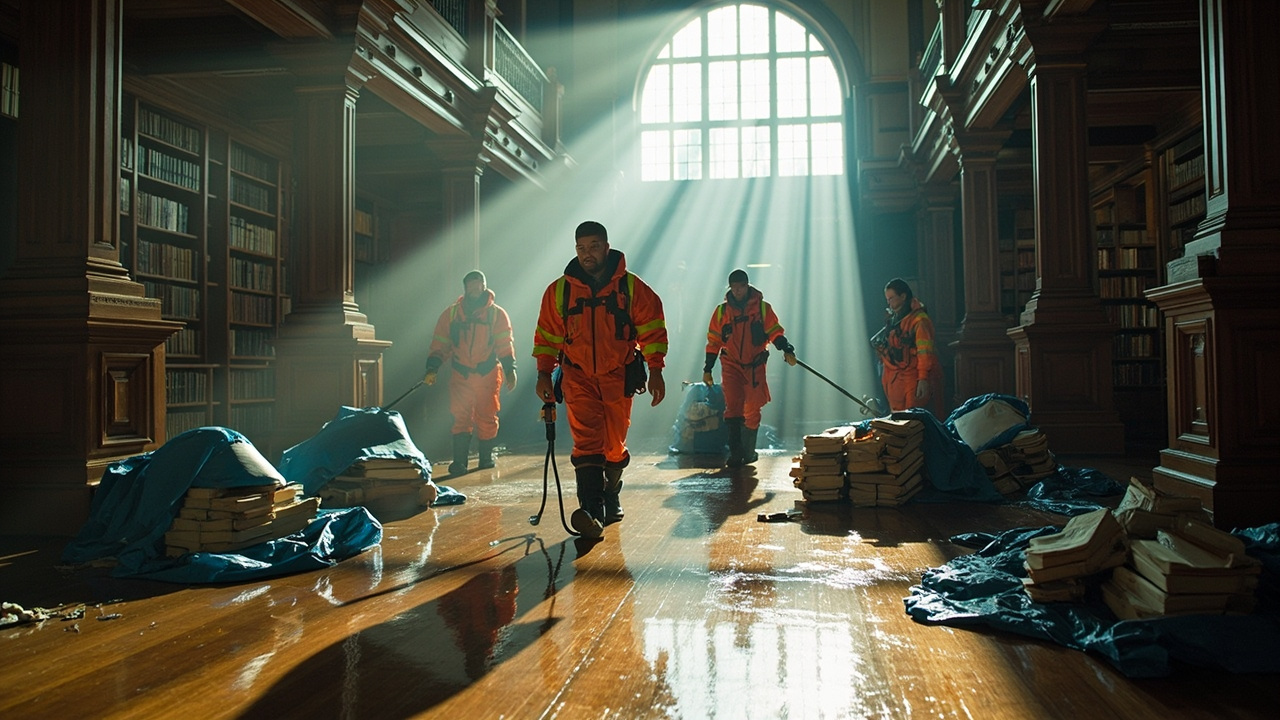
We coordinate with your facilities team to isolate affected zones without disrupting campus operations. We establish containment barriers using negative air machines and plastic sheeting to prevent cross-contamination into occupied spaces. We document pre-loss conditions with photo and video evidence, then track daily drying progress using calibrated moisture meters and thermal hygrometers. Every data point feeds into a daily log shared with your risk management office and insurance adjuster.

Our extraction process uses truck-mounted pumps and submersible units to remove standing water within hours, not days. We pull baseboards, drill weep holes in wall cavities, and inject airflow behind millwork to prevent hidden moisture from creating secondary damage. For contaminated water, we follow ANSI/IICRA S500 protocols, treating affected materials as Category 2 or Category 3 depending on source and exposure time.

Drying is not just about running fans. We calculate grain depression and vapor pressure differentials to optimize drying time. We adjust equipment placement based on real-time moisture readings, ensuring structural components reach equilibrium moisture content before reconstruction begins. This prevents callback issues and mold remediation costs six months later.

What to Expect During Campus Restoration

School & University Restoration in Tampa – Minimize Downtime, Protect Your Academic Mission
01

Emergency Mobilization and Containment

Within hours of your call, our team arrives with industrial extraction equipment and containment materials. We isolate the affected area, establish negative air pressure to prevent airborne contaminants from spreading, and begin water removal. We coordinate with campus security and facilities to maintain building access and minimize disruption to adjacent spaces. You receive an initial scope of work and projected timeline within 24 hours.
02

Drying and Environmental Monitoring

We deploy high-capacity air movers, desiccant dehumidifiers, and structural drying mats to extract moisture from walls, flooring, and subfloor assemblies. Our technicians monitor temperature, humidity, and material moisture content twice daily using calibrated instruments. We provide daily progress reports to your project stakeholders, including drying curves and projected completion dates. All work follows IICRC S500 standards for structural drying.
03

Verification and Documentation Closeout

Before demobilization, we verify all structural components have reached target moisture levels using invasive and non-invasive testing. We provide a certificate of drying completion, complete moisture logs, and photographic evidence of pre-loss and post-restoration conditions. You receive a full report package for insurance submission and facility records. We coordinate with your reconstruction contractor to ensure a seamless transition to rebuild phases.

Why Tampa Schools and Universities Choose Fortress Water Damage Restoration

Institutional decision-makers need contractors who understand the operational complexity of academic environments. You cannot shut down a residence hall for three weeks without a housing displacement plan. You cannot close a lab building without relocating sensitive research equipment. You need a restoration partner who integrates into your incident command structure, not one who treats your campus like a large house.

We understand Florida Building Code requirements for educational occupancies, including fire-rated assembly restoration and accessibility compliance. We work with your environmental health and safety team to ensure air quality testing, mold assessments, and hazardous material handling meet OSHA and EPA standards. Our project managers communicate in your language, whether that is risk management, capital planning, or student affairs.

Tampa's academic institutions face specific challenges. The University of Tampa, USF, and Hillsborough Community College operate aging facilities in flood-prone areas near the Hillsborough River and Tampa Bay. Fortress Water Damage Restoration Tampa has restored classroom buildings, residence halls, dining facilities, and administrative offices across the greater Tampa metro. We know how to navigate procurement processes, certificate of insurance requirements, and vendor compliance audits.

Speed matters, but so does accountability. We provide daily updates, maintain chain-of-custody for salvageable materials, and coordinate with your insurance carrier and third-party adjusters. Our goal is not just to dry your building. Our goal is to return your facility to full operation with minimal disruption, complete documentation, and zero liability gaps.

What Tampa Educational Institutions Should Know About Campus Restoration

Response Time and Mobilization Capacity

We maintain a 24/7 dispatch line and can mobilize a multi-technician crew within two hours of your emergency call. For large-scale incidents affecting multiple buildings or floors, we coordinate additional equipment and personnel from our regional network. Our response protocol includes immediate communication with your facilities director, risk manager, and campus police to establish site access, safety perimeters, and work schedules that minimize impact on academic operations. Speed is critical in Tampa's humid climate, where microbial growth accelerates rapidly.

Assessment and Scope Development

Our initial assessment includes moisture mapping using thermal imaging cameras, invasive moisture testing of structural components, and documentation of affected building systems. We identify hidden moisture in wall cavities, ceiling plenums, and under flooring assemblies that standard visual inspections miss. You receive a detailed scope of work outlining affected areas, required equipment, projected drying time, and estimated costs. We coordinate with your insurance carrier and provide supporting documentation for claims processing. All findings are documented with photo and video evidence.

Quality of Restoration and Structural Integrity

Our drying protocols follow ANSI/IICRC S500 standards, ensuring structural components reach equilibrium moisture content before reconstruction. We use calibrated moisture meters and thermal hygrometers to verify drying progress, not assumptions based on elapsed time. For contaminated water events, we follow EPA and OSHA guidelines for safe handling and disposal of affected materials. Our goal is not just to pass a final inspection. Our goal is to restore your building to pre-loss condition with zero risk of secondary damage or future mold growth.

Documentation and Compliance Records

Educational institutions require detailed records for risk management, accreditation, and regulatory compliance. We provide complete documentation including daily moisture logs, equipment placement diagrams, psychrometric calculations, air quality testing results, and certificate of drying completion. All records are delivered in both digital and hard copy formats. We maintain these records for seven years to support any future insurance audits or facility assessments. Our documentation meets the evidentiary standards required for claims processing and legal review.

Frequently Asked Questions

You Have Questions,
We Have Answers

What is school beautification? +

School beautification refers to strategic improvements to educational facilities that enhance appearance, functionality, and safety. For Tampa schools, this includes repainting exteriors to withstand high humidity, upgrading landscaping for hurricane resilience, repairing water-damaged drywall from roof leaks, and restoring damaged flooring. These projects extend beyond cosmetics. They address deferred maintenance that affects air quality, prevent mold growth in Florida's climate, and create environments that support learning. Effective beautification projects also improve property value and community perception while addressing underlying issues like water intrusion or aging infrastructure that compromise building integrity.

Is Harvard a university or a school? +

Harvard is both a university and a school. As Harvard University, it operates as a comprehensive research institution with multiple schools, including Harvard College (undergraduate), Harvard Law School, Harvard Medical School, and others. The term "school" applies to its individual colleges and graduate programs. This structure is common among major universities. The distinction matters for facility management and restoration work, where different buildings serve different functions. Each school within a university may have unique restoration needs based on use, foot traffic, lab equipment, dormitory occupancy, or historic preservation requirements.

What can you suggest for the improvement of the school? +

Schools benefit from addressing water damage quickly, improving HVAC systems for Tampa's humidity, and upgrading aging infrastructure before failures occur. Replace deteriorated ceiling tiles that trap moisture and harbor mold. Install proper drainage around foundations to prevent water intrusion during heavy rains. Modernize restrooms to reduce plumbing failures. Repair roof penetrations and flashing that allow leaks. Conduct regular mold inspections in crawl spaces and mechanical rooms. Establish preventive maintenance schedules for plumbing and HVAC systems. These improvements reduce emergency repairs, minimize class disruptions, protect indoor air quality, and extend building lifespan while controlling long-term costs.

What is a university? +

A university is a higher education institution that grants undergraduate and graduate degrees across multiple academic disciplines. Universities typically include several colleges or schools under one administration, offer research programs, and provide professional degrees in fields like law, medicine, or engineering. They differ from colleges, which generally focus on undergraduate education in a narrower range of subjects. For facility restoration purposes, universities present complex challenges. They operate research labs with specialized equipment, house thousands of students in dormitories, maintain historic buildings, and run 24/7 operations that require phased restoration work to minimize disruption to academic schedules.

What is the 10 rule for school? +

The 10 rule for schools typically refers to classroom management principles, not facility restoration. However, in building maintenance, a practical 10 rule means addressing water damage within 10 hours to prevent mold colonization. For Tampa schools facing high humidity, this timeline is critical. When pipes burst, roofs leak, or HVAC condensation accumulates, rapid response prevents minor water events from becoming major remediation projects. Schools must document damage immediately, extract standing water, establish drying equipment, and monitor moisture levels. Delayed response increases restoration costs, extends downtime, and creates health hazards that force classroom closures.

What are the benefits of renovating a school? +

Renovating schools improves indoor air quality, eliminates safety hazards, extends building lifespan, and enhances learning environments. In Tampa, renovation addresses water damage from hurricane season, removes mold growth caused by humidity, and repairs aging plumbing that threatens classrooms. Modern HVAC systems reduce operational costs and improve temperature control. Updated electrical systems support technology needs. Proper waterproofing prevents future damage. Renovations also increase property value, reduce liability exposure, and demonstrate commitment to student health. Schools that address deferred maintenance proactively avoid emergency closures, minimize business interruption, and control costs by fixing problems before they escalate into code violations.

Can a 2.5 GPA go to Harvard? +

This question addresses admissions standards, not facility restoration. However, for schools and universities in Tampa requiring restoration services after water damage, the focus should remain on protecting educational continuity regardless of institutional prestige. Whether you operate a private university, community college, or K-12 campus, water damage threatens operations equally. The priority is rapid response to minimize downtime, protect sensitive equipment and archives, maintain safe environments for students, and comply with health codes. Academic standards matter to admissions offices. Facility integrity matters to operations teams responsible for maintaining functional, code-compliant learning spaces.

What is the #1 hardest school to get into? +

This question concerns college admissions, not educational facility restoration. For facility managers and administrators responsible for Tampa schools and universities, the hardest challenge is often maintaining aging infrastructure while keeping campuses operational. Water damage from storms, aging pipe failures, and humidity-related deterioration create urgent situations requiring immediate professional response. The difficulty lies in coordinating restoration work around academic calendars, protecting sensitive research equipment, managing occupied dormitories during repairs, maintaining accreditation standards, and controlling costs within tight budgets. These operational challenges require experienced contractors who understand educational environments and can work within institutional constraints.

Why did Bill Gates quit Harvard? +

This question explores personal history unrelated to facility restoration. For Tampa educational institutions, the relevant concern is why administrators delay addressing water damage and deferred maintenance until problems force emergency action. Budget constraints, competing priorities, and underestimating minor leaks lead to costly failures. Small roof leaks become major mold remediation projects. Ignored plumbing issues flood computer labs. Deferred HVAC maintenance creates indoor air quality complaints. The lesson for facility managers is clear. Address water intrusion immediately. Schedule preventive maintenance. Budget for systematic repairs. Proactive management prevents catastrophic failures that disrupt education and multiply costs.

What are three things that would make school better? +

Three improvements that make schools better include eliminating water damage and mold that affect health, upgrading HVAC systems for proper humidity control in Tampa's climate, and maintaining plumbing infrastructure to prevent disruptive failures. Dry, well-ventilated classrooms with good air quality directly support learning and reduce absenteeism. Reliable building systems minimize emergency closures. Proactive maintenance reduces total ownership costs. While educational programming matters, facility conditions create the foundation for effective instruction. Schools cannot function when classrooms flood, mold grows in walls, or HVAC systems fail during Florida heat. Infrastructure investment protects educational investment.

How Tampa's Hurricane Season and Aging Campus Infrastructure Increase Water Damage Risk

Tampa Bay's geographic position makes it one of the most vulnerable metro areas in the United States for hurricane storm surge. Educational facilities built near the Hillsborough River or in low-lying areas face recurring flood risk during tropical systems. Many campus buildings were constructed between 1950 and 1980, before modern building codes addressed wind-driven rain infiltration and HVAC condensate management. Flat roof designs common in academic buildings create ponding water issues that accelerate membrane failure. When a hurricane or severe thunderstorm impacts Tampa, educational institutions face simultaneous failures across multiple buildings, overwhelming in-house facilities teams and requiring specialized large-scale university flood cleanup services and school disaster recovery services.

Fortress Water Damage Restoration Tampa has worked with public and private educational institutions throughout Hillsborough County, understanding the unique procurement, insurance, and operational continuity requirements academic facilities face. We coordinate with your facilities management team, risk office, and insurance carrier to ensure compliance with Florida Building Code, ADA accessibility standards, and institutional safety protocols. Our team understands the difference between occupied academic buildings and vacant structures, adjusting containment, air quality management, and work schedules to protect student and staff health. Choosing a local contractor with institutional restoration experience reduces liability exposure, accelerates insurance claims processing, and ensures your campus returns to full operation quickly.
Water Damage Restoration Services in The Tampa Area

We proudly serve the entire Tampa area with rapid-response water damage restoration services. Whether you’re downtown, in the suburbs, or operating a business near the bay, our expert team is just minutes away. Use the map below to view our service zone or find our nearest location. We’re ready to respond wherever you need us. Your peace of mind is only a call or click away.

Address:
Fortress Water Damage Restoration Tampa, 4830 W Kennedy Blvd #600, Tampa, FL, 33609

Additional Services We Offer

Our news updates

Latest Articles & News from The Blogs

The First 4 Hours After a Pipe Bursts in Your Gibsonton House When water starts spraying from a broken pipe…

The First 4 Hours After a Pipe Bursts in Your Gibsonton House

The First 4 Hours After a Pipe Bursts in Your Gibsonton House When water starts spraying from a broken pipe…

A Homeowner Guide to Choosing the Best Dehumidifier for Humidity Control in Seffner

A Homeowner Guide to Choosing the Best Dehumidifier for Humidity Control in Seffner Living in Seffner means dealing with Florida’s…

Why Your Kids Keep Sneezing After a Small Leak in Your Seffner Home

Why Your Kids Keep Sneezing After a Small Leak in Your Seffner Home Your child wakes up sneezing again. You…

Contact Us

Water damage does not wait for a convenient time. Call Fortress Water Damage Restoration Tampa at (656) 219-8088 for immediate response and expert educational facility restoration. We understand institutional risk management and deliver results that protect your academic mission.