




Menu

How to Handle Insurance Claims in Tampa – Get Maximum Payouts for Water Damage with Expert Documentation and Adjuster Support

Navigate the water damage insurance claim process with confidence using our proven documentation methods, direct adjuster communication, and comprehensive damage assessment protocols designed to maximize your settlement in Tampa.

Slider Image 1
Slider Image 2
Slider Image 3
Slider Image 4
Slider Image 5
Slider Image 7
Slider Image 8
Slider Image 9
Slider Image 10
Slider Image 11

Why Water Damage Claims Get Denied in Tampa's High-Humidity Climate

Tampa homeowners face a frustrating reality. The same subtropical humidity that makes this city livable also creates the perfect storm for claim denials. Insurance adjusters in Hillsborough County know that mold growth starts within 24 to 48 hours in our climate, and they use this timeline against you.

You call your insurer after discovering water pooling in your Seminole Heights bungalow. They send an adjuster three days later. By then, secondary damage has spread. The adjuster claims the mold was pre-existing. Your claim gets reduced or denied entirely.

Filing a water damage claim requires immediate action in Tampa's 80 percent average humidity environment. The delay between discovery and documentation becomes the insurance company's best weapon. They argue that you failed to mitigate damage, even though you called within hours.

The water damage insurance claim process favors those who understand adjuster tactics. Most homeowners in South Tampa or Hyde Park submit incomplete documentation. They photograph surface damage but miss moisture readings in wall cavities. They document the flooded bathroom but ignore elevated humidity levels in adjacent rooms.

Navigating water restoration claims means proving causation, extent, and timeliness. You need thermal imaging to show moisture migration through drywall. You need hygrometer readings to establish humidity levels. You need detailed photo sequences with timestamps. Without this evidence, adjusters lowball settlements or deny claims outright, citing policy exclusions you never knew existed.

The average Tampa homeowner loses thousands in potential claim value through poor documentation and weak adjuster negotiations.

Why Water Damage Claims Get Denied in Tampa's High-Humidity Climate
The Documentation Protocol That Forces Fair Settlements

The Documentation Protocol That Forces Fair Settlements

Managing water mitigation claims starts with forensic-level documentation before any water extraction begins. Fortress Water Damage Restoration Tampa deploys moisture meters and thermal imaging cameras within the first hour of contact. We map moisture content in structural materials using pin-type and pinless meters calibrated to ANSI/IICRC S500 standards.

Our technicians photograph every affected surface from multiple angles with EXIF data intact. We document moisture readings on studs, subfloors, and drywall at specific grid points. This creates an irrefutable baseline that adjusters cannot dispute. We measure relative humidity in each affected room and adjacent spaces to establish the contamination zone.

Tips for water damage insurance claims always include creating a moisture map. We sketch floor plans showing water migration patterns and affected materials by class and category. Class 3 water damage, the most common in Tampa's heavy rain events, requires documenting how fast-evaporating materials absorbed water. We note ceiling texture saturation, carpet pad compression, and baseboard swelling with precise measurements.

We communicate directly with your adjuster using industry terminology they understand. When we reference psychrometric calculations or vapor pressure differentials, adjusters recognize they are dealing with professionals who know IICRC standards. This shifts negotiation dynamics immediately.

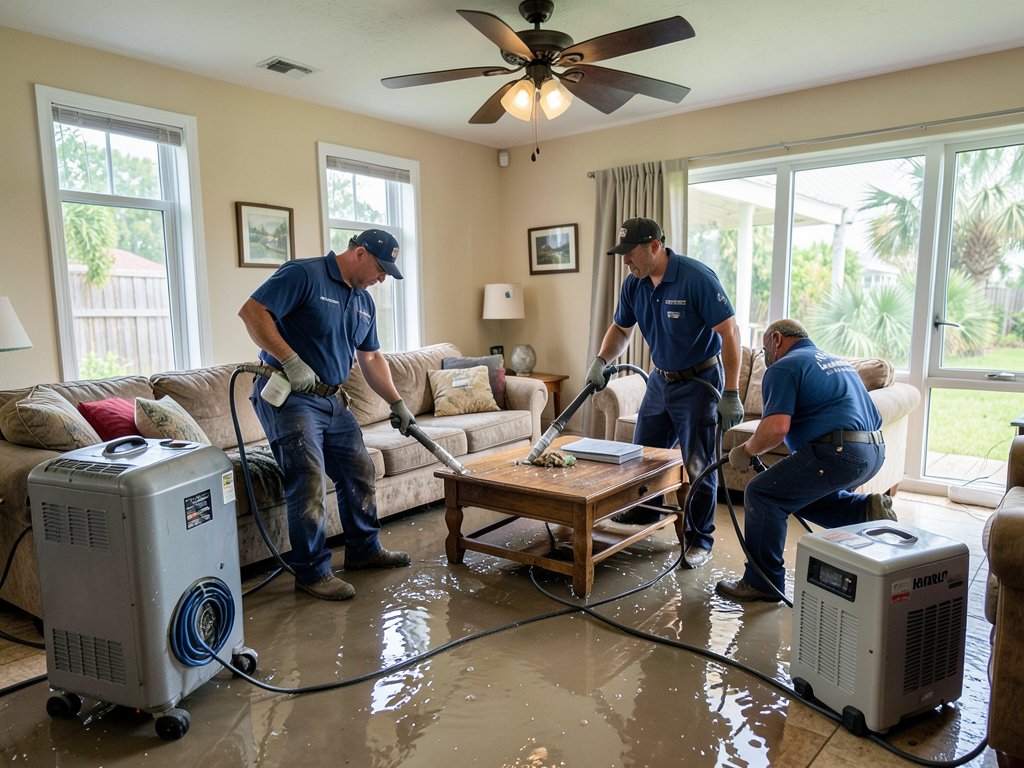
Our teams extract water using truck-mounted systems that document gallons removed. We place commercial dehumidifiers with data loggers that record temperature and humidity every 15 minutes. This creates a drying log that proves mitigation efforts, eliminating the insurer's favorite denial tactic.

Every step gets photographed, measured, and logged in real-time documentation that becomes your claim evidence package.

Your Claim Documentation Timeline

How to Handle Insurance Claims in Tampa – Get Maximum Payouts for Water Damage with Expert Documentation and Adjuster Support
01

Emergency Assessment and Baseline

Within two hours of your call, our technicians arrive with moisture detection equipment and documentation tools. We establish moisture content baselines in affected and unaffected areas, photograph all damage with measurement references, and create the initial moisture map. This baseline becomes the foundation for your entire claim. We notify your insurer immediately with preliminary findings that trigger your claim timeline and establish our role as your mitigation contractor.
02

Adjuster Coordination and Evidence Building

We schedule your adjuster walkthrough and provide them with our preliminary assessment. During their visit, we explain our findings using industry-standard terminology and present measured data. We document their observations and any agreements on scope. As mitigation proceeds, we continue logging equipment readings, taking progress photos, and updating the moisture map. This creates a comprehensive evidence trail that supports your claim value and prevents scope disputes later.
03

Final Documentation and Settlement Support

After restoration reaches IICRC dry standards, we provide final moisture readings proving complete mitigation. We compile all documentation into a detailed report with photos, equipment logs, and material inventories. This package goes to your adjuster with our final invoice. If the insurer disputes charges or scope, we provide technical clarification and reference specific policy language. Our documentation has supported thousands of successful claims, giving Tampa homeowners the evidence they need for fair settlements.

Why Tampa Homeowners Trust Our Claim Support Process

Fortress Water Damage Restoration Tampa has worked with every major insurance carrier operating in Hillsborough County. We know which adjusters understand IICRC protocols and which ones need technical education. This familiarity accelerates your claim timeline and reduces disputes.

Our technicians hold IICRC Water Restoration Technician certifications and understand the science behind psychrometrics and structural drying. When an adjuster questions our equipment placement or drying timeline, we reference the specific IICRC S500 standard sections that support our methods. This technical fluency prevents claim delays and scope reductions.

We understand Tampa's unique building characteristics. Many homes in historic neighborhoods like Old Seminole Heights feature pier and beam foundations that create crawl space humidity issues. Water damage in these structures requires different documentation than slab-on-grade homes common in newer developments like New Tampa. We adjust our assessment protocols based on your home's construction type.

Florida Statute 627.70132 requires insurers to acknowledge claims within 14 days. We ensure your claim documentation meets this timeline, creating accountability. Our evidence packages reference specific policy provisions, preventing insurers from citing vague exclusions.

Local building codes in Tampa require specific moisture barriers and vapor retarders in certain applications. Our restoration work complies with these codes, and our documentation proves compliance. This prevents insurers from claiming that repairs do not meet local standards.

We have supported claims ranging from minor supply line failures in Westchase to major storm surge flooding in Bayshore Beautiful. Our systematic approach works regardless of damage scale or cause.

What Your Claim Documentation Includes

Immediate Response Documentation

Your claim timeline starts when you call us. We arrive within two hours across the Tampa metro area, including Town 'n' Country, Carrollwood, and Temple Terrace. Our initial documentation happens before any mitigation work begins, creating an untainted record of damage. We photograph all affected areas, measure moisture content in structural materials, and map water migration patterns. This initial evidence package goes to your insurer within hours, establishing the damage baseline and starting your claim clock with professional documentation that adjusters respect.

Comprehensive Technical Assessment

Our assessment goes beyond surface observations. We use thermal imaging to detect hidden moisture in wall cavities and ceiling spaces. We measure humidity levels in affected and adjacent rooms to define the contamination zone. We classify water damage by category and class according to IICRC standards. We test moisture content in structural materials using both invasive and non-invasive methods. This technical data prevents adjuster disputes about damage extent. When we state that drywall moisture content exceeds 17 percent, we have meter readings to prove it.

Real-Time Mitigation Logging

Every piece of equipment we place gets logged with location, capacity, and runtime data. Our commercial dehumidifiers feature data loggers that record conditions every 15 minutes, creating an irrefutable drying timeline. We photograph equipment placement and daily progress. We document material removal with detailed inventories showing quantities and locations. This continuous documentation proves you took immediate mitigation action, eliminating the insurer's most common denial basis. Your claim file shows exactly what work happened, when it happened, and why it was necessary.

Final Verification and Adjuster Support

Restoration completion requires proving that affected materials meet IICRC dry standards. We take final moisture readings showing that wood framing, subfloors, and other structural elements have returned to normal moisture content for Tampa's climate. We compile all documentation into a comprehensive report with photo sequences, equipment logs, moisture maps, and material inventories. If your adjuster disputes any aspect of our scope or charges, we provide technical clarification and reference specific industry standards. We have never had a properly documented claim denied due to inadequate mitigation evidence.

Frequently Asked Questions

You Have Questions,
We Have Answers

What is the insurance claims handling process? +

The insurance claims handling process starts when you report damage to your insurer. An adjuster inspects your property to assess losses and determine coverage. You submit documentation, including photos, receipts, and repair estimates. The insurer reviews your claim, verifies policy terms, and issues a settlement offer. In Tampa, water damage claims often involve detailed moisture assessments due to high humidity. You can accept the offer, negotiate, or dispute it. Once approved, you receive payment minus your deductible. The process typically takes days to weeks depending on damage severity and documentation completeness.

What not to say during an insurance claim? +

Never speculate about the cause of damage or admit fault when speaking to your insurer. Avoid minimizing damage by saying things like "it's not that bad" or exaggerating losses with statements you cannot prove. Do not accept the first settlement without review. In Tampa, avoid blaming hurricane damage on flood conditions if you lack flood coverage, as this triggers denial. Stick to factual descriptions. Do not discuss previous claims or unrelated property issues. Never sign documents without reading them. Let evidence speak for your claim, not emotions or guesses.

What are the 3 D's of insurance claims? +

The 3 D's of insurance claims are Duty, Deductible, and Damages. Duty refers to the insurer's obligation to defend and cover valid claims under your policy. Deductible is the out-of-pocket amount you pay before coverage kicks in. Damages represent the actual losses you suffered that the policy covers. In Tampa, understanding these elements helps when filing water damage claims after storms or plumbing failures. Insurers must fulfill their duty if damages exceed your deductible and fall within policy terms. Knowing the 3 D's prevents confusion during the claims process.

What is the 80% rule in insurance? +

The 80% rule requires you to insure your property for at least 80% of its replacement value to avoid penalties. If you underinsure, the insurer will only pay a proportional amount of the claim, not the full loss. For example, if your Tampa home needs $200,000 to rebuild but you only carry $120,000 in coverage, you are underinsured. The insurer calculates payment based on the ratio of coverage to required amount. This rule protects against lowball policies. Always reassess coverage limits after renovations or market value increases in the Tampa area.

What are the 5 P's of insurance? +

The 5 P's of insurance are People, Property, Perils, Premiums, and Policy. People are those covered under the policy. Property refers to what is insured, like your Tampa home or belongings. Perils are the specific risks covered, such as water damage or wind. Premiums are your regular payments to maintain coverage. Policy is the contract outlining terms, exclusions, and limits. Understanding the 5 P's helps Tampa residents evaluate whether their coverage matches local risks like tropical storms, humidity-related damage, and plumbing failures. Review your policy annually to ensure adequate protection.

What are the 4 phases of the claim process? +

The four phases of the claim process are Notice, Investigation, Evaluation, and Resolution. Notice occurs when you report damage to your insurer. Investigation involves the adjuster inspecting your Tampa property and gathering evidence. Evaluation is when the insurer reviews documentation, applies policy terms, and calculates losses. Resolution happens when the insurer issues payment or denies the claim. In Tampa, water damage claims require thorough investigation due to coverage complexities between storm surge, flooding, and plumbing issues. Each phase requires clear communication and documentation to ensure fair settlement and avoid delays.

What insurance adjusters won't tell you? +

Adjusters will not tell you that their initial offer is negotiable or that you can hire a public adjuster to represent your interests. They will not volunteer information about policy provisions that favor you or mention deadline extensions you may qualify for. In Tampa, adjusters rarely explain the difference between actual cash value and replacement cost unless you ask. They will not disclose that you can challenge their damage assessment with independent estimates. Adjusters work for the insurer, not you. Always read your policy, document everything, and question lowball settlements before accepting.

What are the three most common mistakes on a claim that will cause denials? +

The three most common claim mistakes are incomplete documentation, missing deadlines, and failing to mitigate further damage. Many Tampa homeowners do not photograph damage immediately or save receipts for emergency repairs. Missing the claim notification window or proof of loss deadline triggers automatic denial. Failing to stop ongoing water damage, like not tarping a roof after storm damage, gives insurers grounds to deny secondary losses. Always document damage thoroughly, follow timelines in your policy, and take reasonable steps to prevent additional harm. These mistakes are preventable with attention to detail.

Why should you never admit fault? +

Admitting fault weakens your legal position and can be used against you in claims disputes or lawsuits. Even if you think you caused the damage, statements like "it's my fault" give insurers ammunition to deny coverage. In Tampa, many water damage claims involve complex causes like hidden plumbing failures or storm-related issues. An investigation may reveal factors beyond your control. Admitting fault prematurely eliminates negotiation leverage. Stick to facts. Describe what happened without assigning blame. Let professionals and evidence determine liability. Protect your rights by staying neutral during the claims process.

What is the most common claim denial? +

The most common claim denial is lack of coverage for the specific peril that caused damage. In Tampa, flood damage is frequently denied because standard homeowners policies exclude it, requiring separate flood insurance. Other common denials include failure to report damage promptly, inadequate maintenance, or damage that occurred before the policy took effect. Insurers also deny claims for incomplete documentation or missed deadlines. Review your policy carefully to understand covered perils. After storms or plumbing failures, report damage immediately and document everything. Knowing your coverage prevents surprises during the claims process.

How Tampa's Hurricane Season Complicates Water Damage Claims

Tampa sits in a unique insurance environment where flood policies and homeowner policies create coverage confusion. When Hurricane Idalia brought storm surge to Bayshore Boulevard and heavy rain to inland neighborhoods, many homeowners discovered their standard policies excluded flood damage. Water entering through wind-damaged roofs falls under homeowner coverage. Water rising from the ground requires flood insurance. Filing a water damage claim after a hurricane means documenting water source and entry point with precision. We photograph roof damage, measure interior water levels, and document whether water entered from above or below. This evidence determines which policy applies and prevents claim denials based on coverage disputes.

Hillsborough County sees more than 100 days of measurable rainfall annually, making water damage claims common. Local adjusters know Tampa homes and have seen every excuse. They recognize professional mitigation contractors and respond differently to properly documented claims. Our relationship with Tampa-based adjusters and regional insurance offices means your claim gets processed by people who know our work. We understand local policy interpretations and how Tampa's building codes affect restoration requirements. This local expertise prevents claim delays and disputes that out-of-town restoration companies create by not understanding Florida's unique insurance environment.
Water Damage Restoration Services in The Tampa Area

We proudly serve the entire Tampa area with rapid-response water damage restoration services. Whether you’re downtown, in the suburbs, or operating a business near the bay, our expert team is just minutes away. Use the map below to view our service zone or find our nearest location. We’re ready to respond wherever you need us. Your peace of mind is only a call or click away.

Address:
Fortress Water Damage Restoration Tampa, 4830 W Kennedy Blvd #600, Tampa, FL, 33609

Additional Services We Offer

Our news updates

Latest Articles & News from The Blogs

How Clogged Gutters and Downspouts Can Lead to a Flooded Living Room in Wooded Lutz Neighborhoods When heavy afternoon thunderstorms…

How Clogged Gutters and Downspouts Can Lead to a Flooded Living Room in Wooded Lutz Neighborhoods

How Clogged Gutters and Downspouts Can Lead to a Flooded Living Room in Wooded Lutz Neighborhoods When heavy afternoon thunderstorms…

Why You Should Never Use Bleach to Clean Up Mold After a Leak in Your Tampa Palms Home

Why You Should Never Use Bleach to Clean Up Mold After a Leak in Your Tampa Palms Home When you…

Dealing With Water Damage in Your Backyard ADU or Guest House in Seminole Heights

Dealing With Water Damage in Your Backyard ADU or Guest House in Seminole Heights Water damage in a Seminole Heights…

Contact Us

Your insurance settlement depends on documentation quality, not damage severity. Call Fortress Water Damage Restoration Tampa now at (656) 219-8088 for immediate assessment and claim support. We document damage, communicate with adjusters, and provide the evidence you need for maximum settlement value.