
Is it a Roof Leak or Just Attic Condensation in Your Lutz Home?
You notice water stains on your ceiling or feel damp insulation in your attic. Your first thought might be a roof leak. But in Florida’s humid climate, attic condensation can look exactly like a leak. Understanding the difference matters because the fix for each problem is completely different. Florida Building Code Information.
Roof leaks need immediate repair to stop water intrusion. Condensation issues require improving ventilation and controlling humidity. Mistaking one for the other wastes money and leaves the real problem unsolved. This guide helps Lutz homeowners identify what they’re dealing with before calling a contractor. EPA Mold Information.
Understanding Florida’s Attic Moisture Problem
Tampa Bay’s climate creates unique attic conditions. Summer humidity often exceeds 80% and temperatures regularly hit the 90s. When warm, moist air contacts cooler attic surfaces, condensation forms. This happens when your air conditioning cools attic surfaces below the dew point temperature.
Common causes in Lutz homes include blocked soffit vents, inadequate ridge ventilation, and moisture from HVAC ductwork. Many homes built in the 1980s through 2000s have insulation issues that trap moisture. The problem worsens during Florida’s rainy season when humidity stays high for weeks.. Read more about Why Wet Fiberglass Insulation Must Be Replaced After a Keystone Roof Leak.
Key Signs of Roof Leaks
Roof leaks create specific patterns that help identify them. Water from a leak travels along rafters and ceiling joists before dripping. This creates tea-colored rings or streaks on drywall. The staining often appears yellow-brown with darker edges. Expert Water Extraction and Drying for Davis Islands Waterfront Homes.
Leaks typically show up after rainfall. You might notice water dripping during storms or see wet spots that dry between rains. The moisture concentrates in specific areas rather than spreading across large surfaces. Common leak locations include around chimneys, vent pipes, skylights, and along roof valleys. Getting Your Water Damage Insurance Claim Approved in Tampa (And Who to Call First).
Water damage from leaks feels different than condensation. Leak moisture saturates materials deeply and creates soft spots in drywall or wood. You might see peeling paint, bubbling wallpaper, or sagging ceiling sections. The smell is often musty but more like wet earth than mildew. Fixing a Water Damaged Ceiling in Your Town ‘n’ Country Home Before it Collapses.
Key Signs of Attic Condensation
Condensation creates uniform moisture patterns throughout attic spaces. Instead of localized stains, you see widespread dampness on insulation, wood framing, and metal components. Rust forms on nail heads, creating what professionals call “shiners” – small rust spots on the underside of roof sheathing.. Read more about The Dangers of Leaving a Small Ceiling Leak Unfixed in Your Drew Park Commercial Building.
Condensation moisture feels cool and slightly sticky to touch. It doesn’t create the deep saturation that leaks cause. Instead, surfaces feel uniformly damp across large areas. You might notice water droplets forming on metal ductwork, attic fans, or the back of attic access doors. Water Damage Restoration Ruskin.
Timing helps distinguish condensation from leaks. Condensation occurs consistently regardless of weather. You’ll find moisture during dry spells and after rain. The problem often worsens during temperature swings when cool air meets warm attic air.
Quick Diagnostic Checklist
- Does moisture appear only after rain? Likely a leak.
- Is dampness uniform across large areas? Probably condensation.
- Do you see rust on nail heads throughout the attic? Condensation indicator.
- Are stains tea-colored with rings? Classic leak pattern.
- Does moisture disappear between rain events? Points to leaks.
- Is there consistent dampness regardless of weather? Condensation.
Visual Comparison Table
| Feature | Roof Leak | Attic Condensation |
|---|---|---|
| Pattern | Localized, concentrated | Widespread, uniform |
| Color | Tea-colored rings | No staining or light spots |
| Timing | After rain only | Constant regardless of weather |
| Texture | Deeply saturated | Surface-level dampness |
| Smell | Musty, earthy | Musty, mildew-like |
| Associated Signs | Water dripping, soft spots | Rust on nails, wet ducts |
Tampa-Specific Factors Affecting Your Diagnosis
Lutz homes face unique challenges due to Florida’s building practices and climate. Many local homes use concrete block construction with stucco exteriors. This creates different moisture migration patterns than wood-frame homes in northern states.
The area’s high water table affects foundation moisture levels. Homes in low-lying areas near Lake Magdalene or the Hillsborough River experience more ground moisture issues. Sandy soil in parts of Lutz allows rapid water movement, which can affect crawl spaces and foundations.
Florida’s building code requires specific ventilation ratios for attics. Many older Lutz homes built before 2000 don’t meet current standards. Blocked soffit vents are common – birds, insects, or insulation can obstruct airflow. Without proper intake and exhaust ventilation, moisture gets trapped in attics.
Summer thunderstorms in Tampa Bay dump inches of rain in hours. This intense rainfall tests roof integrity. Small flashing issues that might go unnoticed in other climates become obvious after a Florida downpour. The combination of high winds and driving rain finds weaknesses in roof seals.
The Role of HVAC Systems
Air conditioning systems significantly impact attic moisture in Florida homes. When your AC runs, it cools attic surfaces below the dew point. This causes condensation on ductwork, air handlers, and even the attic floor in some cases.
Common HVAC-related moisture issues include:
- Sweating ductwork creating puddles on attic floors
- Leaking condensate drain lines soaking insulation
- Poorly sealed air handler closets allowing humid air infiltration
- Missing or damaged vapor barriers in attic floors
Many Lutz homeowners run their AC continuously during summer months. This creates a constant cooling effect in attics, maintaining surfaces below dew point for extended periods. The result is ongoing condensation that mimics leak patterns. The Carrollwood Homeowner Guide to Fast Mold Removal and Testing.
Professional Diagnostic Tools
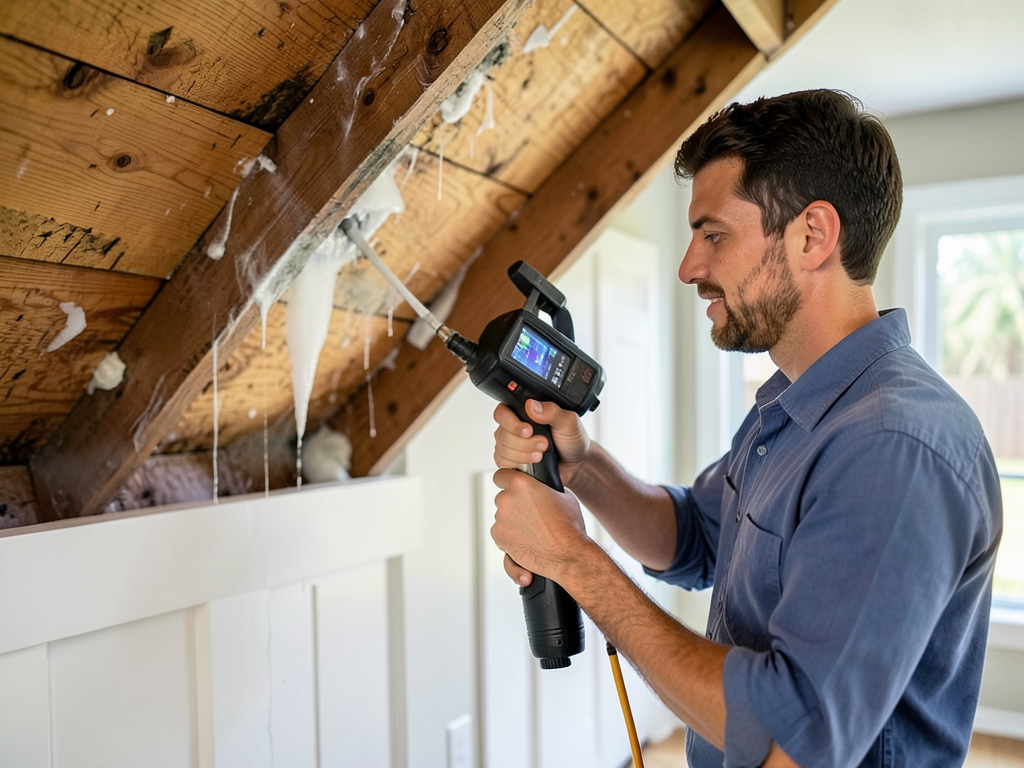
Restoration professionals use specific tools to identify moisture sources. Thermal imaging cameras detect temperature differences that indicate active leaks versus condensation. Wet areas appear cooler on infrared scans because evaporation cools surfaces.. Read more about Finding the Source of a Mystery Water Leak in Your FishHawk Townhome Wall.
Moisture meters measure the actual water content in materials. They help distinguish between surface condensation and deeper moisture penetration from leaks. Some meters can detect moisture through several inches of material, revealing hidden leak damage.
Hygrometers measure relative humidity and dew point in attic spaces. These readings help determine if ventilation improvements could solve condensation problems. In Florida attics, humidity above 70% often indicates ventilation issues.
Smoke pencils or infrared cameras can track air movement patterns. This helps identify where humid outdoor air enters attics and where ventilation might be inadequate. Proper airflow is critical for moisture control in Florida’s climate.
The Mold Factor
Both leaks and condensation create conditions for mold growth. Florida’s heat accelerates mold development – spores can colonize within 24-48 hours of moisture exposure. The type of moisture source affects which mold species grow.
Roof leaks often introduce organic material like leaves or dirt along with water. This provides food sources for mold. The constant water supply from active leaks supports aggressive mold colonies. Common species include Stachybotrys (black mold) and Chaetomium.
Condensation creates more uniform moisture conditions throughout attic spaces. This favors different mold species like Aspergillus and Penicillium. These molds grow as surface colonies on wood and drywall rather than penetrating deeply.
Health impacts vary by mold type and exposure level. Both leak-related and condensation-related mold can cause respiratory issues, allergic reactions, and other health problems. Professional testing determines specific species and contamination levels.
Insurance Considerations
Homeowners insurance coverage differs significantly between leaks and condensation. Sudden, accidental damage from roof leaks typically qualifies for coverage. Insurance companies view this as a covered peril since the damage occurs unexpectedly.
Condensation and ventilation issues are usually considered maintenance problems. Insurance rarely covers damage from long-term moisture caused by inadequate ventilation or humidity control. This includes damage to insulation, wood framing, and personal property stored in attics.
Documentation becomes critical when filing claims. Photos showing the extent of damage, dates when problems appeared, and attempts to mitigate further damage strengthen claims. Keep records of any roof repairs, ventilation improvements, or HVAC maintenance.
Some policies offer separate coverage for mold remediation. This optional coverage can be valuable in Florida where mold grows rapidly. Review your policy details to understand what’s covered and what documentation you need for claims.
When to Call a Professional
Certain situations require immediate professional attention. Active water intrusion during storms indicates serious roof problems. Large areas of wet insulation or sagging ceiling sections suggest extensive damage that could lead to structural failure.
Visible mold covering more than 10 square feet requires professional remediation. Disturbing large mold colonies releases spores throughout your home. Professionals use containment procedures to prevent cross-contamination during removal.
If you can’t determine whether you have a leak or condensation, professional diagnosis prevents costly mistakes. Incorrect assumptions about the moisture source lead to ineffective repairs. A thorough inspection identifies the actual problem and recommends appropriate solutions.
Water damage restoration companies offer comprehensive services. They can repair leaks, improve ventilation, remove damaged materials, and prevent future problems. Many provide free inspections to help you understand your situation before committing to repairs.
Prevention Strategies
Preventing both leaks and condensation starts with regular maintenance. Schedule annual roof inspections to catch small problems before they cause major damage. Look for cracked shingles, damaged flashing, and sealant deterioration around roof penetrations.
Improve attic ventilation to control condensation. Ensure soffit vents remain clear of insulation and debris. Consider adding ridge vents or powered attic fans if natural ventilation proves inadequate. The goal is one square foot of ventilation per 150 square feet of attic space.
Maintain your HVAC system to prevent condensation issues. Clean condensate drain lines annually to prevent clogs and backups. Check ductwork insulation for damage that allows moisture formation. Consider upgrading to high-efficiency systems with better humidity control.
Monitor attic conditions seasonally. Use a hygrometer to track humidity levels. If readings consistently exceed 60%, investigate ventilation improvements. During extreme weather, check attic spaces for new moisture signs before problems escalate.
Cost Factors to Consider
Repair costs vary significantly based on the moisture source and damage extent. Simple roof repairs like replacing damaged shingles might cost a few hundred dollars. Extensive structural repairs or full roof replacement can run thousands.
Condensation solutions often cost less initially but may require ongoing maintenance. Adding ventilation might cost $500-$2,000 depending on your attic configuration. However, these improvements prevent recurring damage and reduce energy costs.
Mold remediation costs depend on contamination extent. Small areas might cost $500-$1,500 to clean. Large infestations requiring material removal and replacement can exceed $10,000. Early intervention always costs less than addressing established problems.
Consider both immediate repair costs and long-term prevention expenses. A comprehensive solution addressing the root cause often proves more economical than repeated Band-Aid fixes for recurring moisture problems.
Frequently Asked Questions
How can I tell if my attic moisture is from a leak or condensation?
Check the timing and pattern. Leaks appear after rain and create localized tea-colored stains. Condensation occurs consistently and creates uniform dampness across large areas. Rust on nail heads throughout the attic indicates condensation rather than leaks.
Is attic condensation dangerous in Florida homes?
Yes. Florida’s heat accelerates mold growth in moist conditions. Condensation can lead to wood rot, insulation damage, and mold colonization within 24-48 hours. The moisture also attracts pests and can damage stored items in your attic.
Will my homeowners insurance cover attic moisture damage?
Insurance typically covers sudden damage from roof leaks but not condensation or ventilation issues. These are considered maintenance problems. Review your policy for mold coverage, which may be optional in Florida homes.
Next Steps for Lutz Homeowners
Don’t let attic moisture problems worsen. Small issues become major damage when left unaddressed in Florida’s climate. If you’re seeing signs of water damage or persistent dampness in your attic, professional evaluation helps identify the source and recommend solutions.
Fortress Water Damage Restoration serves Lutz and surrounding Tampa Bay communities with 24/7 emergency response. Our certified technicians use thermal imaging and moisture meters to accurately diagnose your problem. We provide clear recommendations for both immediate repairs and long-term prevention.
Call (656) 219-8088 today for a free attic inspection. We’ll help you understand exactly what’s causing your moisture problems and provide a detailed plan to protect your home. Don’t guess about your attic’s health – get professional answers now.
Early intervention prevents costly repairs and protects your family’s health. Whether you need roof repairs, ventilation improvements, or mold remediation, we have the expertise to solve your attic moisture problems permanently.
You may also find this helpful. Cleaning and Sanitizing Your HVAC Ducts After a Major Water Leak in Town ‘n’ Country.
{
“@context”: “https://schema.org”,
“@type”: “BlogPosting”,
“headline”: “Is it a Roof Leak or Just Attic Condensation in Your Lutz Home?”,
“description”: “Confused about attic moisture in your Lutz home? Learn how to tell roof leaks from condensation with our Florida-specific diagnostic guide. Call (656) 219-8088 for expert help.”,
“wordCount”: 2032,
“datePublished”: “2026-04-21T10:55:00.000Z”,
“dateModified”: “2026-04-21T10:55:00.000Z”,
“inLanguage”: “en-US”,
“mainEntityOfPage”: {
“@type”: “WebPage”,
“@id”: “https://fortresswaterdamagerestorationtampa.com”
},
“publisher”: {
“@type”: “LocalBusiness”,
“name”: “Fortress Water Damage Restoration Tampa”,
“url”: “https://fortresswaterdamagerestorationtampa.com”
},
“author”: {
“@type”: “Organization”,
“name”: “Fortress Water Damage Restoration Tampa”,
“url”: “https://fortresswaterdamagerestorationtampa.com”
},
“image”: {
“@type”: “ImageObject”,
“url”: “https://fortresswaterdamagerestorationtampa.com/wp-content/uploads/2026/03/is-it-a-roof-leak-or-just-attic-condensation-in-yo-1.png”
}
}
{
“@context”: “https://schema.org”,
“@type”: “LocalBusiness”,
“name”: “Fortress Water Damage Restoration Tampa”,
“url”: “https://fortresswaterdamagerestorationtampa.com”,
“address”: {
“@type”: “PostalAddress”,
“addressLocality”: “Tampa”
},
“areaServed”: {
“@type”: “City”,
“name”: “Tampa”
}
}
{
“@context”: “https://schema.org”,
“@type”: “FAQPage”,
“mainEntity”: [
{
“@type”: “Question”,
“name”: “How can I tell if my attic moisture is from a leak or condensation?”,
“acceptedAnswer”: {
“@type”: “Answer”,
“text”: “Check the timing and pattern. Leaks appear after rain and create localized tea-colored stains. Condensation occurs consistently and creates uniform dampness across large areas. Rust on nail heads throughout the attic indicates condensation rather than leaks.”
}
},
{
“@type”: “Question”,
“name”: “Is attic condensation dangerous in Florida homes?”,
“acceptedAnswer”: {
“@type”: “Answer”,
“text”: “Yes. Florida’s heat accelerates mold growth in moist conditions. Condensation can lead to wood rot, insulation damage, and mold colonization within 24-48 hours. The moisture also attracts pests and can damage stored items in your attic.”
}
},
{
“@type”: “Question”,
“name”: “Will my homeowners insurance cover attic moisture damage?”,
“acceptedAnswer”: {
“@type”: “Answer”,
“text”: “Insurance typically covers sudden damage from roof leaks but not condensation or ventilation issues. These are considered maintenance problems. Review your policy for mold coverage, which may be optional in Florida homes.”
}
}
]
}
{
“@context”: “https://schema.org”,
“@type”: “BreadcrumbList”,
“itemListElement”: [
{
“@type”: “ListItem”,
“position”: 1,
“name”: “Home”,
“item”: “https://fortresswaterdamagerestorationtampa.com”
},
{
“@type”: “ListItem”,
“position”: 2,
“name”: “Blog”,
“item”: “https://fortresswaterdamagerestorationtampa.com/blog”
},
{
“@type”: “ListItem”,
“position”: 3,
“name”: “Is it a Roof Leak or Just Attic Condensation in Your Lutz Home?”
}
]
}
{
“@context”: “https://schema.org”,
“@type”: “Service”,
“serviceType”: “Water Damage Restoration”,
“provider”: {
“@type”: “LocalBusiness”,
“name”: “Fortress Water Damage Restoration Tampa”,
“url”: “https://fortresswaterdamagerestorationtampa.com”
},
“areaServed”: {
“@type”: “City”,
“name”: “Tampa”
},
“description”: “Confused about attic moisture in your Lutz home? Learn how to tell roof leaks from condensation with our Florida-specific diagnostic guide. Call (656) 219-8088 for expert help.”
}