
The Carrollwood Homeowner Guide to Fast Mold Removal and Testing
Living in Carrollwood means enjoying tree-lined streets and suburban comfort but also dealing with Florida’s relentless humidity. When moisture problems hit your home whether from a burst pipe or hurricane-driven rain mold can spread through your walls within 24-48 hours. This guide walks you through exactly what happens during professional mold removal in Carrollwood and how to protect your family from the health risks of black mold and other common Florida species.. Read more about A Homeowner Guide to Choosing the Best Dehumidifier for Humidity Control in Seffner.

Why Carrollwood Homes Face Unique Mold Challenges
Carrollwood sits in Hillsborough County where the water table runs high and afternoon thunderstorms roll in almost daily during summer. Most homes here built in the 1970s through 1990s use concrete block construction with stucco exteriors. While durable these materials can trap moisture inside wall cavities especially when AC units sweat or roof flashing fails. The area’s average humidity often exceeds 80% creating perfect conditions for mold spores to germinate on wood drywall and carpet backing.
Neighborhoods like Original Carrollwood and Carrollwood Village often see mold problems start in less obvious places. A slow leak behind a refrigerator supply line or a clogged condensate drain in the attic can feed hidden colonies for months before you notice that musty smell. By then the colony might cover 10 square feet or more crossing the threshold where Florida law requires licensed mold remediation.
Common Mold Types Found in Tampa Bay Homes
Understanding what you might be dealing with helps you make faster decisions. Here are the species most frequently found during Carrollwood mold inspections:
- Stachybotrys chartarum (black mold) thrives on wet cellulose materials like drywall and ceiling tiles. It produces mycotoxins that can cause respiratory issues especially in children and elderly residents.
- Aspergillus appears in green yellow or white colonies and often grows in HVAC systems. Some species can trigger allergic reactions or asthma attacks.
- Penicillium spreads quickly on water-damaged materials and produces a strong musty odor. It often appears blue or green.
- Chaetomium favors chronically damp drywall and carpet. It has a cotton-like texture and can cause skin infections in sensitive individuals.
Professional testing identifies the species and concentration levels helping you decide whether DIY cleaning suffices or if full containment and removal is necessary.
Florida’s Legal Requirements for Mold Remediation
Florida regulates mold remediation through the Department of Business and Professional Regulation. Any project covering more than 10 square feet requires a state-licensed mold remediator. The technician must follow IICRC S520 standards which mandate containment barriers negative air pressure and HEPA filtration. After removal a post-remediation verification (PRV) by a third-party assessor confirms the colony is gone and air quality meets safety standards.
Homeowners insurance sometimes covers mold if it results from a covered peril like a burst pipe. However flood damage mold or neglect-related growth typically falls outside coverage. Always document the source and extent of damage with photos before beginning cleanup.
Professional Mold Removal Process Step by Step
Understanding the remediation sequence helps you know what to expect and how long your home might be disrupted. Here’s the standard five-step process used by licensed Carrollwood technicians:
- Inspection and Moisture Mapping
Technicians use thermal imaging cameras and moisture meters to locate hidden damp areas. They identify the water source whether a roof leak AC condensation or plumbing failure.
- Containment Setup
Heavy plastic sheeting creates isolation chambers around affected areas. Negative air machines with HEPA filters prevent spores from migrating to clean rooms.
- Material Removal
Porous materials like drywall carpet padding and insulation with mold growth get removed and bagged for disposal. Non-porous surfaces undergo cleaning with antimicrobial solutions.
- HEPA Vacuuming and Air Scrubbing
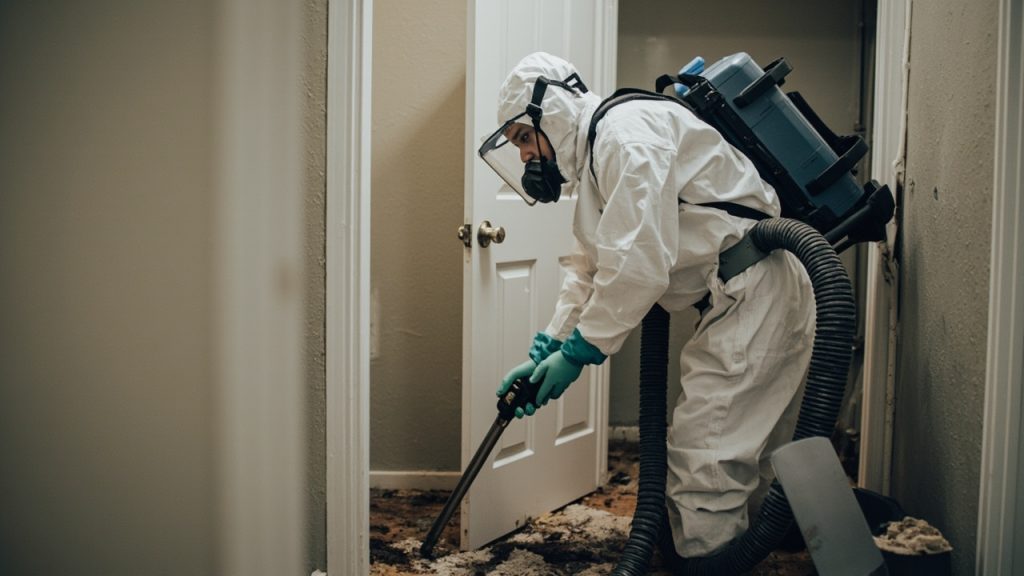
Industrial vacuums with HEPA filters capture spores from surfaces. Air scrubbers run continuously to clean airborne particles.
- Drying and Prevention
Dehumidifiers and air movers eliminate residual moisture. Technicians may apply antimicrobial coatings to deter future growth.
The entire process typically takes three to five days depending on the extent of contamination and drying requirements.
DIY vs. Professional Remediation: When to Call the Experts
Small mold patches under 10 square feet on non-porous surfaces sometimes respond to DIY cleaning with detergent and water. However several factors push the job into professional territory:
| DIY Safe | Call Professionals |
|---|---|
| Under 10 sq ft | Over 10 sq ft |
| Non-porous surface | Porous materials involved |
| No health symptoms | Respiratory issues present |
| Visible source found | Hidden moisture suspected |
| No HVAC involvement | Spores in air ducts |
Professional remediation costs more upfront but includes proper containment testing and documentation that protects your home’s value and your family’s health.
Preventing Mold Growth in Your Carrollwood Home
Humidity control forms the foundation of mold prevention in Florida. Keep indoor relative humidity between 30% and 50% using dehumidifiers and your AC system. Here are additional steps to reduce risk:
- Fix leaks immediately whether from plumbing roof or windows.
- Clean AC drain lines quarterly to prevent condensate backups.
- Use exhaust fans in bathrooms and kitchens to remove moisture at the source.
- Inspect your roof after major storms especially if you have a flat or low-slope design common in Carrollwood.
- Check under sinks and around appliances monthly for early signs of water damage.
Consider installing a whole-home dehumidifier if your house feels damp year-round. These systems integrate with your HVAC and can reduce the workload on your air conditioner while keeping mold-spore-friendly conditions at bay.
Emergency Mold Response: What to Do First
When you discover extensive mold growth or water damage act quickly to limit spread and protect your health:
- Stop the water source if possible.
- Isolate the area by closing doors and vents.
- Avoid disturbing visible mold which can release spores into the air.
- Document damage with photos for insurance purposes.
- Call a licensed mold remediator immediately.
Many Carrollwood companies offer 24/7 emergency response because mold waits for no one. Fast action can mean the difference between a small contained job and a whole-home remediation project.
Local Success Stories: Carrollwood Mold Remediation
Recently a Carrollwood family in the Northdale area discovered black mold behind their kitchen cabinets after a slow dishwasher leak. The colony had spread to 25 square feet hidden from view. Our team contained the kitchen used negative air pressure and removed all affected materials. Post-remediation testing showed spore counts returned to normal levels. The homeowners avoided potential health issues and preserved their home’s value.
In another case a Carrollwood Village condo unit suffered mold growth in the ceiling after a hurricane-driven roof leak. The owner noticed a musty smell but saw no visible damage. Thermal imaging revealed wet insulation above the ceiling. Full remediation including containment and air scrubbing restored safe conditions within four days.
Cost Factors for Mold Remediation in 2026
Several variables affect remediation pricing in the Tampa Bay area:
| Factor | Impact on Cost |
|---|---|
| Square footage | Larger areas require more labor materials and disposal fees |
| Material type | Removing drywall costs less than removing hardwood flooring or cabinetry |
| Containment needs | Complex layouts may need multiple chambers increasing setup time |
| Testing requirements | Pre and post-remediation testing adds $200-$600 but may be required for insurance |
| Urgency | After-hours or weekend service typically adds 20-30% to base rates |
Most Carrollwood homeowners pay between $1,500 and $6,000 for standard residential remediation depending on these factors. Commercial properties often see higher costs due to larger square footage and stricter documentation requirements.
Choosing the Right Mold Remediation Company
Not all restoration companies handle mold remediation. Look for these credentials when selecting a Carrollwood provider:
- Florida State Mold Remediator License (MRSR or MRSA number)
- IICRC certification in mold remediation
- Proof of general liability and pollution insurance
- Experience with local building styles and common moisture problems
- Clear written scope of work and pricing
Ask for references from other Carrollwood homeowners and verify they understand Florida’s specific humidity and building code challenges.
Frequently Asked Questions
How quickly does mold grow after water damage?
Under Florida’s humid conditions mold can begin growing within 24 to 48 hours of water exposure. Fast drying and dehumidification prevent colonization.
Can I stay in my home during remediation?
For small contained areas you might remain in the home. Larger projects often require temporary relocation especially if the HVAC system needs cleaning or if occupants have respiratory sensitivities.
Will my insurance cover mold removal?
Coverage depends on the cause. Sudden pipe bursts often qualify while flood damage or neglect-related growth typically does not. Always check your policy and document damage before cleanup.
How do I know mold is gone after remediation?
Post-remediation verification testing measures spore counts and species. Results should show levels comparable to outdoor air and no active growth.
Take Action Against Mold Today
Don’t let mold compromise your Carrollwood home’s safety or your family’s health. If you notice musty odors see visible growth or experienced recent water damage call a licensed mold remediator immediately. Fast professional response limits damage and protects your investment.
Call (656) 219-8088 now for 24/7 emergency mold inspection and removal in Carrollwood and surrounding Tampa neighborhoods. Our certified technicians will assess your situation contain the problem and restore your home to a safe healthy condition.
Visit our Water Damage Restoration Ruskin page to learn how we handle large-scale commercial drying or check our 2026 cost guide for transparent pricing information.
{
“@context”: “https://schema.org”,
“@type”: “BlogPosting”,
“headline”: “The Carrollwood Homeowner Guide to Fast Mold Removal and Testing”,
“description”: “Learn how to identify and remove mold in Carrollwood homes. Discover local mold challenges, professional remediation steps, and prevention tips for Florida homeowners.”,
“wordCount”: 1524,
“datePublished”: “2026-03-16T06:38:00.000Z”,
“dateModified”: “2026-03-16T06:38:00.000Z”,
“inLanguage”: “en-US”,
“mainEntityOfPage”: {
“@type”: “WebPage”,
“@id”: “https://fortresswaterdamagerestorationtampa.com”
},
“publisher”: {
“@type”: “LocalBusiness”,
“name”: “Fortress Water Damage Restoration Tampa”,
“url”: “https://fortresswaterdamagerestorationtampa.com”
},
“author”: {
“@type”: “Organization”,
“name”: “Fortress Water Damage Restoration Tampa”,
“url”: “https://fortresswaterdamagerestorationtampa.com”
},
“image”: {
“@type”: “ImageObject”,
“url”: “https://fortresswaterdamagerestorationtampa.com/wp-content/uploads/2026/03/the-carrollwood-homeowner-guide-to-fast-mold-remov-1.jpg”
}
}
{
“@context”: “https://schema.org”,
“@type”: “LocalBusiness”,
“name”: “Fortress Water Damage Restoration Tampa”,
“url”: “https://fortresswaterdamagerestorationtampa.com”,
“address”: {
“@type”: “PostalAddress”,
“addressLocality”: “Tampa”
},
“areaServed”: {
“@type”: “City”,
“name”: “Tampa”
}
}
{
“@context”: “https://schema.org”,
“@type”: “FAQPage”,
“mainEntity”: [
{
“@type”: “Question”,
“name”: “How quickly does mold grow after water damage?”,
“acceptedAnswer”: {
“@type”: “Answer”,
“text”: “Under Florida’s humid conditions mold can begin growing within 24 to 48 hours of water exposure. Fast drying and dehumidification prevent colonization.”
}
},
{
“@type”: “Question”,
“name”: “Can I stay in my home during remediation?”,
“acceptedAnswer”: {
“@type”: “Answer”,
“text”: “For small contained areas you might remain in the home. Larger projects often require temporary relocation especially if the HVAC system needs cleaning or if occupants have respiratory sensitivities.”
}
},
{
“@type”: “Question”,
“name”: “Will my insurance cover mold removal?”,
“acceptedAnswer”: {
“@type”: “Answer”,
“text”: “Coverage depends on the cause. Sudden pipe bursts often qualify while flood damage or neglect-related growth typically does not. Always check your policy and document damage before cleanup.”
}
},
{
“@type”: “Question”,
“name”: “How do I know mold is gone after remediation?”,
“acceptedAnswer”: {
“@type”: “Answer”,
“text”: “Post-remediation verification testing measures spore counts and species. Results should show levels comparable to outdoor air and no active growth.”
}
}
]
}
{
“@context”: “https://schema.org”,
“@type”: “HowTo”,
“name”: “Professional Mold Remediation Process”,
“step”: [
{
“@type”: “HowToStep”,
“position”: 1,
“name”: “Inspection and Moisture Mapping”,
“text”: “Technicians use thermal imaging cameras and moisture meters to locate hidden damp areas. They identify the water source whether a roof leak AC condensation or plumbing failure.”
},
{
“@type”: “HowToStep”,
“position”: 2,
“name”: “Containment Setup”,
“text”: “Heavy plastic sheeting creates isolation chambers around affected areas. Negative air machines with HEPA filters prevent spores from migrating to clean rooms.”
},
{
“@type”: “HowToStep”,
“position”: 3,
“name”: “Material Removal”,
“text”: “Porous materials like drywall carpet padding and insulation with mold growth get removed and bagged for disposal. Non-porous surfaces undergo cleaning with antimicrobial solutions.”
},
{
“@type”: “HowToStep”,
“position”: 4,
“name”: “HEPA Vacuuming and Air Scrubbing”,
“text”: “Industrial vacuums with HEPA filters capture spores from surfaces. Air scrubbers run continuously to clean airborne particles.”
},
{
“@type”: “HowToStep”,
“position”: 5,
“name”: “Drying and Prevention”,
“text”: “Dehumidifiers and air movers eliminate residual moisture. Technicians may apply antimicrobial coatings to deter future growth.”
}
],
“image”: “https://fortresswaterdamagerestorationtampa.com/wp-content/uploads/2026/03/the-carrollwood-homeowner-guide-to-fast-mold-remov-1.jpg”
}
{
“@context”: “https://schema.org”,
“@type”: “BreadcrumbList”,
“itemListElement”: [
{
“@type”: “ListItem”,
“position”: 1,
“name”: “Home”,
“item”: “https://fortresswaterdamagerestorationtampa.com”
},
{
“@type”: “ListItem”,
“position”: 2,
“name”: “Blog”,
“item”: “https://fortresswaterdamagerestorationtampa.com/blog”
},
{
“@type”: “ListItem”,
“position”: 3,
“name”: “The Carrollwood Homeowner Guide to Fast Mold Removal and Testing”
}
]
}
{
“@context”: “https://schema.org”,
“@type”: “Service”,
“serviceType”: “Water Damage Restoration”,
“provider”: {
“@type”: “LocalBusiness”,
“name”: “Fortress Water Damage Restoration Tampa”,
“url”: “https://fortresswaterdamagerestorationtampa.com”
},
“areaServed”: {
“@type”: “City”,
“name”: “Tampa”
},
“description”: “Learn how to identify and remove mold in Carrollwood homes. Discover local mold challenges, professional remediation steps, and prevention tips for Florida homeowners.”
}