
How an AC Drain Line Backup Can Ruin Your Tampa Home (And How We Fix It)
That small PVC pipe running from your air handler to the outside wall is the only thing stopping a flood in your home. When Tampa’s humidity causes algae to clog that condensate drain line water backs up and spills into your walls ceilings and floors. What starts as a minor AC issue becomes a major restoration project within hours.
Condensate drain line backups are the leading cause of water damage in Florida homes. The combination of our year-round heat 80%+ humidity and algae growth in PVC pipes creates a perfect storm for system failures. Once that water breaches your ceiling or walls you’re not just looking at AC repair—you’re facing structural drying mold prevention and potentially thousands in restoration costs.. Read more about Safe and Efficient Sewage Backup Cleanup for East Lake-Orient Park Residents.
Let’s walk through exactly how an AC drain line backup happens what damage it causes and the specific steps we take to restore your Tampa home to pre-loss condition.
Why Tampa Homes Are Vulnerable to AC Drain Line Backups
Tampa’s climate creates unique challenges for HVAC systems. Our air conditioners work overtime removing moisture from the air—a typical 3-ton unit can produce 5-10 gallons of condensate water per day during summer months. That water flows through narrow PVC pipes where warm damp conditions promote rapid algae and biofilm growth.
The problem compounds in older Tampa neighborhoods like Seminole Heights and Riverside Heights where homes built in the 1950s-1970s often have aging drain lines and float switches that haven’t been tested in years. In newer developments like Westchase and New Tampa poor installation practices or undersized drain lines can create bottlenecks even in well-maintained systems.
Common causes of AC drain line backups include algae and mold growth inside the PVC pipe pipe sagging or improper slope preventing proper drainage damaged or missing secondary drain pan failed float switch that should shut off the system when water backs up and incorrect pipe sizing for the unit’s condensate output.
Warning Signs Your AC Drain Line Is Backing Up
Most homeowners don’t discover a drain line backup until water damage is already occurring. Here are the early warning signs to watch for water stains appearing on your ceiling near the air handler location damp spots on walls or floors near the indoor unit musty odors coming from your vents or near the AC unit your AC system shutting off unexpectedly if the float switch works and visible algae or mold around the drain line exit point outside.
In Tampa’s humid climate you have a 24-48 hour window before mold begins growing in wet materials. That’s why immediate action is critical when you spot these warning signs.
The Damage Timeline: From Leak to Restoration
Understanding what happens after a drain line backup helps explain why professional restoration is necessary.
- Minutes to Hours
Water begins pooling in the secondary drain pan or overflows onto building materials. Drywall absorbs moisture rapidly ceiling tiles sag and water spreads to adjacent rooms.
- Hours to Days
Wood flooring swells and warps. Baseboards absorb moisture and may begin to separate from walls. Paint blisters and wallpaper peels away.
- Days to Weeks
Mold colonies establish in damp areas. Musty odors intensify. Structural materials weaken and may require replacement rather than repair.. Read more about Speeding Up Structural Drying in Your Renovated Tampa Heights Home.
Our 4-Step Restoration Process for AC-Related Water Damage
When your AC drain line backup causes water damage we follow a systematic approach to restore your Tampa home.
1. Emergency Water Extraction and Damage Assessment
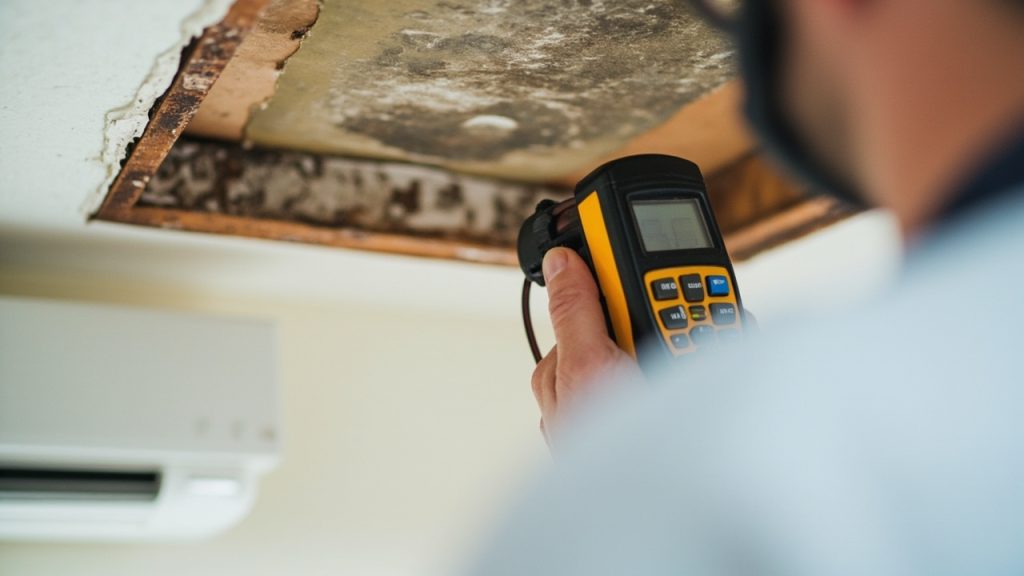
Our first priority is stopping the water source and removing standing water. We use commercial-grade extractors to remove water from carpets flooring and any visible pooling. During this phase we also assess the full extent of damage using moisture meters to detect water that may have traveled inside walls or under flooring.
2. Structural Drying and Dehumidification
Simply removing visible water isn’t enough. We deploy industrial air movers and dehumidifiers to dry the building materials that absorbed moisture. This process typically takes 3-5 days in Tampa’s humid climate as we must reduce the moisture content in walls ceilings and subfloors to safe levels.
3. Mold Prevention and Antimicrobial Treatment
Given Tampa’s humidity we apply EPA-registered antimicrobial treatments to prevent mold growth in affected areas. This step is crucial because even if visible mold isn’t present the conditions for mold growth may still exist in hidden areas.
4. Repairs and Restoration
The final phase involves repairing or replacing damaged materials. This may include drywall replacement painting flooring repair or replacement and addressing any structural issues caused by the water damage. We coordinate with licensed contractors to ensure all repairs meet Florida building codes.
Common AC-Related Water Damage Scenarios in Tampa
Different parts of your home face different risks when an AC drain line backs up.
Ceiling Damage in Second-Story Homes
In two-story homes common in areas like Carrollwood and Westchase the air handler is often in the attic. When the drain line backs up water can saturate attic insulation and leak through the ceiling below. This creates not just cosmetic damage but also insulation that must be replaced to maintain energy efficiency.
Wall Damage in Single-Story Homes
In ranch-style homes typical of South Tampa and Palma Ceia the air handler is often in a closet or garage. Water damage here often affects walls and flooring with water traveling along the path of least resistance into adjacent rooms.
Floor Damage in Homes with Carpeting
Carpeting and padding can hold significant amounts of water creating ideal conditions for mold growth. In homes throughout Brandon and Riverview where carpeting is common we often need to remove and replace both the carpet and padding after a significant leak.
Insurance Coverage for AC Drain Line Backups
Many Tampa homeowners are surprised to learn that standard homeowners insurance policies may not cover water damage from AC drain line backups. Coverage depends on your specific policy and the cause of the backup.
Insurance typically covers sudden accidental water damage but may exclude damage from lack of maintenance or wear and tear. If the drain line backed up due to algae growth from normal use you might be responsible for the repair costs. However if a component failure caused the backup you may have coverage.
We work directly with insurance companies to document damage and provide the necessary information for claims. Our experience with Tampa-area insurers helps streamline the process and maximize your coverage.
Preventing Future AC Drain Line Backups
After restoring your home we recommend several preventative measures to avoid future backups annual HVAC maintenance that includes drain line cleaning and inspection installing or testing your secondary drain pan and float switch using algae tablets or vinegar flushes to prevent biological growth in the drain line and ensuring proper pipe slope and sizing during any HVAC work.
These simple steps can prevent the costly damage we’ve described and extend the life of your HVAC system.
Why Professional Restoration Matters in Tampa’s Climate
Tampa’s humidity creates unique challenges for water damage restoration. The moisture content in the air means that materials dry much slower than in drier climates and the conditions for mold growth exist year-round.
Professional restoration involves more than just removing water. It requires understanding how moisture moves through building materials knowing when materials can be saved versus when they must be replaced and having the equipment to dry your home thoroughly despite the humid outdoor conditions.
We use moisture meters thermal imaging cameras and industry-standard drying protocols to ensure your home is truly dry not just surface-dry. This prevents the secondary damage that often occurs when DIY drying attempts leave moisture in walls under floors or in other hidden areas.
Cost Factors for AC-Related Water Damage Restoration
The cost of restoring water damage from an AC drain line backup varies based on several factors.
| Damage Factor | Cost Impact | Typical Range |
|---|---|---|
| Square footage affected | Direct correlation | $3-8 per sq ft |
| Material types damaged | varies by material | $500-5000+ |
| Mold presence | adds remediation costs | $1500-10000+ |
| Insurance coverage | may reduce out-of-pocket costs | Variable |
These are general ranges—your specific situation may vary. We provide detailed estimates after our initial assessment.
Emergency Response: What to Do When You Discover a Leak
If you discover water coming from your AC system take these immediate steps turn off your AC system at the thermostat to prevent further water production locate and turn off the electrical breaker for your air handler if safe to do so remove valuable items from the affected area begin blotting up standing water with towels or a wet vacuum if available and call a professional restoration company immediately.
Remember that time is critical—the longer water sits the more damage it causes and the higher the risk of mold growth.
Frequently Asked Questions
How long does it take to restore water damage from an AC leak?
The restoration process typically takes 3-7 days depending on the extent of damage. Emergency water extraction happens within hours of your call but complete structural drying can take several days in Tampa’s humid climate.
Can I just fix the AC and not worry about the water damage?
No. Once building materials have been saturated they need professional drying or replacement. Moisture trapped in walls or under flooring will lead to mold growth and structural deterioration within days.
Will my homeowners insurance cover this?
Coverage depends on your specific policy and the cause of the backup. We can help document the damage and work with your insurance company but you should review your policy or contact your agent to understand your coverage.
How can I prevent this from happening again?
Regular HVAC maintenance including annual drain line cleaning and inspection is the best prevention. Also ensure your system has a functioning secondary drain pan and float switch that will shut off the system if water backs up.
Is the water from my AC drain line dangerous?
While condensate water starts as relatively clean it can become contaminated with algae bacteria and other microorganisms as it sits in the drain line. This “gray water” can pose health risks if it contacts living spaces which is why proper containment and cleanup are important.
Don’t Let an AC Drain Line Backup Destroy Your Home
Water damage from an AC drain line backup can escalate from a minor inconvenience to a major restoration project within hours. In Tampa’s humid climate the combination of algae growth year-round AC usage and the potential for hidden moisture makes professional restoration essential.
We’ve restored hundreds of Tampa homes affected by AC-related water damage. Our process addresses not just the visible water but the hidden moisture that causes long-term problems. From emergency water extraction to final repairs we handle every step of the restoration process.
Don’t wait until that small water stain becomes a major problem. If you’ve discovered water damage from your AC system call us now for a free assessment. We’ll stop the damage dry your home properly and restore it to pre-loss condition—often working directly with your insurance company to minimize your stress and out-of-pocket costs.
Available 24/7 for emergency response throughout Tampa Brandon Riverview and surrounding areas. Your home deserves expert care when water strikes.
{
“@context”: “https://schema.org”,
“@type”: “BlogPosting”,
“headline”: “How an AC Drain Line Backup Can Ruin Your Tampa Home (And How We Fix It)”,
“description”: “Learn how AC drain line backups cause water damage in Tampa homes and discover our proven restoration process to fix it fast.”,
“wordCount”: 1853,
“datePublished”: “2026-02-26T12:22:00.000Z”,
“dateModified”: “2026-02-26T12:22:00.000Z”,
“inLanguage”: “en-US”,
“mainEntityOfPage”: {
“@type”: “WebPage”,
“@id”: “https://fortresswaterdamagerestorationtampa.com”
},
“publisher”: {
“@type”: “LocalBusiness”,
“name”: “Fortress Water Damage Restoration Tampa”,
“url”: “https://fortresswaterdamagerestorationtampa.com”
},
“author”: {
“@type”: “Organization”,
“name”: “Fortress Water Damage Restoration Tampa”,
“url”: “https://fortresswaterdamagerestorationtampa.com”
},
“image”: {
“@type”: “ImageObject”,
“url”: “https://fortresswaterdamagerestorationtampa.com/wp-content/uploads/2026/03/how-an-ac-drain-line-backup-can-ruin-your-tampa-ho-1.jpg”
}
}
{
“@context”: “https://schema.org”,
“@type”: “LocalBusiness”,
“name”: “Fortress Water Damage Restoration Tampa”,
“url”: “https://fortresswaterdamagerestorationtampa.com”,
“address”: {
“@type”: “PostalAddress”,
“addressLocality”: “Tampa”
},
“areaServed”: {
“@type”: “City”,
“name”: “Tampa”
}
}
{
“@context”: “https://schema.org”,
“@type”: “FAQPage”,
“mainEntity”: [
{
“@type”: “Question”,
“name”: “How long does it take to restore water damage from an AC leak?”,
“acceptedAnswer”: {
“@type”: “Answer”,
“text”: “The restoration process typically takes 3-7 days depending on the extent of damage. Emergency water extraction happens within hours of your call but complete structural drying can take several days in Tampa’s humid climate.”
}
},
{
“@type”: “Question”,
“name”: “Can I just fix the AC and not worry about the water damage?”,
“acceptedAnswer”: {
“@type”: “Answer”,
“text”: “No. Once building materials have been saturated they need professional drying or replacement. Moisture trapped in walls or under flooring will lead to mold growth and structural deterioration within days.”
}
},
{
“@type”: “Question”,
“name”: “Will my homeowners insurance cover this?”,
“acceptedAnswer”: {
“@type”: “Answer”,
“text”: “Coverage depends on your specific policy and the cause of the backup. We can help document the damage and work with your insurance company but you should review your policy or contact your agent to understand your coverage.”
}
},
{
“@type”: “Question”,
“name”: “How can I prevent this from happening again?”,
“acceptedAnswer”: {
“@type”: “Answer”,
“text”: “Regular HVAC maintenance including annual drain line cleaning and inspection is the best prevention. Also ensure your system has a functioning secondary drain pan and float switch that will shut off the system if water backs up.”
}
},
{
“@type”: “Question”,
“name”: “Is the water from my AC drain line dangerous?”,
“acceptedAnswer”: {
“@type”: “Answer”,
“text”: “While condensate water starts as relatively clean it can become contaminated with algae bacteria and other microorganisms as it sits in the drain line. This “gray water” can pose health risks if it contacts living spaces which is why proper containment and cleanup are important.”
}
}
]
}
{
“@context”: “https://schema.org”,
“@type”: “HowTo”,
“name”: “AC Drain Line Backup Damage Timeline”,
“step”: [
{
“@type”: “HowToStep”,
“position”: 1,
“name”: “Minutes to Hours”,
“text”: “Water begins pooling in the secondary drain pan or overflows onto building materials. Drywall absorbs moisture rapidly ceiling tiles sag and water spreads to adjacent rooms.”
},
{
“@type”: “HowToStep”,
“position”: 2,
“name”: “Hours to Days”,
“text”: “Wood flooring swells and warps. Baseboards absorb moisture and may begin to separate from walls. Paint blisters and wallpaper peels away.”
},
{
“@type”: “HowToStep”,
“position”: 3,
“name”: “Days to Weeks”,
“text”: “Mold colonies establish in damp areas. Musty odors intensify. Structural materials weaken and may require replacement rather than repair.”
}
],
“image”: “https://fortresswaterdamagerestorationtampa.com/wp-content/uploads/2026/03/how-an-ac-drain-line-backup-can-ruin-your-tampa-ho-1.jpg”
}
{
“@context”: “https://schema.org”,
“@type”: “BreadcrumbList”,
“itemListElement”: [
{
“@type”: “ListItem”,
“position”: 1,
“name”: “Home”,
“item”: “https://fortresswaterdamagerestorationtampa.com”
},
{
“@type”: “ListItem”,
“position”: 2,
“name”: “Blog”,
“item”: “https://fortresswaterdamagerestorationtampa.com/blog”
},
{
“@type”: “ListItem”,
“position”: 3,
“name”: “How an AC Drain Line Backup Can Ruin Your Tampa Home (And How We Fix It)”
}
]
}
{
“@context”: “https://schema.org”,
“@type”: “Service”,
“serviceType”: “Water Damage Restoration”,
“provider”: {
“@type”: “LocalBusiness”,
“name”: “Fortress Water Damage Restoration Tampa”,
“url”: “https://fortresswaterdamagerestorationtampa.com”
},
“areaServed”: {
“@type”: “City”,
“name”: “Tampa”
},
“description”: “Learn how AC drain line backups cause water damage in Tampa homes and discover our proven restoration process to fix it fast.”
}