



Largo sits in Pinellas County, surrounded by water on three sides. This peninsula location creates constant humidity that accelerates mold growth after water intrusion. Properties near Boca Ciega Bay and the Intracoastal Waterway face elevated flood risk during summer thunderstorms and tropical systems. Florida's porous limestone foundation absorbs water quickly, letting moisture travel through concrete slabs and into wall cavities where you cannot see it.
The area's aging housing stock compounds these issues. Many Largo homes were built in the 1960s and 1970s with original plumbing that corrodes in our mineral-heavy groundwater. When these pipes fail, water spreads under tile floors and behind drywall before homeowners notice. Your air conditioning system runs year-round in this subtropical climate, creating condensation that drips into ceiling cavities when drain lines clog.
Hurricane season from June through November brings storm surge and wind-driven rain that penetrates roof valleys and window seals. Even tropical depressions dump several inches of rain in hours, overwhelming stormwater systems and causing street flooding that backs up into garages and ground-level units. The warm temperatures mean wet materials begin growing mold within 24 to 48 hours, turning a water problem into a health hazard if not dried properly.
Fortress Water Damage Restoration Tampa operates with one goal: stop water damage before it destroys your property. We maintain rapid response teams throughout Pinellas County because water does not wait for business hours. When you call our emergency line, a certified technician dispatches to your Largo property with industrial extraction equipment, moisture meters, and thermal imaging cameras.
We understand Florida building codes and insurance requirements. Our technicians document every step of the remediation process with photos, moisture readings, and detailed notes that insurance adjusters need to approve your claim. We communicate directly with your carrier to handle the paperwork while you focus on getting your life back to normal.
Unlike general contractors who dabble in water cleanup, we specialize exclusively in water damage restoration and mold remediation. Our crews train on IICRC standards for water removal, structural drying, and antimicrobial treatments. We invest in professional-grade dehumidifiers, air movers, and hydroxyl generators that dry buildings faster and more thoroughly than basic equipment.
Largo's coastal humidity demands aggressive drying protocols. We monitor moisture levels in walls, floors, and ceilings daily until readings confirm complete dryness. Cutting corners on drying time leads to hidden mold growth that appears weeks later. We stay on site until the job is finished correctly, even if it takes longer than estimated. Your property gets restored once, not repaired multiple times because the first company rushed through the process.

Water damage does not stop at 5 PM. Our emergency response teams operate around the clock, arriving at Largo properties within hours of your call. We bring truck-mounted extraction equipment and start water removal immediately to minimize damage and prevent mold growth. Fast response saves your property and reduces restoration costs.

We handle communication with your insurance company from initial claim filing through final payment. Our detailed documentation and moisture tracking reports give adjusters the evidence they need to approve coverage. You receive copies of all reports so you understand exactly what work was performed and why it was necessary.
Every technician on your job holds current certification in water damage restoration and applied structural drying. We follow Institute of Inspection Cleaning and Restoration Certification protocols for moisture mapping, equipment placement, and drying verification. Your property gets restored using industry-approved methods that prevent future problems.
We restore water-damaged properties across Largo daily. Our technicians understand how this coastal climate affects drying times and mold risk. We know which neighborhoods have older plumbing, which areas flood during storms, and how local construction methods impact water intrusion patterns. This experience speeds up restoration and prevents overlooked damage.
Water damage takes many forms, from burst pipes flooding entire floors to slow leaks hidden behind walls. Fortress Water Damage Restoration Tampa handles every type of water intrusion with specialized equipment and proven techniques. We assess the water source, category, and affected materials to build a custom remediation plan for your property.
Our services cover the complete restoration process from initial emergency response through final repairs. We extract standing water, remove unsalvageable materials, dry structural components, treat for microbial growth, and reconstruct damaged areas. You work with one company instead of coordinating multiple contractors.
We categorize our work into three main service lines based on urgency level and damage severity. Emergency response gets technicians on site fast to stop active water intrusion and begin extraction. Structural drying uses industrial dehumidifiers and air movers to remove moisture from building materials. Mold remediation treats contamination caused by prolonged moisture exposure. Each service follows strict protocols to restore your property safely and completely.
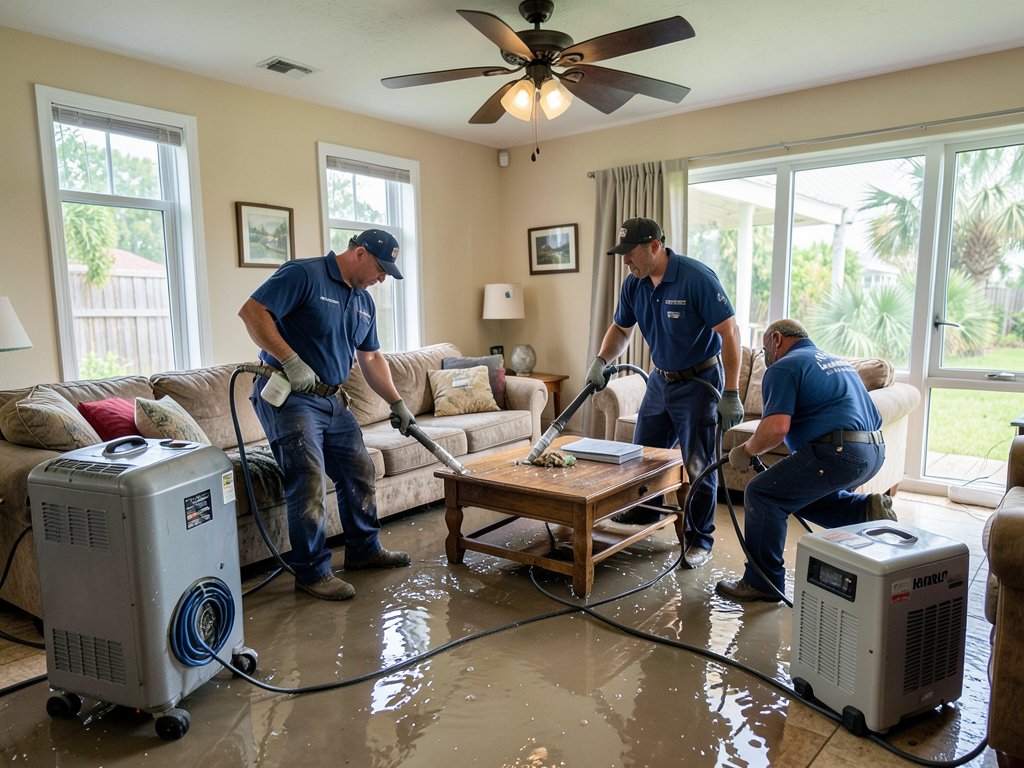
When water invades your property, immediate action prevents extensive damage. Our emergency crews arrive with truck-mounted extractors that remove hundreds of gallons per hour. We pull up saturated carpeting, extract water from pad and subfloor, and remove standing water from tile and concrete surfaces. Technicians move furniture to dry areas and place protective barriers to contain affected zones. Fast extraction stops water from spreading to unaffected rooms and reduces drying time by days.
Removing visible water is just the start. Moisture hides in wall cavities, under flooring, and inside ceiling structures. We use thermal imaging to find hidden moisture and place commercial dehumidifiers to pull water vapor from the air. High-velocity air movers create airflow across wet surfaces to speed evaporation. Technicians monitor moisture levels in wood, drywall, and concrete daily until readings confirm complete dryness. Proper structural drying prevents warping, swelling, and mold growth.
Florida's humidity causes mold to develop within 48 hours of water exposure. When we discover active growth during water cleanup, we contain the affected area with plastic sheeting and negative air pressure. Contaminated materials get bagged and removed following EPA guidelines. We treat remaining surfaces with antimicrobial solutions and verify clearance with air quality testing. Mold remediation protects your family's health and prevents spores from spreading through your HVAC system.
Largo's location between the Gulf of Mexico and Tampa Bay creates unique water damage risks. Properties face threats from natural flooding, plumbing failures, and weather-related intrusion. Understanding these common problems helps you recognize warning signs before minor leaks become major disasters.
The area's aging infrastructure plays a major role in water damage frequency. Many Largo neighborhoods were developed in the 1960s and 1970s when builders used materials and methods that do not hold up in Florida's harsh climate. Original plumbing corrodes from mineral deposits in our groundwater. Roof systems deteriorate from constant sun exposure and seasonal storms. Air conditioning condensate lines clog with algae growth. These age-related failures cause the majority of water damage insurance claims.
Storm-related flooding affects properties in low-lying areas and older neighborhoods with inadequate drainage. When several inches of rain fall in an hour, stormwater backs up through floor drains and seeps through foundation cracks. Coastal properties near Boca Ciega Bay face storm surge during hurricanes. Even homes a mile inland can flood when retention ponds overflow.
Corroded copper pipes and failing water heaters dump hundreds of gallons into homes before owners discover the leak. Pinellas County's mineral-heavy water accelerates corrosion in older plumbing systems. When supply lines burst behind walls or under slabs, water spreads through multiple rooms before you see visible damage. These hidden leaks cause extensive structural damage and require professional moisture detection to locate all affected areas.
Your AC system removes humidity from indoor air and drains condensate through PVC pipes. When these drain lines clog with algae or disconnect from vibration, water overflows into ceiling cavities and drips through light fixtures. Many homeowners ignore small ceiling stains until drywall collapses. Regular AC maintenance prevents most condensate leaks, but when overflows occur, the water damage spreads quickly through insulation and ceiling materials.
Tropical systems bring storm surge and heavy rainfall that overwhelm stormwater infrastructure. Properties in flood zones near Boca Ciega Bay and the Intracoastal Waterway face the highest risk, but intense thunderstorms cause street flooding throughout Largo. Water enters through garage doors, foundation cracks, and window seals. Storm flooding often contains contaminants from sewage backups, requiring specialized cleaning protocols beyond standard water removal.
Florida's intense sun degrades roof shingles faster than in northern climates. Wind-driven rain during storms finds weak spots around vents, valleys, and flashing. Water travels along roof decking and drips into walls far from the actual leak point. Window seals crack from heat expansion and contraction, letting water seep behind stucco during heavy rain. These slow leaks cause hidden damage that appears as ceiling stains and wall discoloration weeks after storms pass.
Water damage creates chaos and stress. You need a restoration company that responds fast, communicates clearly, and delivers results without surprises. Fortress Water Damage Restoration Tampa follows a proven process that puts you in control from the first phone call through final walkthrough.
When you contact our emergency line, you speak with a trained specialist who asks specific questions about your situation. We need to know the water source, how long it has been present, and what areas are affected. This information helps us dispatch the right equipment and crew size for your needs.
Our technician arrives with professional gear and begins work immediately. You receive a detailed explanation of the remediation process and a written estimate before we start major work. We document everything with photos and moisture readings so you and your insurance company understand exactly what repairs are needed. Throughout the job, you receive daily updates on drying progress and timeline adjustments.
You never wonder what is happening with your property. Our project manager contacts you daily with drying progress updates and moisture readings. We explain our findings in plain language, not technical jargon. If we discover additional damage during demolition, we document it with photos and discuss options before proceeding. You receive copies of all reports, invoices, and insurance correspondence so you have a complete record of work performed.
We bring commercial-grade dehumidifiers, air movers, and moisture detection tools to every job. Our technicians place equipment strategically based on airflow patterns and moisture readings, not random placement. We monitor drying progress with calibrated meters that measure moisture content in wood, drywall, and concrete. Equipment stays on site until materials reach acceptable dryness levels, even if it takes longer than initially estimated. Proper drying prevents callback visits for mold growth.
Water removal and drying are just part of the job. We rebuild demolished areas using quality materials that match your existing finishes. Our carpenters install new drywall, baseboards, and flooring to restore your property to pre-loss condition. Before we leave, we verify all materials have dried completely and no moisture remains in hidden cavities. You receive final documentation showing your property is safe and dry.
Every water damage job follows the same core process. We assess the damage, remove water and moisture, then rebuild affected areas. This systematic approach ensures nothing gets overlooked and your property returns to normal as quickly as possible.
Our technician arrives and immediately assesses the water source and damage extent. We stop active leaks, shut off water supplies if needed, and begin extracting standing water with truck-mounted pumps. Thermal imaging cameras locate hidden moisture in walls and under flooring. We document initial conditions with photos and moisture readings, then remove saturated materials that cannot be saved. This first phase typically takes 4 to 8 hours depending on property size and water volume.
We position commercial dehumidifiers and high-velocity air movers to create optimal drying conditions. Technicians return daily to take moisture readings in affected materials and adjust equipment placement. We track progress on drying logs that document moisture reduction over time. This phase usually takes 3 to 5 days in Florida's humid climate but may extend longer for concrete foundations or severe flooding. Drying continues until all materials reach acceptable moisture levels.
Once drying is complete, our construction crew rebuilds demolished areas. We install new drywall, paint, trim, and flooring to match your existing finishes. Final moisture verification confirms no hidden dampness remains. We walk through the completed work with you to ensure satisfaction before closing the project. You receive complete documentation including before photos, daily moisture logs, and final clearance readings for your insurance records.
Professional water damage restoration follows strict industry standards that protect property owners and ensure thorough remediation. The Institute of Inspection Cleaning and Restoration Certification establishes protocols for water classification, structural drying, and microbial remediation. These standards are not optional guidelines. Insurance companies and Florida building codes require certified restoration contractors to follow IICRC procedures.
Water gets classified into three categories based on contamination level. Category 1 is clean water from supply lines or rain. Category 2 is gray water containing chemical or biological contaminants from appliance discharges. Category 3 is black water from sewage backups or flood water that contacted soil. The category determines which materials can be saved and what cleaning protocols apply.
Materials are also classified by their porosity. Class 1 affects materials with low absorption like concrete and hardwood. Class 2 impacts materials with high absorption rates like carpet and drywall. Class 3 involves water coming from overhead or affecting ceilings, walls, and insulation. Class 4 describes specialty situations requiring extra drying time like hardwood floors or stone.
Fortress technicians document water category and material class for every job. This classification drives our equipment selection, drying timeline, and demolition decisions. We cannot cut corners on Category 3 water or pretend Class 4 materials will dry in two days. Our reports show insurance adjusters that we followed proper standards.
Florida building codes require specific moisture levels before reconstruction begins. Wood framing must read below 19 percent moisture content. Concrete slabs need readings below 4.5 percent on the calcium chloride scale. Drywall cannot exceed 16 percent. We use calibrated moisture meters daily to verify these thresholds before removing drying equipment or starting rebuilds. Documentation protects you from future mold claims and validates that restoration was completed correctly.
IICRC standards require water damage classification based on contamination level. Clean water from supply lines receives different treatment than gray water from appliances or black water from sewage. The classification determines which materials get restored versus removed, what cleaning products are safe to use, and whether antimicrobial treatment is necessary. Proper classification protects your family from health hazards.
Florida building codes establish specific moisture thresholds before reconstruction can begin. Wood framing must dry below 19 percent moisture content to prevent rot and mold growth. Concrete slabs need calcium chloride readings under 4.5 percent before installing new flooring. These requirements protect your investment by ensuring hidden moisture will not cause future problems. We document compliance with daily moisture logs.
Several factors determine how long structural drying takes. Water category and material class impact baseline timeline. Florida's high humidity slows evaporation compared to dry climates. Building materials like tile and concrete dry slower than carpet. The amount of water and how long it sat before extraction also extends drying time. Professional monitoring with daily moisture readings prevents premature equipment removal that leads to microbial growth.
Insurance companies require detailed documentation of water damage restoration work. We provide photo evidence of initial damage, daily moisture reading logs, thermal imaging reports, and final drying verification. This documentation proves we followed IICRC protocols and achieved required moisture levels. Thorough records prevent claim disputes and demonstrate the restoration was completed according to industry standards.
Professional water damage restoration guide for Largo, Florida homeowners and businesses. This video explains the complete water damage restoration process including emergency water extraction, structural drying, mold prevention, and reconstruction. Learn about IICRC industry standards, Florida building code requirements for moisture levels, insurance claim procedures, and how coastal humidity affects drying timelines. Covers common water damage causes in Pinellas County including plumbing failures, AC condensate leaks, storm flooding, and roof intrusion.
Fortress Water Damage Restoration Tampa maintains rapid response capabilities throughout Largo and the greater Pinellas County area. Our central location allows technicians to reach properties from Seminole to Clearwater within 60 minutes of dispatch. We serve residential and commercial properties across all Largo neighborhoods, from newer developments to established communities built in the 1960s and 1970s.
The East Bay Drive corridor runs through the heart of Largo, connecting properties near the Pinellas Trail with communities around Lake Seminole. Water damage patterns differ across these areas. Older homes near downtown Largo often have original plumbing and roofing that fail during storms. Properties in Harbor Bluffs and Bayou Shores face elevated flood risk from their proximity to Boca Ciega Bay. The Belleair Bluffs area includes mid-century homes with aging infrastructure that creates frequent water damage insurance claims.
West of Seminole Boulevard, communities near Ridgecrest Park and John S Taylor Park include newer construction with different water intrusion points. These properties typically face AC condensate issues and appliance failures rather than aged plumbing. The Largo Central Park area attracts residents who renovate older homes, often discovering hidden water damage during remodeling projects.
We respond to properties throughout the Largo Service Area including zip codes 33770, 33771, 33773, 33774, and 33778. Our technicians know which neighborhoods flood during heavy rain, where aging infrastructure causes pipe failures, and how different construction methods affect water damage restoration. Properties near Largo Medical Center receive the same fast response as homes in residential areas miles away.
The proximity to Indian Rocks Beach and the Gulf Coast means many Largo residents maintain vacation rental properties that need rapid water damage response to prevent lost rental income. We work with property managers and landlords who cannot be on site during remediation, providing detailed photo documentation and remote communication.
Our service area extends beyond Largo to include Pinellas Park, Kenneth City, Seminole, Bay Pines, and Clearwater. Whether you own a single-family home near Largo Golf Course or manage a commercial building on Ulmerton Road, we respond with the same professional equipment and certified technicians. Distance from our shop does not affect response time or service quality.
Yes. Water damage worsens fast in Largo's humid climate. What starts as a small leak can trigger mold growth within 24 to 48 hours, rot wood framing, and destroy drywall. Professional restoration stops the damage cycle, extracts standing water, dries structural materials, and prevents secondary issues like mold or foundation shifts. Ignoring water damage drops your property value and creates health risks. The cost of restoration is far less than replacing an entire floor system or remediating widespread mold. Acting quickly protects your investment and keeps repair costs manageable.
Water remediation stops the immediate problem. Crews extract standing water, dry out affected areas, and prevent further damage. Restoration comes next. It repairs what the water damaged. This includes replacing drywall, refinishing floors, repainting walls, and rebuilding structural components. Remediation is emergency response. Restoration is reconstruction. In Largo, you need both after a serious flood or pipe burst. Remediation happens first to stabilize the property. Restoration follows to return your home or business to pre-loss condition. Some companies handle both phases. Others specialize in one.
You have options beyond ServPro in Largo. Local water damage restoration companies offer faster response times, personalized service, and competitive pricing. These local firms understand Largo's specific challenges like high humidity, frequent afternoon storms, and older plumbing in established neighborhoods. They work directly with your insurance and handle everything from emergency water extraction to full reconstruction. Choosing a local alternative means you get technicians who know the area, respond quickly, and prioritize your project instead of routing you through a national call center.
Yes. Water damage worsens fast in Largo's humid climate. What starts as a small leak can trigger mold growth within 24 to 48 hours, rot wood framing, and destroy drywall. Professional restoration stops the damage cycle, extracts standing water, dries structural materials, and prevents secondary issues like mold or foundation shifts. Ignoring water damage drops your property value and creates health risks. The cost of restoration is far less than replacing an entire floor system or remediating widespread mold. Acting quickly protects your investment and keeps repair costs manageable.
Water remediation stops the immediate problem. Crews extract standing water, dry out affected areas, and prevent further damage. Restoration comes next. It repairs what the water damaged. This includes replacing drywall, refinishing floors, repainting walls, and rebuilding structural components. Remediation is emergency response. Restoration is reconstruction. In Largo, you need both after a serious flood or pipe burst. Remediation happens first to stabilize the property. Restoration follows to return your home or business to pre-loss condition. Some companies handle both phases. Others specialize in one.
You have options beyond ServPro in Largo. Local water damage restoration companies offer faster response times, personalized service, and competitive pricing. These local firms understand Largo's specific challenges like high humidity, frequent afternoon storms, and older plumbing in established neighborhoods. They work directly with your insurance and handle everything from emergency water extraction to full reconstruction. Choosing a local alternative means you get technicians who know the area, respond quickly, and prioritize your project instead of routing you through a national call center.
Water damage restoration includes emergency water extraction, moisture detection using thermal imaging, structural drying with air movers and dehumidifiers, antimicrobial treatment to prevent mold, and complete repairs. Technicians remove damaged materials like soaked drywall or flooring, dry the framing and subfloor, treat affected areas, and rebuild. In Largo, restoration also addresses humidity control to prevent recurring issues. The process covers inspection, documentation for insurance, mitigation, drying, mold prevention, and full reconstruction. A complete restoration returns your property to pre-damage condition.
Restoration costs vary by damage extent, water category, and affected square footage. A small bathroom leak might cost a few thousand dollars. Major flood damage affecting multiple rooms can reach tens of thousands. Clean water costs less to remediate than contaminated water from sewage backups. Largo properties with tile floors dry faster than homes with hardwood. Most insurance policies cover sudden and accidental water damage. Get a detailed estimate that includes extraction, drying, antimicrobial treatment, and reconstruction. Costs increase the longer water sits.
Yes, if moisture returns. Mold needs water to grow. Professional remediation removes existing mold and treats surfaces with antimicrobial solutions. If you fix the leak or humidity problem, mold stays gone. If moisture returns through a new leak, poor ventilation, or Largo's high humidity without proper dehumidification, mold can regrow. Remediation addresses current mold. Prevention requires controlling moisture long-term. Fix leaks immediately, maintain gutters, use dehumidifiers, and ensure proper ventilation in bathrooms and crawl spaces. Mold comes back only when conditions allow it.
Most homeowner policies cover sudden and accidental water damage like burst pipes, appliance malfunctions, or storm-related leaks. Insurance typically pays for both remediation and restoration. Flood damage requires separate flood insurance. Gradual damage from long-term leaks or poor maintenance gets denied. In Largo, document everything immediately. Take photos, call your insurance company, and hire a restoration firm that works directly with adjusters. They handle documentation, moisture readings, and scope reports. Your policy should cover water extraction, drying, mold prevention, and repairs minus your deductible.
Very likely in Largo's humid climate. Mold spores exist everywhere. They grow when moisture sits for 24 to 48 hours. Water damage creates perfect conditions. Drywall, insulation, and wood framing absorb water and stay damp even after surface water disappears. Without professional drying equipment, hidden moisture feeds mold growth inside walls and under floors. The risk increases with category two or three water containing contaminants. Immediate extraction and thorough drying with commercial dehumidifiers dramatically reduce mold probability. Delay increases the chance to near certainty.
Your claim amount depends on your policy limits, damage extent, and deductible. Insurance pays actual cash value or replacement cost minus depreciation. Document everything with photos and videos. Get a professional assessment showing all affected areas, not just visible damage. Water migrates through walls and floors. In Largo, high humidity can extend drying time and increase costs. Your restoration company provides a detailed estimate and works with your adjuster. Most policies cover reasonable and necessary repairs. Underclaiming hurts you. Work with professionals who document thoroughly.
Both are national franchises with standard processes. The better choice in Largo is a local water damage restoration company. Local firms respond faster, offer personalized service, and understand regional issues like Florida humidity, afternoon storms, and older plumbing systems common in established Largo neighborhoods. You avoid corporate call centers and get direct communication with technicians handling your project. Local companies work with your insurance, provide competitive pricing, and prioritize your emergency instead of routing you through regional dispatch. Choose based on response time, local expertise, and direct accountability.
Water damage restoration includes emergency water extraction, moisture detection using thermal imaging, structural drying with air movers and dehumidifiers, antimicrobial treatment to prevent mold, and complete repairs. Technicians remove damaged materials like soaked drywall or flooring, dry the framing and subfloor, treat affected areas, and rebuild. In Largo, restoration also addresses humidity control to prevent recurring issues. The process covers inspection, documentation for insurance, mitigation, drying, mold prevention, and full reconstruction. A complete restoration returns your property to pre-damage condition.
Restoration costs vary by damage extent, water category, and affected square footage. A small bathroom leak might cost a few thousand dollars. Major flood damage affecting multiple rooms can reach tens of thousands. Clean water costs less to remediate than contaminated water from sewage backups. Largo properties with tile floors dry faster than homes with hardwood. Most insurance policies cover sudden and accidental water damage. Get a detailed estimate that includes extraction, drying, antimicrobial treatment, and reconstruction. Costs increase the longer water sits.
Yes, if moisture returns. Mold needs water to grow. Professional remediation removes existing mold and treats surfaces with antimicrobial solutions. If you fix the leak or humidity problem, mold stays gone. If moisture returns through a new leak, poor ventilation, or Largo's high humidity without proper dehumidification, mold can regrow. Remediation addresses current mold. Prevention requires controlling moisture long-term. Fix leaks immediately, maintain gutters, use dehumidifiers, and ensure proper ventilation in bathrooms and crawl spaces. Mold comes back only when conditions allow it.
Most homeowner policies cover sudden and accidental water damage like burst pipes, appliance malfunctions, or storm-related leaks. Insurance typically pays for both remediation and restoration. Flood damage requires separate flood insurance. Gradual damage from long-term leaks or poor maintenance gets denied. In Largo, document everything immediately. Take photos, call your insurance company, and hire a restoration firm that works directly with adjusters. They handle documentation, moisture readings, and scope reports. Your policy should cover water extraction, drying, mold prevention, and repairs minus your deductible.
Very likely in Largo's humid climate. Mold spores exist everywhere. They grow when moisture sits for 24 to 48 hours. Water damage creates perfect conditions. Drywall, insulation, and wood framing absorb water and stay damp even after surface water disappears. Without professional drying equipment, hidden moisture feeds mold growth inside walls and under floors. The risk increases with category two or three water containing contaminants. Immediate extraction and thorough drying with commercial dehumidifiers dramatically reduce mold probability. Delay increases the chance to near certainty.
Your claim amount depends on your policy limits, damage extent, and deductible. Insurance pays actual cash value or replacement cost minus depreciation. Document everything with photos and videos. Get a professional assessment showing all affected areas, not just visible damage. Water migrates through walls and floors. In Largo, high humidity can extend drying time and increase costs. Your restoration company provides a detailed estimate and works with your adjuster. Most policies cover reasonable and necessary repairs. Underclaiming hurts you. Work with professionals who document thoroughly.
Both are national franchises with standard processes. The better choice in Largo is a local water damage restoration company. Local firms respond faster, offer personalized service, and understand regional issues like Florida humidity, afternoon storms, and older plumbing systems common in established Largo neighborhoods. You avoid corporate call centers and get direct communication with technicians handling your project. Local companies work with your insurance, provide competitive pricing, and prioritize your emergency instead of routing you through regional dispatch. Choose based on response time, local expertise, and direct accountability.
We proudly serve the entire Tampa area with rapid-response water damage restoration services. Whether you’re downtown, in the suburbs, or operating a business near the bay, our expert team is just minutes away. Use the map below to view our service zone or find our nearest location. We’re ready to respond wherever you need us. Your peace of mind is only a call or click away.
Address:
Largo, FL, 33770

The Home Buyer Guide to Spotting Hidden Water Damage During a Westchase Open House Walking through an open house in Westchase should feel exciting. You imagine your family in the kitchen. You picture weekend barbecues…
How Clogged Gutters and Downspouts Can Lead to a Flooded Living Room in Wooded Lutz…

Why You Should Never Use Bleach to Clean Up Mold After a Leak in Your…

Dealing With Water Damage in Your Backyard ADU or Guest House in Seminole Heights Water…
Water damage gets worse every hour you wait. Call Fortress Water Damage Restoration Tampa at (656) 219-8088 right now for immediate dispatch to your Largo property. We answer 24/7 and arrive with professional extraction equipment within hours.