




Riverview sits in the Alafia River watershed where subtropical humidity and afternoon thunderstorms create perfect conditions for water intrusion year-round. Properties near the river basin and along the Tampa Bay coastline face elevated flood risk during hurricane season, while inland homes deal with the consequences of sandy soil that drains poorly and shifts foundation slabs. Summer humidity levels above 70 percent mean any water intrusion becomes a mold growth opportunity within 48 hours.
The area's rapid residential growth means many homes were built on reclaimed wetlands where water tables sit just feet below the surface. Older neighborhoods near US-301 and Gibsonton Drive contain properties with aging plumbing systems prone to slab leaks and supply line failures. Newer developments in Winthrop and Panther Trace feature open floor plans with extensive drywall that wicks moisture horizontally when flooding occurs. Air conditioning systems run constantly to combat humidity, creating condensate drainage issues that saturate walls and subfloors. Florida's building codes require specific moisture barriers and drainage systems, but improper installation during construction leaves many Riverview homes vulnerable to hidden water damage that compounds over time.
Fortress Water Damage Restoration Tampa earned its reputation across Hillsborough County by doing what other restoration companies promise but fail to deliver: we answer the phone at 3 AM, dispatch technicians who arrive in under an hour, and start extracting water while you're still on the phone with your insurance agent. Our trucks carry truck-mounted extraction units that remove 50 gallons per minute, not the small shop vacs competitors show up with. Every technician holds current IICRC certifications in water damage restoration and applied structural drying, meaning they understand building science and how water migrates through Riverview's specific construction types.
We invest in thermal imaging cameras that detect moisture inside walls and under flooring that you cannot see, preventing the hidden dampness that turns into a mold remediation nightmare three weeks later. Our equipment inventory includes enough commercial dehumidifiers and air movers to dry a 3,000 square foot home simultaneously rather than moving equipment from room to room over multiple days. When we document your loss, insurance adjusters recognize our reports because they're thorough, accurate, and follow Xactimate pricing standards used across Florida.
Fortress maintains relationships with local plumbers, electricians, and contractors who respond to our job sites, meaning your burst pipe gets fixed and your drywall gets replaced by professionals we trust, not random subcontractors found on the internet. We handle the entire claim process from emergency mitigation through final restoration, giving you a single point of contact instead of coordinating between multiple vendors while your home sits torn apart. Riverview residents call us back for future issues because we treat your home like it's ours and explain everything in plain language instead of industry jargon designed to confuse.

Our trucks stage across Hillsborough County to reach Riverview properties within one hour of your call. Technicians arrive with truck-mounted extraction equipment already loaded, ready to start water removal immediately. We don't schedule appointments for the next day while your home sits underwater. Fast response prevents secondary damage and cuts your total restoration cost dramatically.

We document every stage of water damage with photos, moisture readings, and detailed scope reports your insurance company accepts without argument. Our estimators use Xactimate software that matches your adjuster's pricing database, eliminating the back-and-forth negotiations that delay payment. You sign one authorization and we handle all claim communication while you focus on your family.
Every Fortress technician completes Institute of Inspection Cleaning and Restoration Certification programs in water damage restoration and applied structural drying. This means they understand psychrometrics, vapor pressure, and how to dry Riverview's specific building materials without causing additional damage. Certification isn't optional at Fortress. It's the baseline requirement before anyone touches your property.
We handle emergency water extraction, structural drying, mold prevention, demolition, and full reconstruction under one contract. You get a single project manager from the first emergency call through final walkthrough instead of coordinating between separate mitigation and restoration companies. This integrated approach cuts your timeline in half and eliminates the finger-pointing when problems arise.
Fortress provides complete water damage solutions from emergency response through final restoration for Riverview residential and commercial properties. Our service range covers sudden flooding events, chronic moisture problems, and everything between. We mobilize for middle-of-the-night pipe bursts and also schedule planned remediation for properties with long-term humidity issues causing hidden damage. Each situation requires different equipment, expertise, and restoration approaches.
Our emergency mitigation services focus on rapid water extraction and structural drying to prevent mold growth and secondary damage. Remediation services address existing mold, contaminated materials, and water-damaged building components that need removal and replacement. Restoration services rebuild your property to pre-loss condition, handling everything from drywall installation to flooring replacement. This three-phase approach ensures nothing gets overlooked from the moment water invades your property until you receive the final certificate of completion. Understanding which services you need depends on how quickly we respond, how long water sat before extraction, and what building materials got saturated. Fortress evaluates your specific damage and explains exactly which services are necessary versus optional.
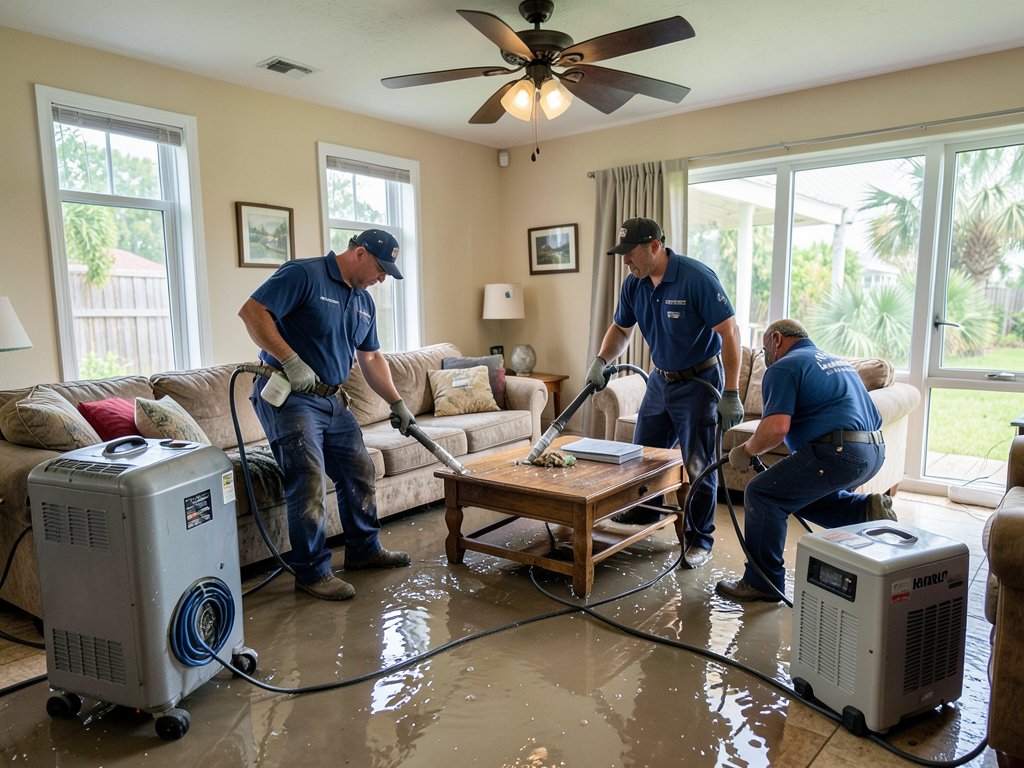
Emergency mitigation stops water damage from getting worse when you're facing active flooding, burst pipes, or appliance failures. Our technicians arrive with truck-mounted extraction units that remove standing water in minutes, then position commercial dehumidifiers and air movers to dry building materials before mold growth starts. We monitor moisture levels in walls, subfloors, and ceilings using thermal imaging and moisture meters, adjusting equipment daily until everything reaches acceptable dryness levels. This service includes water removal, content protection, demolition of non-salvageable materials, antimicrobial treatment, and complete structural drying with daily documentation for insurance.
Mold remediation becomes necessary when water damage goes unaddressed for more than 48 hours or when you discover hidden moisture problems behind walls and under flooring. We establish containment barriers, use HEPA filtration to prevent spore spread, and remove contaminated materials following Florida mold remediation protocols. Every affected surface receives antimicrobial treatment, and we verify successful remediation with post-clearance testing. This service addresses visible mold growth and hidden colonies inside wall cavities, under carpet padding, and within HVAC systems where moisture accumulates unseen.
Complete restoration rebuilds your property after water damage mitigation and mold remediation finish. This phase includes subfloor replacement, drywall installation, insulation replacement, painting, flooring installation, trim carpentry, and fixture reinstallation. Our reconstruction team matches existing finishes and materials so restored areas blend seamlessly with undamaged portions of your home. We coordinate all trades including plumbing, electrical, and HVAC repairs needed after demolition. You receive a fully finished space that looks like water damage never happened, backed by warranty on all workmanship and materials.
Riverview's location in the Tampa Bay watershed creates specific water damage scenarios that property owners face repeatedly. The combination of afternoon thunderstorms dumping several inches of rain in under an hour, aging infrastructure in established neighborhoods, and construction practices that don't account for seasonal flooding means water intrusion happens frequently across all property types. Understanding these common problems helps you recognize warning signs before minor moisture issues become full-scale restoration projects.
The Alafia River basin floods during heavy rain events, sending water into crawl spaces and onto first-floor slabs in low-lying areas near the waterfront. Homes built before current flood mapping requirements sit in zones now designated as high-risk but lack proper drainage systems or elevation requirements. Air conditioning systems battle humidity year-round, creating condensate drainage problems that saturate insulation and drywall. Supply line failures in older neighborhoods happen without warning when corroded pipes finally rupture inside wall cavities. Each scenario requires immediate response to prevent the secondary damage that multiplies your restoration cost.
Many Riverview homes use post-tension slab foundations where supply lines run through the concrete. When these pipes fail, water leaks directly into the slab and wicks up through flooring and baseboards. You notice warped wood floors, cracked tiles, or mysterious water pooling without any visible source. Detecting these leaks requires specialized acoustic equipment and thermal imaging to locate the breach point without demolishing your entire floor.
Properties near the Alafia River and within the 100-year flood plain experience storm surge during hurricanes and flash flooding during severe thunderstorms. Water enters through foundation cracks, door thresholds, and garage floors, saturating drywall from the ground up. The contaminated nature of floodwater requires complete removal of porous materials like carpet, padding, and the bottom two feet of drywall to prevent bacterial growth and health hazards.
Air conditioning systems in Riverview run almost continuously from April through October, generating gallons of condensate daily. When drain lines clog with algae buildup or when float switches fail, water overflows from the drip pan directly into ceilings and walls. This creates hidden moisture accumulation inside insulation and drywall that goes unnoticed until mold appears or ceilings collapse from water weight.
Washing machine hoses, dishwasher supply lines, and refrigerator ice maker connections fail suddenly after years of constant water pressure. These ruptures flood homes with clean water that spreads across multiple rooms within minutes. The open floor plans common in newer Riverview construction allow water to travel extensively before you discover the source, saturating hardwood floors, carpets, and drywall throughout large sections of your home.
When water is flooding your Riverview home, you need clarity about what happens next, not vague promises about excellence and quality service. Fortress operates with a defined response protocol that starts the moment you call and continues through final restoration completion. You speak immediately with a trained dispatcher who asks specific questions about your water source, how much standing water you see, and whether you've shut off the water supply. This information determines which equipment we load and how quickly we mobilize.
Our dispatch system alerts the closest available crew who calls you within five minutes to confirm they're en route and provide an accurate arrival time. When technicians arrive, they walk through your property with you before starting any work, explaining what they see, what needs to happen immediately, and what can wait. You receive written documentation at every phase including initial assessment, daily moisture readings, and completion certificates. No surprises, no unexplained charges, and no abandoning your property mid-project to start another job. Here's what that looks like in practice.
Your call connects to our 24/7 dispatch center where trained staff assess your emergency and dispatch the nearest crew within minutes. We ask about your water source, affected areas, and immediate safety concerns to determine equipment needs before arriving. You receive a call back within five minutes from the responding technician with their estimated arrival time. Our crews carry extraction equipment, moisture detection tools, and drying equipment on every truck, eliminating delays waiting for equipment delivery.
The lead technician walks through your property with you, using thermal imaging and moisture meters to find all affected areas including hidden moisture inside walls and under flooring. We explain what needs immediate extraction, what materials can be saved versus replaced, and provide a preliminary timeline for drying and restoration. Water extraction starts within 20 minutes of arrival using truck-mounted equipment that removes standing water quickly, followed by placement of commercial dehumidifiers and air movers positioned based on moisture readings.
Technicians return daily to take moisture readings, adjust equipment placement, and document drying progress with photos and meter readings. You receive a detailed initial assessment report within 24 hours showing all damage, required services, and cost estimates formatted for insurance submission. We communicate directly with your adjuster, providing technical documentation they need to approve your claim without delays. Once structural drying completes, you receive a completion certificate confirming your property meets industry dryness standards before reconstruction begins.
Water damage restoration follows a logical sequence from emergency response through final repairs. Fortress uses a three-phase process that addresses immediate damage first, then resolves underlying problems, and finally rebuilds your property to pre-loss condition.
The first phase begins with rapid water removal using truck-mounted extraction equipment and portable pumps. Technicians remove standing water, extract moisture from carpets and padding, and relocate furniture to unaffected areas. We establish drying chambers using plastic sheeting to concentrate dehumidification in affected zones. Initial moisture mapping documents saturation levels in floors, walls, and ceilings. This phase focuses purely on stopping additional damage and beginning the drying process before mold growth starts.
Phase two involves continuous operation of commercial dehumidifiers and air movers positioned based on daily moisture readings. Technicians monitor humidity levels, adjust equipment placement, and remove building materials that cannot be dried successfully like saturated drywall and insulation. Antimicrobial treatment prevents mold growth on surfaces and inside wall cavities. We perform controlled demolition to access hidden moisture and ensure complete drying. This phase continues until moisture meters confirm all building materials reach acceptable dryness standards.
The final phase rebuilds everything removed during mitigation and remediation. Our reconstruction team installs new drywall, insulation, flooring, baseboards, and paint to match existing finishes. We coordinate plumbing repairs, electrical work, and HVAC reconnection as needed. You conduct a final walkthrough before we close the project, ensuring every detail meets your approval. All work includes warranty coverage on materials and labor, and we handle final invoicing directly with your insurance company.
Professional water damage restoration follows scientific principles defined by the Institute of Inspection Cleaning and Restoration Certification. The IICRC S500 Standard guides the water damage restoration industry with specific protocols for assessing damage severity, determining appropriate drying methods, and verifying successful restoration. This matters because your insurance company expects restoration contractors to follow these standards, and failure to do so can result in claim denial or inadequate drying that causes mold growth later.
Water damage classification determines the restoration approach and cost. Class 1 damage affects only part of a room with minimal absorption into materials, while Class 4 damage involves specialty drying situations like hardwood floors, plaster, or concrete that require extended drying times. Category 1 water is clean supply line water that poses no contamination risk. Category 2 gray water from appliance discharge or toilet overflow contains contaminants requiring antimicrobial treatment. Category 3 black water from sewage backups or flooding requires extensive material removal because porous materials cannot be adequately sanitized.
Florida's humid subtropical climate complicates drying because ambient humidity hovers around 70 percent much of the year. This means dehumidifiers must work harder and longer to achieve proper drying compared to arid climates. The psychrometric chart guides equipment placement and operation based on temperature, relative humidity, and vapor pressure. We target specific grains per pound of moisture in the air and monitor daily progress until equilibrium moisture content is reached in affected materials. Thermal imaging cameras detect temperature differentials that indicate moisture presence inside building assemblies without requiring invasive inspection. Moisture meters provide quantitative readings in wood, drywall, and concrete to track drying progress objectively. This combination of equipment and methodology ensures thorough drying that prevents mold growth and structural damage from lingering moisture.
The IICRC S500 Standard establishes the framework for professional water damage restoration including classification systems, safety protocols, and drying verification methods. Insurance companies and Florida courts recognize this standard as the baseline for acceptable restoration practices. Contractors who deviate from S500 protocols risk claim denial and liability for inadequate restoration. Our technicians train specifically on these standards and document compliance throughout every project.
Restoration cost depends on water category, damage classification, affected square footage, and material types involved. Category 3 black water requires extensive material removal and disposal, substantially increasing cost compared to Category 1 clean water. Hardwood floors and specialty finishes take longer to dry than carpet and vinyl. The time between water intrusion and our arrival directly impacts cost because prolonged saturation damages more materials. Fast response minimizes secondary damage and keeps restoration costs lower.
Complete structural drying in Riverview typically takes three to seven days depending on saturation levels and material types. Hardwood flooring requires two weeks or more to reach equilibrium moisture content without cupping or buckling. High ambient humidity slows evaporation rates, requiring continuous dehumidifier operation. Anyone promising same-day drying is setting you up for mold problems later. We provide daily moisture readings showing measurable progress until target dryness levels are achieved.
Florida Statutes Chapter 468 Part XVII requires mold-related services be performed by licensed mold remediators or assessors when projects exceed 10 square feet of contamination. Our team maintains proper Florida mold remediation licenses and follows Department of Business and Professional Regulation protocols. This licensing ensures work meets state requirements and protects you from liability if health issues arise later. Always verify your contractor holds current Florida licensing before authorizing mold remediation work.
This video explains the professional water damage restoration process for Riverview FL properties. Topics include emergency water extraction methods, structural drying protocols, IICRC S500 standards, water damage classification systems, and complete property restoration procedures. Viewers learn about equipment used for water removal and drying, factors affecting restoration timelines in Florida's humid climate, and why rapid response prevents mold growth. The video covers common water damage scenarios in Riverview including slab leaks, flooding, and appliance failures.
Fortress Water Damage Restoration Tampa maintains rapid response coverage throughout Riverview and surrounding areas in eastern Hillsborough County. Our service territory extends from the Alafia River waterfront east to the Hillsborough-Polk county line, and from Apollo Beach north through Bloomingdale and FishHawk Ranch. We respond to water damage emergencies across established neighborhoods near US-301 and Gibsonton Drive where older homes face plumbing failures and foundation issues, as well as newer master-planned communities like Winthrop and Panther Trace built within the last two decades.
Properties along the Alafia River basin including areas near Alafia River State Park require specialized flood response because storm surge and heavy rain send contaminated water into homes built in the 100-year flood plain. The Riverview community south of Big Bend Road contains a mix of 1970s and 1980s construction where aging galvanized supply lines fail without warning, flooding homes before residents realize what happened. North of Bloomingdale Avenue, the newer subdivisions feature open floor plans with extensive square footage that allows water damage to spread quickly across multiple rooms when appliances fail or supply lines rupture.
We maintain familiarity with construction styles specific to each Riverview area. Homes near Boyette Road and Providence Road tend toward concrete block construction with stucco exteriors that hide water intrusion until significant damage occurs inside wall cavities. Properties in FishHawk Ranch and adjacent communities use wood frame construction with manufactured trusses and OSB sheathing that deteriorates rapidly when exposed to moisture. The varying elevation across Riverview means homes in low-lying areas near Bell Shoals Road experience different drainage challenges than properties on higher ground near Balm Riverview Road.
Our technicians respond to commercial properties throughout the US-301 corridor including retail centers, office buildings, and industrial facilities that require after-hours emergency service to minimize business interruption. We understand that water damage in a commercial setting creates liability concerns and revenue loss beyond simple property damage, which is why we mobilize immediately to extract water and begin drying before customers or employees arrive the next morning. Whether your property sits in historic Riverview, the master-planned communities spreading east toward Lithia, or the commercial districts along major corridors, Fortress maintains the same 60-minute response commitment and brings the same expertise to every water damage emergency regardless of property type or location.
Water damage restoration costs in Riverview typically range from several hundred to several thousand dollars depending on the extent of damage, water category, and affected materials. A small bathroom leak might cost less than a flooded basement with structural damage. Factors include square footage, drywall replacement, flooring type, and mold remediation needs. Riverview's humid climate often increases costs because moisture lingers longer in porous materials like drywall and insulation. Emergency water extraction runs less than full-scale reconstruction. Get a detailed inspection before committing to repairs. Most restoration companies offer free assessments to provide accurate pricing.
Yes. Water damage restoration prevents catastrophic long-term problems that cost exponentially more to fix later. Unaddressed water intrusion leads to mold growth within 24 to 48 hours, especially in Riverview's high-humidity environment. Structural wood rot, compromised drywall, and foundation issues develop quickly. Your property value drops if damage goes unchecked. Insurance claims become harder to file after delays. Professional restoration includes moisture detection, antimicrobial treatment, and documentation for claims. The upfront investment protects your health, property integrity, and resale value. Waiting turns a manageable problem into a structural disaster.
Water damage repair timelines depend on severity and materials affected. Minor extraction and drying take 3 to 5 days. Moderate damage with drywall and flooring replacement requires 1 to 2 weeks. Extensive structural repairs or mold remediation can stretch 3 to 4 weeks. Riverview's humidity slows drying times compared to drier climates, so proper dehumidification equipment matters. Insurance approval processes add days. Contractors need time to order materials and schedule subcontractors. Emergency water extraction starts immediately, but full restoration follows a phased approach. Fast response limits total repair time.
Water damage restoration costs in Riverview typically range from several hundred to several thousand dollars depending on the extent of damage, water category, and affected materials. A small bathroom leak might cost less than a flooded basement with structural damage. Factors include square footage, drywall replacement, flooring type, and mold remediation needs. Riverview's humid climate often increases costs because moisture lingers longer in porous materials like drywall and insulation. Emergency water extraction runs less than full-scale reconstruction. Get a detailed inspection before committing to repairs. Most restoration companies offer free assessments to provide accurate pricing.
Yes. Water damage restoration prevents catastrophic long-term problems that cost exponentially more to fix later. Unaddressed water intrusion leads to mold growth within 24 to 48 hours, especially in Riverview's high-humidity environment. Structural wood rot, compromised drywall, and foundation issues develop quickly. Your property value drops if damage goes unchecked. Insurance claims become harder to file after delays. Professional restoration includes moisture detection, antimicrobial treatment, and documentation for claims. The upfront investment protects your health, property integrity, and resale value. Waiting turns a manageable problem into a structural disaster.
Water damage repair timelines depend on severity and materials affected. Minor extraction and drying take 3 to 5 days. Moderate damage with drywall and flooring replacement requires 1 to 2 weeks. Extensive structural repairs or mold remediation can stretch 3 to 4 weeks. Riverview's humidity slows drying times compared to drier climates, so proper dehumidification equipment matters. Insurance approval processes add days. Contractors need time to order materials and schedule subcontractors. Emergency water extraction starts immediately, but full restoration follows a phased approach. Fast response limits total repair time.
Water damage repair costs vary widely based on damage severity and materials. Small leaks affecting limited areas cost less than whole-home flooding. Category 3 water (sewage) requires specialized cleaning and disposal, increasing costs. Structural repairs, mold remediation, and content restoration add expense. Riverview homeowners face higher costs when humidity accelerates mold growth or when storm surge damages foundations. Labor, equipment rental, and disposal fees compound quickly. However, delaying repairs costs more. Secondary damage like wood rot or electrical issues multiplies expenses. Address water damage immediately to control costs.
Most homeowners insurance policies cover sudden and accidental water damage, like burst pipes or appliance malfunctions. Riverview policies often exclude flood damage, which requires separate flood insurance through NEMA. Gradual damage from neglected maintenance typically gets denied. Review your policy for coverage limits, deductibles, and exclusions. Document everything with photos and keep repair receipts. Insurance may cover water extraction, structural drying, and reconstruction but not preventable issues like old pipe failures. File claims promptly. Work with restoration companies experienced in insurance documentation to maximize your payout.
Insurance pays for water damage if it meets policy terms. Sudden events like storm damage, burst pipes, or appliance leaks usually qualify. Riverview homes affected by tropical storms may face coverage disputes over wind versus flood damage. Gradual leaks, poor maintenance, or flood events without flood insurance get denied. Insurers require prompt notification and documentation. They send adjusters to assess damage and determine payout amounts. Disputes happen over depreciation, coverage limits, and cause determination. Hire restoration professionals who document thoroughly and communicate with adjusters. This increases approval odds and speeds payment.
Servpro typically completes water damage restoration in 3 to 7 days for standard jobs, though timelines vary by damage severity. Emergency water extraction starts within hours. Drying and dehumidification take 3 to 5 days depending on materials and humidity levels. Reconstruction adds weeks. However, availability in Riverview depends on demand during hurricane season when crews get overwhelmed. Response times slow during peak storm periods. If you need faster service or personalized attention, local Riverview restoration specialists often provide quicker response and better communication than national chains stretched thin during emergencies.
Yes, mold can return after remediation if moisture problems persist. Remediation removes existing mold but does not prevent future growth. Riverview's year-round humidity creates ideal conditions for recurrence. Leaks, poor ventilation, or high indoor humidity allow spores to colonize again. Ensure the source of moisture gets fixed permanently. Use dehumidifiers and improve airflow in crawlspaces and attics. Monitor previously affected areas with moisture meters. Proper remediation includes antimicrobial treatments and encapsulation, but ongoing moisture control determines long-term success. Address humidity issues or expect mold to return.
Water damage is expensive because it affects multiple systems and materials simultaneously. Water spreads quickly through drywall, insulation, flooring, and framing. Extraction requires industrial equipment. Structural drying takes days with commercial dehumidifiers and air movers. Riverview's humid climate extends drying time and increases energy costs. Mold remediation, antimicrobial treatment, and disposal add expense. Replacing damaged materials like hardwood flooring or custom cabinetry costs thousands. Labor-intensive work like removing baseboards and drilling weep holes takes time. Insurance documentation and project management add overhead. Comprehensive restoration protects your investment but requires specialized skills and equipment.
Mold growth becomes likely within 24 to 48 hours after water damage if conditions remain wet and humid. Riverview's tropical climate accelerates this timeline because ambient humidity stays high year-round. Porous materials like drywall, insulation, and carpet absorb moisture quickly and provide food sources for mold spores. Hidden moisture in wall cavities or under flooring creates invisible growth. Mold likelihood increases with delayed response, inadequate drying, or incomplete extraction. Professional water damage restoration with thermal imaging, moisture meters, and industrial dehumidifiers prevents mold. Act immediately after water intrusion.
Water damage repair costs vary widely based on damage severity and materials. Small leaks affecting limited areas cost less than whole-home flooding. Category 3 water (sewage) requires specialized cleaning and disposal, increasing costs. Structural repairs, mold remediation, and content restoration add expense. Riverview homeowners face higher costs when humidity accelerates mold growth or when storm surge damages foundations. Labor, equipment rental, and disposal fees compound quickly. However, delaying repairs costs more. Secondary damage like wood rot or electrical issues multiplies expenses. Address water damage immediately to control costs.
Most homeowners insurance policies cover sudden and accidental water damage, like burst pipes or appliance malfunctions. Riverview policies often exclude flood damage, which requires separate flood insurance through NEMA. Gradual damage from neglected maintenance typically gets denied. Review your policy for coverage limits, deductibles, and exclusions. Document everything with photos and keep repair receipts. Insurance may cover water extraction, structural drying, and reconstruction but not preventable issues like old pipe failures. File claims promptly. Work with restoration companies experienced in insurance documentation to maximize your payout.
Insurance pays for water damage if it meets policy terms. Sudden events like storm damage, burst pipes, or appliance leaks usually qualify. Riverview homes affected by tropical storms may face coverage disputes over wind versus flood damage. Gradual leaks, poor maintenance, or flood events without flood insurance get denied. Insurers require prompt notification and documentation. They send adjusters to assess damage and determine payout amounts. Disputes happen over depreciation, coverage limits, and cause determination. Hire restoration professionals who document thoroughly and communicate with adjusters. This increases approval odds and speeds payment.
Servpro typically completes water damage restoration in 3 to 7 days for standard jobs, though timelines vary by damage severity. Emergency water extraction starts within hours. Drying and dehumidification take 3 to 5 days depending on materials and humidity levels. Reconstruction adds weeks. However, availability in Riverview depends on demand during hurricane season when crews get overwhelmed. Response times slow during peak storm periods. If you need faster service or personalized attention, local Riverview restoration specialists often provide quicker response and better communication than national chains stretched thin during emergencies.
Yes, mold can return after remediation if moisture problems persist. Remediation removes existing mold but does not prevent future growth. Riverview's year-round humidity creates ideal conditions for recurrence. Leaks, poor ventilation, or high indoor humidity allow spores to colonize again. Ensure the source of moisture gets fixed permanently. Use dehumidifiers and improve airflow in crawlspaces and attics. Monitor previously affected areas with moisture meters. Proper remediation includes antimicrobial treatments and encapsulation, but ongoing moisture control determines long-term success. Address humidity issues or expect mold to return.
Water damage is expensive because it affects multiple systems and materials simultaneously. Water spreads quickly through drywall, insulation, flooring, and framing. Extraction requires industrial equipment. Structural drying takes days with commercial dehumidifiers and air movers. Riverview's humid climate extends drying time and increases energy costs. Mold remediation, antimicrobial treatment, and disposal add expense. Replacing damaged materials like hardwood flooring or custom cabinetry costs thousands. Labor-intensive work like removing baseboards and drilling weep holes takes time. Insurance documentation and project management add overhead. Comprehensive restoration protects your investment but requires specialized skills and equipment.
Mold growth becomes likely within 24 to 48 hours after water damage if conditions remain wet and humid. Riverview's tropical climate accelerates this timeline because ambient humidity stays high year-round. Porous materials like drywall, insulation, and carpet absorb moisture quickly and provide food sources for mold spores. Hidden moisture in wall cavities or under flooring creates invisible growth. Mold likelihood increases with delayed response, inadequate drying, or incomplete extraction. Professional water damage restoration with thermal imaging, moisture meters, and industrial dehumidifiers prevents mold. Act immediately after water intrusion.
We proudly serve the entire Tampa area with rapid-response water damage restoration services. Whether you’re downtown, in the suburbs, or operating a business near the bay, our expert team is just minutes away. Use the map below to view our service zone or find our nearest location. We’re ready to respond wherever you need us. Your peace of mind is only a call or click away.
Address:
Riverview, FL, 33569

The Home Buyer Guide to Spotting Hidden Water Damage During a Westchase Open House Walking through an open house in Westchase should feel exciting. You imagine your family in the kitchen. You picture weekend barbecues…
How Clogged Gutters and Downspouts Can Lead to a Flooded Living Room in Wooded Lutz…

Why You Should Never Use Bleach to Clean Up Mold After a Leak in Your…

Dealing With Water Damage in Your Backyard ADU or Guest House in Seminole Heights Water…
Water damage gets worse every hour. Our crews respond 24/7 to Riverview emergencies with equipment ready to extract water and start drying immediately. Call Fortress Water Damage Restoration Tampa now at (656) 219-8088 for rapid response that stops damage from spreading.